Category: Expertise

Advancing Frontiers: The Rise of Minimally Invasive Surgical Techniques

Advancing Frontiers: The Rise of Minimally Invasive Surgical Techniques

In the realm of medical science, the evolution from open surgical procedures to minimally invasive surgical techniques marks a significant stride towards better patient care and enhanced operational efficiency. This shift not only epitomizes the advancement of medical technology but also mirrors the relentless pursuit of reducing surgical invasiveness and the associated risks. The focus of this article is to unravel the various minimally invasive surgical techniques currently in use, the ongoing research aimed at honing these methods, and the global implications of such medical innovations.

Unveiling Modern Techniques

The scope of minimally invasive surgical techniques is continuously expanding, thanks to relentless innovations in medical technology. Here’s a glance at some of these modern techniques.

Laparoscopy

Known as keyhole surgery, laparoscopy is widely used in gastrointestinal, gynecological, and urological surgeries. Recent advancements include the integration of artificial intelligence (AI) and robotic assistance, enhancing surgical precision, but also Single-Incision Laparoscopic Surgery (SILS), Natural Orifice Transluminal Endoscopic Surgery (NOTES), and telementoring, which have shown promise in bettering surgical outcomes and patient recovery times. The global market for laparoscopy devices is projected to grow at a CAGR of 6.5% from 2020 to 2030, reflecting the escalating adoption of this technique.

Endoscopy

Utilizing an endoscope, this technique allows visualization of internal body cavities. Surgical polarimetric endoscopy, a recent advancement, has been employed for the detection of laryngeal cancer. The year 2023 saw the launch of Olympus’s EVIS X1™ endoscopy system, marking a substantial stride in endoscopic technology​. The convergence of artificial intelligence and robotics with endoscopy is a trend to watch, as these technologies are driving further advancements in this domain.

Robotic Surgery

Robotic surgery, once a futuristic idea, has become a reality with its application spanning across various surgical domains, including cardiothoracic, colorectal, urological (in particular with EDAP TMS’s FocalOne® robotic HIFU solution), general, gynecology, and head-and-neck surgery, driven by ongoing technological advances. The surgical robotics market, now exceeding $3 billion, is poised for significant growth, with an increased demand for Robotic-Assisted Surgery (RAS) across the globe.

Laser Surgery

Laser surgery employs beams of light to cut, remove, or cauterize tissue, and is hailed for its precision and minimal damage to surrounding tissues. Recent advancements in refractive surgery, such as the rise of Small Incision Lenticule Extraction (SMILE) and the introduction of technically competitive laser systems, mark a paradigm shift in surgical precision, efficacy, and patient outcomes​. Improvements in aesthetic laser devices, including longer dye lives and increased wavelength capacities, contribute to the enhanced precision and accuracy of laser treatment​.

These techniques, each with its unique advancements, contribute to better patient care, faster recovery times, and reduced healthcare costs, showcasing significant strides in the surgical domain.

The Spectrum of Benefits

Minimally invasive surgical techniques hold a plethora of benefits that significantly enhance both patient care and operational efficiency. Here are the key advantages underscored by recent data:

Reduced Recovery Time

Smaller incisions expedite healing, enabling patients to resume normal activities sooner, substantiated by reduced postoperative complications and shorter hospital stays.

Lesser Pain and Scarring

Patients experience less post-operative pain and minimal scarring, contributing to better cosmetic results and an improved recovery experience​.

Lower Risk of Infection

The minimized exposure of internal body structures to potential contaminants lowers the risk of post-surgical infections, aligning with improved postoperative pain control and shortened postoperative hospitalization​.

Cost-Efficiency

Quicker recovery times, lower infection risks, and shorter hospital stays contribute to lower healthcare costs, aligning with the medico-economic benefits associated with MIS​.

Trailblazing Research and Emerging Techniques

The voyage of minimally invasive surgical techniques into new horizons is steered by groundbreaking research. Here’s a glimpse into the contemporary research and emerging techniques that are pushing the boundaries.

Robotic Assistance

The symbiosis of robotics with minimally invasive surgery is escalating surgical precision and control to unprecedented levels. The advent of sophisticated robotic systems is enabling surgeons to perform complex procedures with enhanced accuracy and minimal invasiveness. Recent innovations like the reconfigured robotic arm design, faster docking to reduce operative time, and fluorescence-detection to identify structures and lesions are notable advancements in this domain. Moreover, robotic-assisted surgery has become a popular trend offering prospective benefits to patients like shorter hospital stays, earlier recovery, and less pain, along with operational benefits to surgeons.

Artificial Intelligence (AI)

AI is the torchbearer of predictive analytics and real-time decision support during surgical procedures. It is fostering a paradigm of data-driven surgery, where AI algorithms aid in enhancing surgical precision and optimizing patient outcomes. While not aimed at replacing surgeons but rather at making most use of their experience and knowledge, AI has the potential to revolutionize surgery, particularly in technical skill assessment and integration into surgical robots, which paves the way for improved preoperative planning and intraoperative guidance.

3D Visualization and Augmented Reality (AR)

3D visualization and AR are revolutionizing the way surgeons interact with medical imaging data. Technologies like the XR90 augmented reality-based surgical visualization and navigation platform combine CT imaging with live ultrasound to perform minimally invasive procedures with enhanced precision. AR technology superimposes artificial targets onto a live view of patient anatomy, offering a more intuitive understanding of anatomical structures and enhancing surgical planning and execution.

Telemedicine and Remote Surgery

The combination of telemedicine with minimally invasive surgical techniques is greatly enhancing the application range for remote surgery and consultations. Telementoring, a form of remote teaching in surgery that includes more and more 3D/AR visualization modes, enriches the training options for surgical trainees, while telemedicine addresses some barriers to surgical care, especially in low- and middle-income countries, by providing remote healthcare services.

Advanced Imaging Technologies

Cutting-edge imaging technologies are the linchpin of successful minimally invasive procedures, offering clearer and more detailed visualizations crucial for surgical success. The evolution of medical imaging systems has been rapid, with the integration of artificial intelligence, cloud-based solutions, and mobile technology revolutionizing medical imaging.

Bridging Surgical Frontiers

The significance of minimally invasive surgical techniques extends beyond the operating rooms of developed nations to developing countries where healthcare resources are often limited. Moreover, the global reverberations of advancements in minimally invasive surgery are palpable, with countries like China embracing and investing in these techniques to foster a robust healthcare ecosystem.

VVR medical, a conduit for European innovators in medical technology and diagnostics, facilitates a smooth entry and establishment in the Chinese market, accelerating China market entry through strategic diagnosis, qualification, and efficient commercialization of products and services. This symbiosis of surgical advancements and market access strategies elucidates a promising trajectory towards a global surgical landscape that is not only efficient and effective but also inclusive and progressive, steering the global healthcare community towards a horizon where surgical care is more accessible, less invasive, and profoundly impactful.

Read More
How do you pay for your purchases when travelling in China? The guide, by VVR International

China leads the way in the use of electronic payments in Asia and worldwide

In China, the preferred method of payment has shifted from cash to mobile payment, to the detriment of credit cards. Indeed, China is now the world leader in the use of payment via mobile phone applications. Alipay and WeChat Pay are the main payment methods used by almost the entire Chinese population, whether urban or rural, and can be used to pay for fruit from a street vendor or to buy a plane ticket to Europe.

Electronic payment: essential for accessing certain applications and services

Cash payments are still accepted in theory, with the exception of orders and services linked to applications such as DIDI, a very widespread car-for-hire service in China, equivalent to Uber, or home catering services. These applications can only be paid for by electronic payment. You will therefore not be able to order a DIDI driver without first setting up an electronic payment solution. Note that DIDI can be used directly via Alipay and has an English interface, which is not the case for all applications. In fact, some applications such as Meituan and Ele.me, which sell takeaway food, are still only available in Chinese.

The decline in cash payments in all sectors of the Chinese economy

It should be noted, however, that the majority of vendors (taxi drivers, grocers, etc.) and businesses (restaurants and others, etc.) strongly prefer to be paid by Alipay and WeChat Pay rather than in cash.

In theory, international bankcards are accepted in shops, restaurants and hotels in major cities such as Shanghai, Beijing, Shenzhen and Guangzhou, but as terminals accepting international cards have been used very little or not at all over the last 3 years, this is no longer possible.

Electronic payment is now available to foreigners.

Historically, these 2 methods of payment were only available to holders of a bank card issued by a Chinese bank, which made travelling in China increasingly complex for non-resident foreigners.

To make your journey easier and ensure that you can make payments in all circumstances, it’s advisable to opt for one of the electronic payment options: WeChat Pay and Alipay.

Since August 2023, these methods have finally been accessible to foreigners who do not have a Chinese bank account! It is now possible to register for Alipay or WeChat Pay with :

  • a non-Chinese telephone number
  • foreign passport details
  • an international bank card

… Finally, create an Alipay and/or WeChat Pay account. Once you’ve done that, you can use these 2 applications for your everyday purchases.

The exchange rate applied to your transactions is set by the bank issuing your bank card. However, some functions, such as money transfers or red envelopes (an option for sending gifts to contacts, echoing the tradition of red envelopes given to children for the Chinese New Year), may not be accessible with a foreign bank card.

Before signing up for WeChat Pay and Alipay

  • Before registering for one of these applications, make sure that you are able to receive the verification codes by SMS that will be sent to you when you create your account (if not, you will need to obtain a Chinese SIM card).
  • It is possible to register from abroad, but identity verification must be carried out in China, as the face scan function is not available in some countries.

Practical installation guide : ALIPAY

  1. Download the application and sign up for the international version
  2. Add your bank account by pressing “add now”, then let the application guide you through the registration process.
  3. Scan the retailers’ QR codes or present your personal QR code to pay.

Practical installation guide : WECHATPAY

  1. Install WeChat on your phone (or make sure you have the latest version, update if necessary) then register with your phone number or log in.
  2. Activate Weixin Pay: to do this, click on “Me” – “Service” then “Wallet” in the application. You can also activate Weixin Pay by clicking on Me – settings – general – tools – weixin pay at the bottom of the screen.
  3. Enter your details and add a card by going to the Wallet tab and then pressing “add a card” to add your card. You will need to accept the terms of use and follow the steps to complete the identity details (if you are using a passport for this step, you will receive a notification prompting you to upload a copy of your ID to the app). Finally, press “Next” and follow the instructions in the application to add your card.
Read More
China, dream or real market opportunity for French startups?

Last 4th April 2023, on the occasion of the SNITEM Start-up day, Irénée Robin, founder and partner of VVR Medical, expert of Chinese health market, was with the MEDICALLIANS experts from UK – Germany – France – USA – Middle East, to present the development opportunities in the main international health markets.

During a workshop focusing on China, Irénée Robin, founder and partner of VVR Medical shared his vision of the Chinese healthcare market, and the business strategies for French companies.

Irénée Robin, founder and partner of VVR Medical shared his analysis

Irénée Robin, founder and partner of VVR Medical shared his analysis

Here are the key takeaways from his speech:

China is (still) striving for the world’s best & cheapest healthcare

The pandemic delayed the process and highlighted structural issues…

  • Suboptimal use of all components of the healthcare chain
  • Deficits in early diagnosis and treatment

…but has triggered changes providing new opportunities

  • Generalization of smart hospital systems
  • Clear vision of Big Data in healthcare

The triptych to achieve this objective in MedTech: Innovation, Scaleability, Affordability

  • Accelerated regulatory proceedings
  • Volume-Based Procurement
  • Promotion of local manufacturing

Those changes raise new questions and challenges for MedTech innovators

  • Market access, distribution channels
  • Realistic bottom line, value chain
  • IP protection, local partners

VVR Medical experts can help you !
Click here to contact Irénée Robin, Co-Founder & Managing Partner at VVR Medical, member of MEDICALLIANS.

Read More
PEO in China: Comparison with ASO, HRO, and How It Accelerates Business Expansion

PEO in ChinaComparison with ASO, HRO, and How It Accelerates Business Expansion

1. Introduction

For many foreign companies, entering the Chinese market means facing complex employment laws, high administrative costs, and long registration procedures. However, expansion no longer has to wait months for entity creation to occur. So, what is the solution? PEO in China, a flexible, compliant, and efficient HR model that lets companies hire staff and operate in China without establishing a local entity. In this article, VVR International provides a comprehensive comparison between PEO/EOR and ASO/HRO models, highlighting their key differences and strategic applications. You’ll also discover how PEO services in China can accelerate business expansion by combining compliance, flexibility, and cost efficiency, helping you determine which HR model best fits your company’s needs and growth objectives. 

2. What Is a PEO/EOR? Understanding the Model

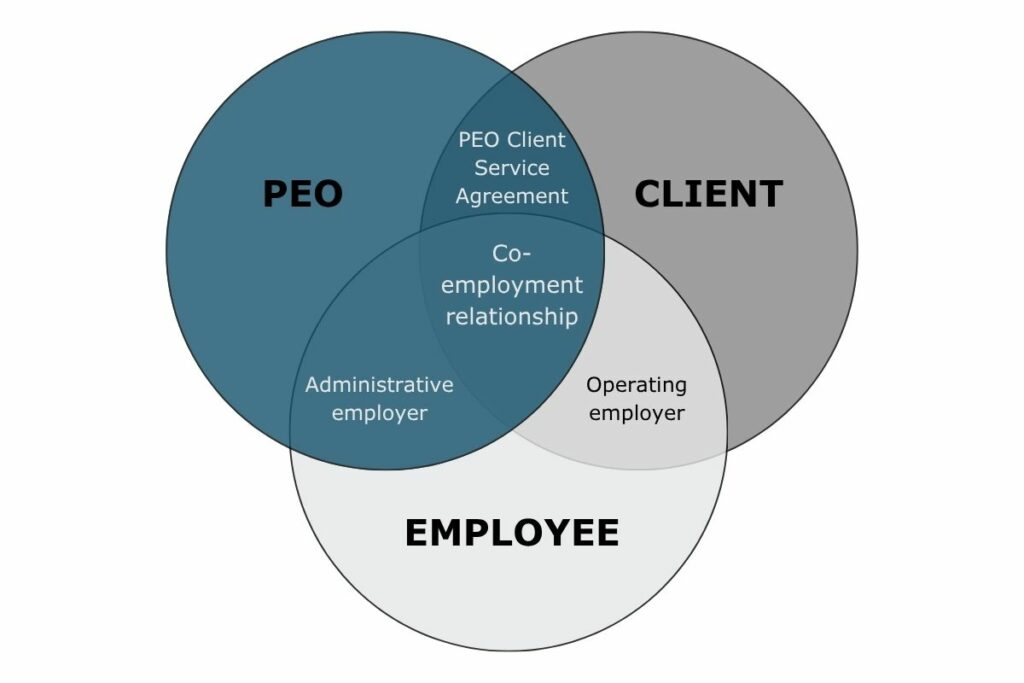
A PEO (Professional Employer Organization) is a specialized HR partner that helps foreign companies hire employees in China while remaining compliant with Chinese labor laws. The PEO acts as a co-employer, managing HR administration, payroll, tax filings, and employment contracts, while the client company oversees day-to-day operations. This setup means you can operate in China without the need to establish a legal entity, while your employees receive full benefits and protection under local law. Moreover, working with a PEO/EOR offers: 

  • Hire and onboard employees in weeks, not months. 
  • Full alignment with Chinese labor, tax, and social insurance regulations. 
  • No need to register a Wholly Foreign-Owned Enterprise (WFOE). 
  • Local payroll, taxation, and health insurance managed seamlessly. 

A Professional Employer Organization (PEO) is not just a payroll service provider. It’s a long-term HR partner ensuring smooth operations for international companies in China. Specifically, in a PEO relationship: 

  • The client company manages the employee’s work and goals. 
  • The PEO/EOR organization in China becomes the local employer of record for HR, payroll, and compliance. 
  • The employee signs a compliant employment contract with the PEO/EOR but works directly under the client’s management. 

Essentially, PEO in China bridges the gap between global expansion and local compliance. It enables companies to enter the market quickly and legally. 

3. PEO in China vs Other HR Models

The HR landscape includes several models for managing employees abroad: PEO, ASO (Administrative Services Organization), and HRO (Human Resources Outsourcing). Each offers a different level of responsibility, cost, and control. Understanding their distinctions helps you choose the best fit for your company’s goals in China. 

Understanding the key differences

Understanding their distinctions helps you choose the best fit for your company’s goals in China.

Understanding their distinctions helps you choose the best fit for your company’s goals in China.

To help you choose the right option for your company, the following overview explains how PEO in China differs from ASO and HRO models in terms of control, compliance, and scalability. 

  • PEO: Co-employment model. The client and the Professional Employer Organization share employer responsibilities. 
  • ASO: Provides HR administration but doesn’t assume legal responsibility. 
  • HRO: Handles specific HR tasks like payroll, recruitment, or training, but only as a service provider. 

Table 1 below provides a side-by-side comparison of these four models. It outlines their core business factors, including structure, risk, scale, scope, cost, and services. Thus, you can quickly see which approach aligns with your expansion goals. 

Factor  PEO (Professional Employer Organization)  ASO (Administrative Services Organization)  HRO (Human Resources Outsourcing) 
Structure  Co-employment between client and PEO.  Client retains employer status; ASO provides admin support.  Client retains full control, outsources selected HR tasks. 
Risk  Shared compliance responsibility.  Client holds legal liability.  Client holds liability. 
Scale  Ideal for SMEs or mid-size firms expanding abroad.  Best for large firms with internal HR teams.  Best for large enterprises seeking efficiency. 
Scope  Covers employment, payroll, benefits, compliance.  Payroll and HR administration.  Training, recruitment, or HR consulting. 
Cost  Moderate, shared employment costs.  Lower, minimal HR services.  Variable depending on the services. 
Services  HR management, payroll, benefits and compliance.  Payroll and benefits admin.  Custom HR solutions. 

Table 1: Comparison Overview – PEO vs ASO and HRO 

PEO in China stands out for combining shared compliance, cost efficiency, and local HR expertise, making it an ideal option for businesses seeking flexibility without sacrificing control. 

While the first table compares strategic factors, the next one highlights practical HR features such as legal responsibility, compliance support, and payroll processing. You can use this snapshot to determine which model best meets your company’s operational and legal needs in China. 

Feature  PEO  ASO  HRO 
Is a legal entity needed?  No  Yes  Yes 
Serves as a legal employer?  Yes  No  No 
Shared legal liability?  Yes  No  No 
Offers compliance support?  Yes  Limited  Partial 
End-to-end HR services & payroll processing?  Yes  Yes  Depends on scope 
Talent staffing services?  Yes  Rarely  Occasionally 
Provision of employee payments?  Yes  Yes  Optional 

Table 2: Features at a glance – PEO vs ASO and HRO 

These key features demonstrate that the PEO model delivers the broadest HR coverage while minimizing legal risk and administrative work. For most foreign companies entering the Chinese market, partnering with a PEO in China provides the smoothest path to hiring, payroll management, and full compliance from day one. Understanding these distinctions is essential for choosing the most suitable HR framework for your business. The next section explains when to choose each model and why PEO in China often provides the perfect balance between agility, compliance, and operational control. 

When to choose each model 

Choosing the right HR model depends on your organization’s size, level of market commitment, and appetite for legal responsibility. Here’s when each approach makes sense and why PEO in China often strikes the best balance between cost efficiency, control, and compliance. 

  • PEO in China: Best when you want speed, compliance, and shared HR management without establishing a local entity. 
  • ASO: Works for larger companies that already have an entity but need help with payroll administration.
  • HRO: Established firms outsource specific HR functions or projects. 

For most international SMEs expanding into China, the PEO model offers the ideal balance between control, cost, and compliance. 

4. How PEO Services Accelerate Business Expansion in China

Expanding to China requires speed, local knowledge, and compliance with Chinese labor laws. A PEO in China acts as your local HR engine. It helps you hire employees, manage payroll, and operate legally, all within a matter of weeks. By partnering with a China PEO service, you can: 

  • Recruit and onboard staff quickly. 
  • Avoid costly delays in entity registration. 
  • Reduce legal risk through compliant HR management. 
  • Focus resources on business development instead of administration. 

The approach is particularly valuable for companies testing new markets, establishing representative offices, or running pilot projects before setting up a subsidiary. 

5. How PEO Services Work in China

VVR International signs a local employment contract with the employee, ensuring full compliance with Chinese labor laws.

VVR International signs a local employment contract with the employee, ensuring full compliance with Chinese labor laws.

PEO services in China follow a well-defined structure that simplifies every stage of employment: 

  • Employment contract setup: 
    • VVR International signs a local employment contract with the employee, ensuring full compliance with Chinese labor laws. 
    • The client company retains operational control while VVR manages administrative obligations.
  • Payroll management: 
    • VVR handles all salary calculations, bonuses, benefits, and health insurance contributions. 
    • Each month, the company receives one clear invoice covering gross salary, taxes, and service fees. 
  • Compliance and taxation: 
    • The PEO ensures compliance with local tax rules, including withholding tax and mandatory social contributions.
    • All payments are made to government-approved channels in the employee’s registered city.
  • HR and administrative support: 
    • VVR RH manages onboarding, probation, performance records, and offboarding in accordance with local law. 
    • For foreign employees, the company also handles work visa and residence permit applications.
  • Continuous legal assurance: 
    • With regular policy updates and proactive HR advice, PEO services maintain long-term compliance and transparency. 

With this structure, foreign companies can hire employees in China confidently, focusing on growth while the organization PEO in China handles the rest. 

6. Why Choose VVR RH as Your Best PEO Services Partner

When choosing a PEO service in China, experience, licensing, and local insight matter. VVR International stands out as a trusted partner combining European reliability with on-the-ground Franco-Chinese expertise. 

VVR International RH handles: 

  • Drafting legally compliant employment contract. 
  • Comprehensive HR management, including onboarding and employee relations. 
  • Full payroll administration (salary, benefits, bonuses, reimbursements). 
  • Administrative tasks such as social protection, housing fund, and health insurance. 
  • Taxation and withholding handled accurately each month. 
  • Contract renewals, terminations, and exit procedures. 
  • Immigration support for foreign employees (work visa and residence permit).
VVR RH stands out as a trusted partner combining European reliability with on-the-ground Franco-Chinese expertise.

VVR RH stands out as a trusted partner combining European reliability with on-the-ground Franco-Chinese expertise.

Operational highlights: 

  • Monthly invoicing for salaries and service fees ensures transparency. 
  • Holds an official Labor Dispatch License, authorizing legal employment of Chinese and foreign staff. 
  • Pays all taxes and social charges in the employee’s registered city, as required by law. 

Additional support from VVR RH: 

  • Intercultural management helps align European and Chinese work cultures for smoother onboarding. 
  • VVR’s teams in France and China coordinate time zones and expectations. 
  • Expatriate assistance offers adaptation training, relocation help, and ongoing HR support. 

More than HR outsourcing, we provide a complete ecosystem for your success in China, ensuring your team operates confidently and compliantly from day one. 


Read more related articles:


7. Final Thoughts

To sum up, a PEO in China allows businesses to hire, manage, and pay employees without setting up a local entity, combining compliance, speed, and scalability. Compared to other HR models, the PEO/EOR approach offers shared control, lower risk, and complete transparency. Whether you’re entering China for the first time or expanding your presence, partnering with an experienced provider like VVR International helps you navigate every step of your journey. 

Are you ready to start your expansion in China? Contact VVR International today to learn how our PEO services in China can help you hire employees, manage payroll, and stay compliant, without the burden of establishing a legal entity.

Share your project with us via contact@vvrinternational.com.

CONTACT US

FAQ

  • What are the main HR challenges in China that outsourcing helps foreign companies solve?

The main HR challenges in China include compliance with labor contract law, managing payroll across different cities, handling social insurance and housing fund contributions, and navigating work permit requirements for foreign employees.

HR outsourcing for foreign companies in China addresses these issues by providing local expertise, payroll outsourcing services, contract management under mutual agreement rules, and support for work permits. This allows companies to operate smoothly while minimizing legal and operational risks.

  • How do HR outsourcing services in China support strategic HR management and long-term growth?

HR outsourcing services in China support strategic HR management, aligning with modern HR practices in China, including digital HR solutions, employee retention strategies, and ESG-focused HR policies. By outsourcing HR functions, companies gain access to market insights, salary benchmarks, and compliance monitoring, enabling them to build sustainable teams in China while adapting to workforce trends and long-term business objectives.

Related Posts

Read More
Interview with Camille Verchery, in the newletter of the Club Chine de l’EM Lyon

Camille Verchery, Director and Founder of VVR International, discusses the strengths and dynamics of the Chinese market and highlights the opportunities for French companies in an interview with the Club Chine de l’EM Lyon.

ENERGY: AT THE HEART OF CHINA’S DEVELOPMENT STRATEGY

First and foremost, Energy has become a strategic sector for China in just a few years. Lacking fossil fuels, the country has invested heavily in research and development of alternatives to increase its independence from the rest of the world. As a result, China is now a leader in wind and photovoltaic energy, as well as nuclear power. It is also a major player in the battery industry and hydrogen technologies.

The challenge for French companies at the forefront of these fields will be to position themselves on the Chinese market, which is hungry for innovative technologies.

THE BOOMING CHINESE HEALTHCARE MARKET AND MEDICAL DEVICES

The Chinese healthcare market is extremely dynamic. Growth is driven by an aging population and increasing demand for healthcare services. China is keen to benefit from the excellence of foreign companies in this sector and is pursuing an attractive policy.

Finally, the introduction of social security as part of the government’s drive to improve the overall health of the population offers numerous development opportunities for innovative French healthcare and medical device companies.

START-UPS AND INNOVATION: CHINA AT THE FOREFRONT OF THE INTERNATIONAL SCENE

China has become one of the world’s leading incubators for start-ups. This success is driven by government funding and incentive policies that recognize the critical and strategic role of innovation in the international political and economic game.

In this context, the challenge is to identify the sectors in which France is a leader and to analyze Chinese advances in order to develop strategies that will enable French companies to benefit from them.

REGIONAL EXPERTISE FOR GLOBAL SUCCESS

Given the current market dynamics and challenges, the international development of companies is often destined to go beyond China. That’s why VVR International co-founded Globallians. Today, this network of partners brings together 16 international development support companies, each specializing in a particular region of the world.

By working together through the Globallians network, these companies are able to help companies expand internationally while providing the expertise needed to address the unique characteristics of each target region.

Read the full interview online on EM Lyon’s LinkedIn page, or click here to download the PDF.

Read More
Digitalizing your company in China

Not merely a tech-business

China seems well ahead on the digitization road: use of new technologies in services (e.g. the mobile payments) , use of artificial intelligence and big data analysis in decision-making (e.g. the Court of Hangzhou), consumers’ behaviors (e.g. the shared bikes), public investments (cf VVR’s article on smart energies)… As a consequence many opportunities arise for European tech businesses in China, but not only. In this article, we will look at the transformation in management, business model, and HR policies induced by the digital transition.

According to a McKinsey report, Internet-linked transformation could contribute to an extent ranging from 7% (in the lowest estimations) to 22% (in the highest estimation) to China’s GDP growth through 2025. The main identified sectors where this growth would mostly happen are:

  • electronic consumer goods (with the Internet of Things, the digital media content…),
  • the automotive (with the supply chain logistics, the development of services thanks to connectivity…),
  • chemicals (with better demand forecast, and production planning, improved R&D…),
  • the financial services (with a decrease in non-performing loans, more efficient banking operations),
  • the real estate (with online sourcing and online marketing),
  • healthcare (with better patient-tracking for chronicle disease, e-commerce for OTC).

To be precise, China is more advanced than Europe when it comes to the use of new technologies, in products or services. Yet, China’s digitization of its industry is less advanced and happening now. Thus European companies already present in China, especially SMEs should take this step towards digitization now, in order to lead the coming disruption (gain in productivity, new business model, new relation to the consumer) instead of feeling threatened by it.

Beyond the development of technology-savvy products for customers (which might not be relevant in all industries), digitization can impact your entire organization in the way things are done, from the product development to the interactions with the client, passing by supply chain management and marketing. In China’s coastal area, most of the companies already initiated their digitization: in an EgonZehnder’s survey over a panel of Chinese companies (2016), 70% of the participants declared that their top management was in support of digitization, and half of them mentioned their CEO as the leader of these changes. Digitization is indeed not only about finding the right technologies to improve your activities, it is first and foremost about having the right team: a team that is able to understand and use these technologies, and that thinks according to this new digital paradigm (for instance, it is about definitely giving up paper-printed presentations). Indeed, a complete shift to the digital age can impact as far as your business model. It requires thus strong adaptation abilities from your company, which need to be developed through the right HR policies.

Given the potential scope of this transition, the top management must design, or at least be associated to, this digitization strategy (e.g. Mengniu’s CEO in VVR’s article on new consumption habits). It might mean thinking about a redefinition of your leadership to better foster collaboration, curiosity and learning in your teams. Besides, there a decision to be taken on whether to allocate digitization to one specific department, in which case you should decide precisely which, to centralize it or to externalize it.

Once the strategy is set, it needs to be taken up by management, as they are essential actors for the teams upgrading, and for the transition towards a more collaborative and innovative-driven way of working. In China, we identify training as crucial: it is indeed easier to train people that are already well integrated in your company rather than hiring and integrating new talents (cf VVR advice on recruitment in China). If, after having upgraded the teams, there is still a HR need, you should pay attention to the peculiarities in China regarding this type of recruitment, making it a rather competitive process.

Indeed, digitization is set to happen faster in China than in any other economy. Thus, several observers pointed out a shortage to come in IT and TIC talents. As such, challenges usually encountered when recruiting somebody in China are exacerbated: finding the right person, negotiating a salary, retaining the new employee… As an illustration, salaries for high-skilled tech talents, especially in the coastal provinces and for people speaking good English, are high, even to European standards.

To smooth the recruitment process and guarantee its success, it is of the utmost importance to carefully follow a rigorous recruiting method. That is to say, first, establish with accuracy the real need(s) of your company that the future employee should satisfy. Then, you will be able to write down precisely the job description and the profile you are looking for (a local Chinese, an overseas returnee, a foreigner…) As digitization is a field in evolution, it is no use to look for specific skills, albeit some basic background is of course required, rather you should be looking for potential. More than ever, recruitment is not about finding a good employee, rather about finding the right person to fit in your company and to hold your company’s vision. Here, analyzing motivations, mentality, and solving approach to new problems might be of a good use.

For more details on recruitment, you may refer to our recruitment department.

To sum up, digitization is happening in China and it opens new doors for products and services, but it also redefines the organization and the vision of each company. We strongly advise to take these steps now, not in an erratic and reactionary manner, but rather in an organized and well-thought strategy, engaging all departments of your company. Two main impacts are to be forecasted in HR: the upgrading of the teams, and the recruitment of new talents.

Can You Hire Employees Without Local Entity? A Complete Guide for Global Hiring

Can You Hire Employees Without a Local Entity? Global Hiring Guide (2026) 1. Introduction You have named the right market and found the right candidate. Now comes the question that stops many global expansion plans in their tracks: "Do you need to set up a legal entity before you can hire employees in China?" A...

Global EOR vs Local EOR: What’s Best for Hiring in China?

Global EOR vs Local EOR: What’s the Difference? 1. Introduction As companies expand into China, one question comes up early in nearly every conversation: Should we use a global EOR platform or partner with a local EOR specialist? On the surface, both solve the same problem, which is that they allow you to hire employees in a foreign...

Hiring International Employees in China: How to Build Global Teams Without Borders

Hiring International Employees in China: How to Build Global Teams Without Borders 1. Introduction China remains one of the most strategically important markets for companies building global teams. It is home to the world’s largest manufacturing base, a rapidly growing technology talent pool, and a consumer market that demands local presence to serve effectively. Yet for HR...

Read More
CHINA’S URBAN MAP

First, second, third and fourth-tier cities

A May 2018 report by Morgan Stanley asserts that the future of China’s growth (by 2030) will lie within lower-tier cities (namely the third and fourth-tier). It is more and more common to see economic analyses regarding China make use of this urban classification. While being a useful analytical tool to understand China’s society, the definition of tiers is actually not so obvious and requires that we stop for a while and think about it.  This article thus gives you the keys to better understand this aspect of China, and the resultant opportunities for your businesses.

A ranking of cities

To begin with, there is no official definition of what is a first, a second, a third and a fourth-tier city in China. To give you a general idea, Beijing, Shanghai, Shenzhen and Canton are unanimously classified as first-tier cities, while second-tier cities are generally provinces’ capitals. Yet, some rankings would label Suzhou and Wuxi as second-tier cities because of their economic growth and despite the fact that they are not capitals. Similarly, Hefei, the capital of Anhui province, is sometimes categorized as a third-tier city because of its weak domestic growth. Three-tier cities generally include non-capital cities with a dynamic economy (high economic growth rate). Lastly, fourth-tier cities are important cities in terms of their population size, but which economy is not so flourishing.

Each year, Yicai Media Group’s Rising Lab issues a ranking of the Chinese cities in terms of tier and make part of their methodology open to the public, allowing us to take a look at their criteria (Yicai Media Group is one of the first economic media in China). They use five criteria: the density of commercial resources, the degree of transportation’s connectivity (is the city a hub?), urban residents’ habits (to what extent do they use e-commerce?), the diversity of activities available in the city and the degree of visibility into the city’s future (the real estate market, the fluidity of the road traffic, the pollution, the talents’ attractiveness, the entrepreneurial index…) Be aware, classifying a city in a first, second, third of fourth-tier is likely to have a tangible impact on the city’s real estate price…

Thus, each organization speaking about tier cities is likely to have their own and different criteria. Most criteria revolve around the local GDP, the population size, and the administrative status of the city (whether it is a province’s capital or not). While the type of criteria does not vary so much from a report to another, the way it is measured does, inducing porous frontiers between different tiers: some cities can be classified in different tiers. Furthermore, the denomination “lower-tier cities” technically encompasses second, third and fourth-tier cities. This can be misleading since second-tier cities are generally wealthier than the average Chinese city.

Another limit in this definition is that very different realities are described with the same word. Indeed, second-tier cities include industrial cities (Tianjin, Wuhan, Changsha…) coastal cities whose consumption market is more developed (Nanjing, Hangzhou, Wuxi, Suzhou…) as well as inland cities, often industrial but that are also becoming hubs with the One-Belt-One-Road initiative (Chengdu, Chongqing…)

A map of consumers

Despite these limits, knowing the tier of a city still is useful as a reading grid to understand to some extent the geographical diversity of China. Morgan Stanley’s report is an illustration of it, identifying a 6,9 trillion USD potential for growth within third and fourth-tier cities by 2030. They identify more specifically five city-clusters with high growth potential: the Jing-Jin-Ji region, the Yangtze River delta, the Canton bay, the Mid-Yangtze region, and the Chengdu-Chongqing area.

They support this assertion by several arguments, the first one being political support for growth in these very cities. Indeed, the central government and regional governments have been recently issuing many development plans, respectively inter-regional and intra-regional, allocating wide investments in connectivity infrastructures. As a result, there has been a multiplication of high-speed trains connections which divides the travel time by two and helps dis-enclave cities.

Besides, the cities offer financial allocations to help young talents buy real estate properties, a must do after graduation in China (this refers mainly to second-tier cities which have the financial resources for it). Besides, contrary to first-tier cities (except from Shenzhen) who implement stricter hukou* policies in order to hamper their population’s growth, second-tier cities make the promotion of their hukou policies, easy to obtain for young talents. As a result, Morgan Stanley’s report forecasts a 2.5% annual urban growth in lower-tier cities between 2017 and 2030. Lower-tier cities also have a higher fertility rate which accounts for this higher growth, as life costs (and the costs of having a child) are lower than in Beijing or Shanghai.

For European companies, as well as for Chinese ones, this demographic evolution means that lower-tier cities, especially second-tier cities, will gather an increasingly qualified manpower as well as better infrastructures in the near future. Implementation costs are to decrease, while labor costs are increasing on the coast. Chinese and foreign companies already started to move in these inland cities (cf VVR’s September article).

Another consequence of interest for European businesses lies in distribution. Indeed, more and more retailers are attracted to these new and untapped markets opening in these smaller cities, as they become more accessible and people’s incomes are increasing. Firstly, residents from these cities devote a larger part of their budget to discretionary spending as their fixed costs are lower (rents). Besides, although there is in these cities a smaller part of the population earning enough to afford European products (often more expensive and assimilated to rather high-end products), the quantities bought per consumer are comparatively larger than in first-tier cities. In other words, less people buy European goods, but the ones who do buy more of them.

Turning more specifically to these consumers’ habits, a survey by AlphaWise on more than 3000 households notes that the income gap between first-tier and lower-tier cities is reducing, but also that consumption habits changed significantly. Third and fourth-tier cities’ consumers now pay more attention to the value of the goods they buy: they upgrade their consumption and are increasingly sensitive to brands (mostly local brands for now). They also care about the fastness, quality and entertainment’s aspect of the service. In terms of industries, the sectors of daily consumption goods shall mostly benefit from these changes: house appliance, food & beverage (especially dairy products), beauty products and make-up… Most of this growth is also expected to happen within the e-commerce because of accessibility reasons. The entertainment industry (cinema, tourism) and the education industry are also likely to see some positive trends in their consumers’ pool.

There are yet some limits to this overall positive picture of the economic potential within lower-tier cities.   Firstly, today, the costs and risks of implementation in third and four-tier cities are still rather high: quality retail spaces are still few, and the size of the consumers’ pool remains to be verified. Thus, it is recommended to use e-commerce to test these markets (although this retail channel also bears its own limitations, cf VVR’s July article).

Furthermore, third and fourth-tier cities’ consumers might have a similar spending power as in the first and second-tier cities, this does not mean that they have similar consumption habits: it is crucial to analyze accurately the local consumption habits and to not launch a product merely because “it worked well in Shanghai”. Each expansion strategy must be thought locally and a dose of education on international products (on geographical indications for instance) might very well be necessary.

Lastly, the consumption’s growth in the lower-tier cities is conditional upon regulatory changes, especially regarding the real estate market. Indeed, these cities’ attractiveness relies on their low real estate prices, enabling young households to buy property. Besides, these young households’ budget is also less taken up by rent and more is available for consumption. On that point, there is no study that is today forecasting such a change in the near future.

In short, China has diverse markets, and it is important to understand their local specificity. Tiers are one way to approach diversity and allows for the above analyses. It is then one way, but it is not the only one and it can not account for the entire diversity of China. For instance, it is also important for retailers and employers to understand the different generations in China…

* The hukou is a resident permit that each Chinese citizen gets, binding them to a province (Shanghai’s hukou, Beijing’s hukou, Jiangsu’s hukou). It is rather similar to a province-scale “nationality” and serves to obtain a right to some public services in the location of the hukou.

By Manon Bellon

Fruit Consumption in China: Trends, Distribution, and Opportunities in 2026

Between 2014 and 2024, annual per capita consumption of fresh fruit in China rose from 38.9 kg to 61.6 kg, an increase of nearly 60% over ten years (National Bureau of Statistics of China 国家数据). Several factors explain this growth. First, increased awareness of the importance of a healthy diet—driven by the rise of the...

Traditional and commercial holidays in China: public holidays, vacations, and business opportunities in 2026

Traditional and commercial holidays in China: public holidays, vacations, and business opportunities in 2026 This year, Chinese New Year is celebrated on February 17 and marks the beginning of a new year under the sign of the Fire Horse. In China, traditional festivals punctuate the year, accompanied by public holidays, family celebrations, and moments of...

Learning expedition in China: an immersion to understand the innovation and culture of a changing market

Why is immersion becoming an essential step before launching a business in China? Understanding the Chinese market from within China The Chinese market attracts companies from around the world due to its size, capacity for innovation, sustained growth, and vast opportunities in cutting-edge sectors. But China is also a complex market with its own dynamics,…

Read More
RAW MATERIALS INDEX RATE – DECEMBER 2018

Here-under, the index rate of raw materials in China throughout the last 6 months.

Available in PDF : Download Newsletter VVR 2018 NOVEMBER

VVR International advises TRASIS on the acquisition of its distributor and the creation of its joint venture in China

VVR International advises TRASIS on the acquisition of its distributor and the creation of its joint venture in China VVR International assisted TRASIS, a global leader in nuclear medicine equipment, in structuring, negotiating and signing the acquisition of its distributor, as well as setting up a joint venture with its long-standing Chinese partner, Beijing PET...

The main traditional and commercial celebrations in China: holidays in 2025

The main traditional and commercial celebrations in China: holidays in 2025 China, with its thousand-year-old history, is a country where tradition and modernity coexist. Traditional festivals play a central role, combining ancestral rituals with family gatherings. Alongside these cultural celebrations, commercial festivals, often inspired by global trends or local initiatives, complete the calendar of key...

Generative artificial intelligence in China: a rapidly expanding technological revolution

Generative artificial intelligence in China: a rapidly expanding technological revolution Generative artificial intelligence (AI), a technology that enables the creation of textual, visual, audio and other content, is developing rapidly in China. With applications ranging from artistic creation to scientific research, not forgetting improved business services, this technology is becoming a strategic pillar of innovation....

Read More
SPOTLIGHT ON THE “TAOBAO VILLAGES”

Taobao : It is Alibaba’s e-commerce platform, launched back in 2003. This C2C platform gathers today over 500 millions of active users. Besides, they also developed a B2C platform in 2008 called T-Mall. These two platforms saw the transaction of some 3 trillion yuans over the year 2017.

It is very likely that a large part of the Halloween costumes worn this year in the coastal cities all come from the same place: a small village in a rural province of China, which specialized in the confection of costumes that they then sell online. This is what we call a “Taobao village”, another aspect of the retail revolution taking place in China. In this month’s article, we provide you with a reading of this phenomenon, which we hope can also be a source of inspiration for your approach of the Chinese e-commerce. What are exactly these “Taobao villages”? How rural entrepreneurs with few resources at hand managed to appropriate these tools and how do they use it? Knowing about “Taobao villages” and these micro-enterprises can be of interest, especially for European retail companies who also need to appropriate themselves the Chinese e-commerce.

A rural community geared towards e-commerce

The official definition of a “Taobao village” is a rural community in which at least 10% of the families use Taobao for retail, or where 100 online shops were open; and where the trading volume reach at least 10 millions of yuans. This definition is given by Aliresearch, the research department from Alibaba, whose mission is to collect and make use of the enormous amount of data Alibaba have at hands. The “Taobao villages” developed themselves firstly with Alibaba (hence their names, from Alibaba’s famous e-commerce platform). The Chinese authorities were then prompt to support these initiatives as they contribute to reach primordial goals set in the 13th Five-Year Plan: eliminating poverty, developing the Western provinces and slowing down the rural exodus. As a matter of fact, 45% of the Chinese population still lives in villages (often much bigger than our European villages). The dose of personal entrepreneurship at the roots of “Taobao villages” is seen very positively by the authorities: seen as one of the key of the development success of coastal cities in China, entrepreneurship now moves to the countryside. Today, JD.com are promoting their own platform to rural communities.

Increasing by 25% in 2015, the number of “Taobao villages” reached 2 118 in 2017, with a total of 120billion of yuans in sales (Aliresearch). Overall, 1.3% of the Chinese population is involved in some e-commerce activity in 2017 (approximately 10 millions). Alibaba’s support is concretized in a 2017-2019 investment plan amounting to 1.6 billions of dollars. Their objective is to open 100 000 Taobao centers in rural places. The Chinese government also makes substantial investments (for the reasons mentioned above). It claims 300 millions of dollars allocated to 200 rural counties to build warehouses, train skilled manpower… The government overtly encourages young Chinese to come back to their native villages to open businesses. It seems so far to be working as 52% of these online entrepreneurs are less than 30.

An experimenting field for micro-enterprises

These statistics seem to point at the success of a rather new business model, with a unique management style: these micro-enterprises are often run by people will low qualification level, who seize the opportunity of low entry barriers to experiment, test their products with the market and adapt them, thanks to the statistics provided by Taobao and the customers feedbacks available. Most of these micro-enterprises produce in the villages and then sell in the cities, but some are the other way around. For those who sell in the cities, e-commerce brought them a significant improvement as it abolishes distances and they could get access to markets where consumers have more purchasing power. Regarding what is sold, there are different strategies. Some villages get specialized in the local food products (Ningxia’s Goji berries, Suichang’s bamboos shoots, tea and sweet potatoes…) while some others get specialized in a product that is not related at all to their localization (outdoor equipment, costumes…) An interesting pattern then stands out: most of the time, the online shops of a village all get involved in the same activity, bringing the specialization to the level of the village (and constructing thereby a sense of identity within the products). The very denomination “Taobao villages” implies an organization to the level of the village. Lastly, it seems that local food products are more successful as consumers await local products that are cheaper and potentially healthier (organic agriculture).

Regional specialization?

Not only do “Taobao villages” bring new products to the coastal cities’ consumers, but it also impacts on the very structure of these villages, creating new associations. In order to guarantee a certain quality for instance, some villages put in place “Taobao associations”, in a way similar to the industry chambers. Moreover, “Taobao villages” require a development of the tertiary sector (sales, delivery, storage), which in some cases amounts to 50% of the local gross product. At last, other activities develop, such as the eco-tourism. This last aspect is all the more interesting as it is also readily observable in Europe. Not mentioning the thematic travels around Europe (such as “Grands Crus tours” in Fance), every year more numerous, one can think of this small Bulgarian village, Momchilovtsi, which local yogurt became extremely popular in China recently, albeit because of a company and not because of e-commerce. As a result, this village now sees buses of Chinese tourists coming to visit. This example is telling as it shows the strength of local identity in nowadays branding in China.

How to fight competition on these platforms

“Taobao villages” actually do not alwqys run so smoothly, and they do encounter some difficulties. First of all, access to digital technologies is still limited in rural China with 1% of the families having a broadband connection in most of the villages (the official goal announced in “Internet+” is a 98% coverage by 2020). Another limit which is more closely linked to the e-commerce characteristics: branding remains limited and many businesses suffer fakes issues. Thus, in Qingyangliu, a “Taobao village”, only 20% to 30% of the businesses are making profit. The identified cause is the fact that the market is saturated and dominated by large companies.

Seeing either as an opportunity, or as a concept with a debatable long-term profit, “Taobao villages” nonetheless are a characteristic trait of the revolution of retail in China. They picture the dynamic entrepreneurial mindset of Chinese businessmen. They also confirm the analysis that e-commerce in China do open many opportunities because of the low entry barriers and larger access, but that many challenges remain when it comes to build a brand image on this already saturated market.

By Manon Bellon

Image credits: Greg Jenkins

Fruit Consumption in China: Trends, Distribution, and Opportunities in 2026

Between 2014 and 2024, annual per capita consumption of fresh fruit in China rose from 38.9 kg to 61.6 kg, an increase of nearly 60% over ten years (National Bureau of Statistics of China 国家数据). Several factors explain this growth. First, increased awareness of the importance of a healthy diet—driven by the rise of the...

Traditional and commercial holidays in China: public holidays, vacations, and business opportunities in 2026

Traditional and commercial holidays in China: public holidays, vacations, and business opportunities in 2026 This year, Chinese New Year is celebrated on February 17 and marks the beginning of a new year under the sign of the Fire Horse. In China, traditional festivals punctuate the year, accompanied by public holidays, family celebrations, and moments of...

Learning expedition in China: an immersion to understand the innovation and culture of a changing market

Why is immersion becoming an essential step before launching a business in China? Understanding the Chinese market from within China The Chinese market attracts companies from around the world due to its size, capacity for innovation, sustained growth, and vast opportunities in cutting-edge sectors. But China is also a complex market with its own dynamics,…

Read More
THE LOGISTICS OF ONE BELT ONE ROAD

With many Europeans coming back from holidays, their minds full of travel memories, we suggest staying in this ambiance, and to learn this month about how products now travel between Europe and China. Since the President XI Jinping unveiled the One Belt One Road (OBOR) initiative in 2013, most commentators agree to qualify this gigantic project as a political project first and foremost. Nevertheless, it has mainly concretized in infrastructures’ investments so far, and one of the most visible impacts is the organization of a new – or improved – logistics network. What are the concrete benefits that European companies can get from the OBOR initiative? What is existing today, and what is still to come? To answers these much commented on questions, VVR went to see M. Joost van Opstal who works at AEL- Berkman, a logistics company. He answered our questions below:

To start with, let’s explore what is OBOR today. How can one know about all the new infrastructures built within this initiative? Which organization does a follow-up on this huge project?

Right now, OBOR is made of two land corridors: China-Mongolia-Russia and the Southern road, also called the Khorgos way (China – Kazakhstan – Russia – Europe). These roads are aimed at connecting inland China to Europe in a more efficient way. Indeed, for factories that moved to Western China, because of rising labor costs on the coast, the transportation from these inland cities to the Chinese harbors sometimes took up as much cost as the whole transportation from these harbors to European harbors! The two largest hubs on the Chinese side are Chongqing and Zhengzhou. In Europe, the entrance terminal is in Poland, where the custom clearance is done – this rail freight is organized on the same principle as maritime freight: one unique customs document is used for the whole transportation process. Most of the goods for Western Europe then go through Duisburg in Germany.

It is to be noticed that most of the rail network used today under the OBOR name actually existed before the launch of the initiative, which explains that it has been operational so fast.

To know about the advancement of the projects (in pink on the above map), there are constant seminars by consulates and embassies, mostly focusing on the impact on the local country’s economies. All in all, official governmental channels are reliable information sources, as well as the companies involved and the ones who sell this project – such as the Khorgos Gateway. There, one is sure to get the most recent information, but they might be lacking some critical insight.

Which impact do you see OBOR has on European businesses?

The impact is mainly on logistics. As a matter of fact, HP is one of the companies at the origin of the initiative, together with the Chinese government and got involved for that reason. Having moved their entire production to Chongqing, they needed an alternative transportation road for their short-life products. In this technology field, two weeks can be the difference between selling and not selling.

Thus, rail freight comes as an alternative for our clients. However, it is merely an alternative, not a replacement: it will not get over 10% of the transportation on the Europe-China freight lines. Compared to maritime freight, rail freight through Central Asia is faster and not subject to so many time and cost variation, while being approximately three times the cost of maritime freight. Until now, the Maritime Silk Road did not lead to much change in the way the maritime freight is operated from China to Europe. Compared to air freight that is mostly used for perishable goods such as food, rail freight is less expensive, allows for bigger quantities and imposes less restrictions when it comes to dangerous goods. Besides, this new rail network now allows for a reasonable travel time and suitable transportation conditions for these perishable goods.

Another much discussed benefit is the larger playing field OBOR would create for European businesses. Indeed, Chinese authorities also claim a development aspect in this project, which would theoretically lead to the creation of a market of 4.4 billion of customers when one counts all the 68 countries involved today. This information yet need to be nuanced as a large majority of these people have today small income. This gigantic market is thus highly conditional on the success of the development part of the initiative.

What risks do you see linked to the use of the OBOR rail network?

Concerns voiced by our clients revolve mainly around two points: the quality of the transportation infrastructure and the security.

When a problem occur on the train, how is it fixed? This concern is especially high for refrigerated products. Although OBOR officials claim that there is a maintenance station every 8 hours, experience says otherwise.

Another particularly acute concern is the risk of theft, mainly for technological products with a high added-value, as the convoy cross poor areas. Incidentally, one can assess the development of Chinese private security companies’ services along the road, showing that this concern is justified. However, reality shows that this happened so far mainly in Europe.

Of course, a political risk remains as some railroads cross many countries, that are either domestically unstable or with unstable relations with one another.

What type of industries have the most to gain from OBOR?

These industries are without doubt retailers in electronics (laptops, computers), fashion, short-life products (milk powder, agricultural products), machine (spare parts), and pharmaceuticals.

Besides, most of the traffic happens from China to Europe (90%), from suppliers to distributors. For instance, companies who supply distributors such as Lidl must deliver their products fast: a one-day difference can lead to a penalty.  Before air freight, which is extremely expensive, was the only option. Today the train offers a cheaper alternative.

The traffic from Europe to China is only 10% of the total. Yet, given the flow size, these 10% can still be very interesting. A very interesting business case is the one of a Dutch powdered milk company. Using OBOR roads enabled them to develop very successfully in China when they have now a Joint-Venture. Today, they use weekly trains connecting the Netherlands to China. All in all, the products that can benefit the most in this direction are: milk powder – today a large part of the exports; agricultural products – mainly fresh vegetables; and pharmaceuticals.

Another benefit we identify for European companies lies in marketing. Indeed, using this way of transportation is environmentally friendly, and socially responsible. Besides, because of the political value attached to this initiative, it might be possible to receive subsidizes too.

The development of cross-border e-commerce is often mentioned in reports. However, the logistics are then different from retail and do not include rail transportation as the volumes are too small.

What are your thoughts on the way OBOR is going to evolve? What is in it for the future?

The scope of the project became so wide, and so many factors are at play that it is hard to predict how it will evolve, if it will reach the official goals or not. From the information we can get in China, there is no sign of new railway being constructed between Europe and China.

Besides, we see that it already reached some limits today, in terms of volume. With 2 trains a week from every end-city the project encompasses, European hubs are encountering congestions issues.

Established in 1903 in The Netherlands as an energy and coal provider, Berkman Energy service became the starting platform for what has grown from a family business into a global entity. Established in 1998, AEL-Berkman Forwarding (HK) Ltd. started off as a joint venture between two highly experienced and professional freight forwarding organizations. With a combined experience of more than 50 years in this business, AEL Asia Express (HK) Ltd. and Berkman Forwarding B.V ventured together with the objective of developing the China market. They organized their first rail freight on OBOR roads in 2016.

By Manon Bellon

VVR International advises TRASIS on the acquisition of its distributor and the creation of its joint venture in China

VVR International advises TRASIS on the acquisition of its distributor and the creation of its joint venture in China VVR International assisted TRASIS, a global leader in nuclear medicine equipment, in structuring, negotiating and signing the acquisition of its distributor, as well as setting up a joint venture with its long-standing Chinese partner, Beijing PET...

The main traditional and commercial celebrations in China: holidays in 2025

The main traditional and commercial celebrations in China: holidays in 2025 China, with its thousand-year-old history, is a country where tradition and modernity coexist. Traditional festivals play a central role, combining ancestral rituals with family gatherings. Alongside these cultural celebrations, commercial festivals, often inspired by global trends or local initiatives, complete the calendar of key...

Generative artificial intelligence in China: a rapidly expanding technological revolution

Generative artificial intelligence in China: a rapidly expanding technological revolution Generative artificial intelligence (AI), a technology that enables the creation of textual, visual, audio and other content, is developing rapidly in China. With applications ranging from artistic creation to scientific research, not forgetting improved business services, this technology is becoming a strategic pillar of innovation....

Read More