PEO in China: Comparison with ASO, HRO, and How It Accelerates Business Expansion

PEO in ChinaComparison with ASO, HRO, and How It Accelerates Business Expansion

1. Introduction

For many foreign companies, entering the Chinese market means facing complex employment laws, high administrative costs, and long registration procedures. However, expansion no longer has to wait months for entity creation to occur. So, what is the solution? PEO in China, a flexible, compliant, and efficient HR model that lets companies hire staff and operate in China without establishing a local entity. In this article, VVR International provides a comprehensive comparison between PEO/EOR and ASO/HRO models, highlighting their key differences and strategic applications. You’ll also discover how PEO services in China can accelerate business expansion by combining compliance, flexibility, and cost efficiency, helping you determine which HR model best fits your company’s needs and growth objectives. 

2. What Is a PEO/EOR? Understanding the Model

A PEO (Professional Employer Organization) is a specialized HR partner that helps foreign companies hire employees in China while remaining compliant with Chinese labor laws. The PEO acts as a co-employer, managing HR administration, payroll, tax filings, and employment contracts, while the client company oversees day-to-day operations. This setup means you can operate in China without the need to establish a legal entity, while your employees receive full benefits and protection under local law. Moreover, working with a PEO/EOR offers: 

  • Hire and onboard employees in weeks, not months. 
  • Full alignment with Chinese labor, tax, and social insurance regulations. 
  • No need to register a Wholly Foreign-Owned Enterprise (WFOE). 
  • Local payroll, taxation, and health insurance managed seamlessly. 

A Professional Employer Organization (PEO) is not just a payroll service provider. It’s a long-term HR partner ensuring smooth operations for international companies in China. Specifically, in a PEO relationship: 

  • The client company manages the employee’s work and goals. 
  • The PEO/EOR organization in China becomes the local employer of record for HR, payroll, and compliance. 
  • The employee signs a compliant employment contract with the PEO/EOR but works directly under the client’s management. 

Essentially, PEO in China bridges the gap between global expansion and local compliance. It enables companies to enter the market quickly and legally. 

3. PEO in China vs Other HR Models

The HR landscape includes several models for managing employees abroad: PEO, ASO (Administrative Services Organization), and HRO (Human Resources Outsourcing). Each offers a different level of responsibility, cost, and control. Understanding their distinctions helps you choose the best fit for your company’s goals in China. 

Understanding the key differences
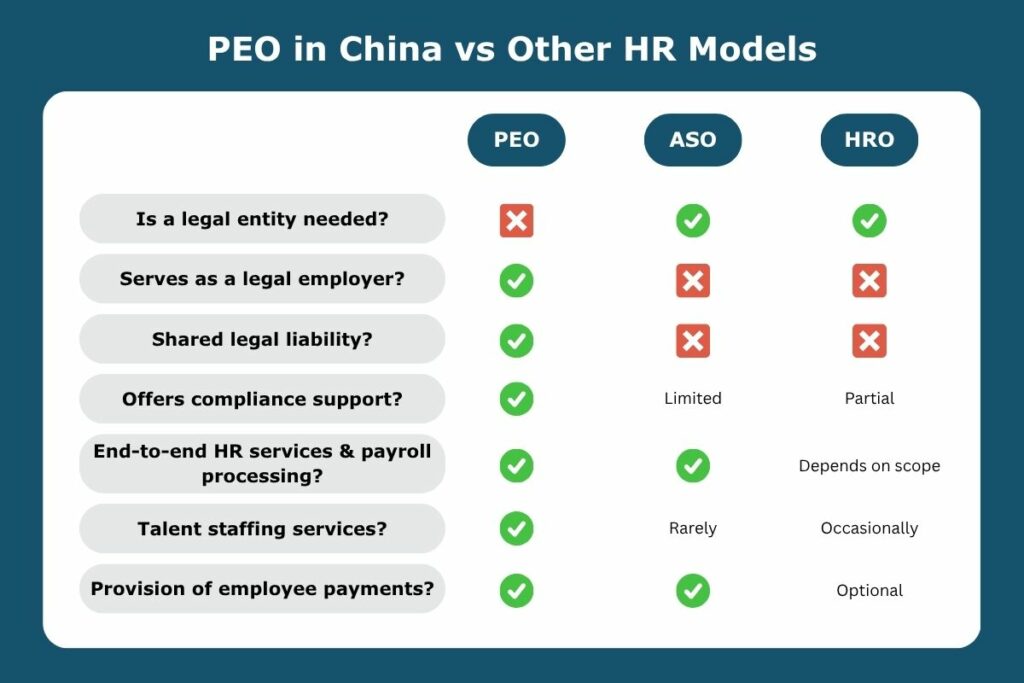
Understanding their distinctions helps you choose the best fit for your company’s goals in China.

Understanding their distinctions helps you choose the best fit for your company’s goals in China.

To help you choose the right option for your company, the following overview explains how PEO in China differs from ASO and HRO models in terms of control, compliance, and scalability. 

  • PEO: Co-employment model. The client and the Professional Employer Organization share employer responsibilities. 
  • ASO: Provides HR administration but doesn’t assume legal responsibility. 
  • HRO: Handles specific HR tasks like payroll, recruitment, or training, but only as a service provider. 

Table 1 below provides a side-by-side comparison of these four models. It outlines their core business factors, including structure, risk, scale, scope, cost, and services. Thus, you can quickly see which approach aligns with your expansion goals. 

Factor  PEO (Professional Employer Organization)  ASO (Administrative Services Organization)  HRO (Human Resources Outsourcing) 
Structure  Co-employment between client and PEO.  Client retains employer status; ASO provides admin support.  Client retains full control, outsources selected HR tasks. 
Risk  Shared compliance responsibility.  Client holds legal liability.  Client holds liability. 
Scale  Ideal for SMEs or mid-size firms expanding abroad.  Best for large firms with internal HR teams.  Best for large enterprises seeking efficiency. 
Scope  Covers employment, payroll, benefits, compliance.  Payroll and HR administration.  Training, recruitment, or HR consulting. 
Cost  Moderate, shared employment costs.  Lower, minimal HR services.  Variable depending on the services. 
Services  HR management, payroll, benefits and compliance.  Payroll and benefits admin.  Custom HR solutions. 

Table 1: Comparison Overview – PEO vs ASO and HRO 

PEO in China stands out for combining shared compliance, cost efficiency, and local HR expertise, making it an ideal option for businesses seeking flexibility without sacrificing control. 

While the first table compares strategic factors, the next one highlights practical HR features such as legal responsibility, compliance support, and payroll processing. You can use this snapshot to determine which model best meets your company’s operational and legal needs in China. 

Feature  PEO  ASO  HRO 
Is a legal entity needed?  No  Yes  Yes 
Serves as a legal employer?  Yes  No  No 
Shared legal liability?  Yes  No  No 
Offers compliance support?  Yes  Limited  Partial 
End-to-end HR services & payroll processing?  Yes  Yes  Depends on scope 
Talent staffing services?  Yes  Rarely  Occasionally 
Provision of employee payments?  Yes  Yes  Optional 

Table 2: Features at a glance – PEO vs ASO and HRO 

These key features demonstrate that the PEO model delivers the broadest HR coverage while minimizing legal risk and administrative work. For most foreign companies entering the Chinese market, partnering with a PEO in China provides the smoothest path to hiring, payroll management, and full compliance from day one. Understanding these distinctions is essential for choosing the most suitable HR framework for your business. The next section explains when to choose each model and why PEO in China often provides the perfect balance between agility, compliance, and operational control. 

When to choose each model 

Choosing the right HR model depends on your organization’s size, level of market commitment, and appetite for legal responsibility. Here’s when each approach makes sense and why PEO in China often strikes the best balance between cost efficiency, control, and compliance. 

  • PEO in China: Best when you want speed, compliance, and shared HR management without establishing a local entity. 
  • ASO: Works for larger companies that already have an entity but need help with payroll administration.
  • HRO: Established firms outsource specific HR functions or projects. 

For most international SMEs expanding into China, the PEO model offers the ideal balance between control, cost, and compliance. 

4. How PEO Services Accelerate Business Expansion in China

Expanding to China requires speed, local knowledge, and compliance with Chinese labor laws. A PEO in China acts as your local HR engine. It helps you hire employees, manage payroll, and operate legally, all within a matter of weeks. By partnering with a China PEO service, you can: 

  • Recruit and onboard staff quickly. 
  • Avoid costly delays in entity registration. 
  • Reduce legal risk through compliant HR management. 
  • Focus resources on business development instead of administration. 

The approach is particularly valuable for companies testing new markets, establishing representative offices, or running pilot projects before setting up a subsidiary. 

5. How PEO Services Work in China

VVR International signs a local employment contract with the employee, ensuring full compliance with Chinese labor laws.

VVR International signs a local employment contract with the employee, ensuring full compliance with Chinese labor laws.

PEO services in China follow a well-defined structure that simplifies every stage of employment: 

  • Employment contract setup: 
    • VVR International signs a local employment contract with the employee, ensuring full compliance with Chinese labor laws. 
    • The client company retains operational control while VVR manages administrative obligations.
  • Payroll management: 
    • VVR handles all salary calculations, bonuses, benefits, and health insurance contributions. 
    • Each month, the company receives one clear invoice covering gross salary, taxes, and service fees. 
  • Compliance and taxation: 
    • The PEO ensures compliance with local tax rules, including withholding tax and mandatory social contributions.
    • All payments are made to government-approved channels in the employee’s registered city.
  • HR and administrative support: 
    • VVR RH manages onboarding, probation, performance records, and offboarding in accordance with local law. 
    • For foreign employees, the company also handles work visa and residence permit applications.
  • Continuous legal assurance: 
    • With regular policy updates and proactive HR advice, PEO services maintain long-term compliance and transparency. 

With this structure, foreign companies can hire employees in China confidently, focusing on growth while the organization PEO in China handles the rest. 

6. Why Choose VVR RH as Your Best PEO Services Partner

When choosing a PEO service in China, experience, licensing, and local insight matter. VVR International stands out as a trusted partner combining European reliability with on-the-ground Franco-Chinese expertise. 

VVR International RH handles: 

  • Drafting legally compliant employment contract. 
  • Comprehensive HR management, including onboarding and employee relations. 
  • Full payroll administration (salary, benefits, bonuses, reimbursements). 
  • Administrative tasks such as social protection, housing fund, and health insurance. 
  • Taxation and withholding handled accurately each month. 
  • Contract renewals, terminations, and exit procedures. 
  • Immigration support for foreign employees (work visa and residence permit).

VVR RH stands out as a trusted partner combining European reliability with on-the-ground Franco-Chinese expertise.

VVR RH stands out as a trusted partner combining European reliability with on-the-ground Franco-Chinese expertise.

Operational highlights: 

  • Monthly invoicing for salaries and service fees ensures transparency. 
  • Holds an official Labor Dispatch License, authorizing legal employment of Chinese and foreign staff. 
  • Pays all taxes and social charges in the employee’s registered city, as required by law. 

Additional support from VVR RH: 

  • Intercultural management helps align European and Chinese work cultures for smoother onboarding. 
  • VVR’s teams in France and China coordinate time zones and expectations. 
  • Expatriate assistance offers adaptation training, relocation help, and ongoing HR support. 

More than HR outsourcing, we provide a complete ecosystem for your success in China, ensuring your team operates confidently and compliantly from day one. 


Read more related articles:


7. Final Thoughts

To sum up, a PEO in China allows businesses to hire, manage, and pay employees without setting up a local entity, combining compliance, speed, and scalability. Compared to other HR models, the PEO/EOR approach offers shared control, lower risk, and complete transparency. Whether you’re entering China for the first time or expanding your presence, partnering with an experienced provider like VVR International helps you navigate every step of your journey. 

Are you ready to start your expansion in China? Contact VVR International today to learn how our PEO services in China can help you hire employees, manage payroll, and stay compliant, without the burden of establishing a legal entity.

Share your project with us via contact@vvrinternational.com.

CONTACT US

FAQ

  • What are the main HR challenges in China that outsourcing helps foreign companies solve?

The main HR challenges in China include compliance with labor contract law, managing payroll across different cities, handling social insurance and housing fund contributions, and navigating work permit requirements for foreign employees.

HR outsourcing for foreign companies in China addresses these issues by providing local expertise, payroll outsourcing services, contract management under mutual agreement rules, and support for work permits. This allows companies to operate smoothly while minimizing legal and operational risks.

  • How do HR outsourcing services in China support strategic HR management and long-term growth?

HR outsourcing services in China support strategic HR management, aligning with modern HR practices in China, including digital HR solutions, employee retention strategies, and ESG-focused HR policies. By outsourcing HR functions, companies gain access to market insights, salary benchmarks, and compliance monitoring, enabling them to build sustainable teams in China while adapting to workforce trends and long-term business objectives.

Related Posts

Read More
Interview with Camille Verchery, in the newletter of the Club Chine de l’EM Lyon

Camille Verchery, Director and Founder of VVR International, discusses the strengths and dynamics of the Chinese market and highlights the opportunities for French companies in an interview with the Club Chine de l’EM Lyon.

ENERGY: AT THE HEART OF CHINA’S DEVELOPMENT STRATEGY

First and foremost, Energy has become a strategic sector for China in just a few years. Lacking fossil fuels, the country has invested heavily in research and development of alternatives to increase its independence from the rest of the world. As a result, China is now a leader in wind and photovoltaic energy, as well as nuclear power. It is also a major player in the battery industry and hydrogen technologies.

The challenge for French companies at the forefront of these fields will be to position themselves on the Chinese market, which is hungry for innovative technologies.

THE BOOMING CHINESE HEALTHCARE MARKET AND MEDICAL DEVICES

The Chinese healthcare market is extremely dynamic. Growth is driven by an aging population and increasing demand for healthcare services. China is keen to benefit from the excellence of foreign companies in this sector and is pursuing an attractive policy.

Finally, the introduction of social security as part of the government’s drive to improve the overall health of the population offers numerous development opportunities for innovative French healthcare and medical device companies.

START-UPS AND INNOVATION: CHINA AT THE FOREFRONT OF THE INTERNATIONAL SCENE

China has become one of the world’s leading incubators for start-ups. This success is driven by government funding and incentive policies that recognize the critical and strategic role of innovation in the international political and economic game.

In this context, the challenge is to identify the sectors in which France is a leader and to analyze Chinese advances in order to develop strategies that will enable French companies to benefit from them.

REGIONAL EXPERTISE FOR GLOBAL SUCCESS

Given the current market dynamics and challenges, the international development of companies is often destined to go beyond China. That’s why VVR International co-founded Globallians. Today, this network of partners brings together 16 international development support companies, each specializing in a particular region of the world.

By working together through the Globallians network, these companies are able to help companies expand internationally while providing the expertise needed to address the unique characteristics of each target region.

Read the full interview online on EM Lyon’s LinkedIn page, or click here to download the PDF.

Read More
Interview of Irénée Robin, Managing Partner at VVR Medical, on Radio Television HK

[PODCAST] Medical innovations in China Mainland and HK : The opportunities for foreign companies

Irénée Robin, Managing Partner at VVR Medical was present during the third Asia Summit on Global Health, in Hong Kong which brought stakeholders from healthcare experts to renowned academia and influential business leaders to explore opportunities in the healthcare sector.

Irénée Robin was one of the speakers at a session focused on medical technology at the event. On this occasion, he was invited by Radio Television Hong Kong for an interview about opportunities in the healthcare sector in Mainland China and HK.


You can listen to the replay of this interview by following this link:

First of all, how healthy would you say the level of investments into the healthcare industry in Mainland China is?

In Mainland China I tend to think that it’s never enough […] but it is increasing and it’s refocusing. The Chinese government has made the health of their own population a priority that they want to address with their own solutions. This strategy is leading to the integration of the whole manufacturing line of every medical device, product, medicine that is needed. In the healthcare sector, the cheapest consumable to the highest end implant tends to be made in China by China, for the Chinese people. This integration will actually generate affordability and eventually decrease the amount of investment or the amount of money needed to take care of the people.

These market dynamics are observable mainly in the day-to-day problems of healthcare in China, but not necessarily in Innovation scope.

About innovation, what are the sort of innovations you’re talking about here and where do we stand with those and what needs to happen to make those go ahead?

Over the past 20 years, China has been very good at scaling up and enabling as many people as possible to have access to basic healthcare. […] During the pandemic, especially the early stage, we saw a few of returnees having spent between 10 and 20 years in Europe or in the US, coming back to China to bring overseas innovation and trying to incubate it in China as well. Now the innovation mindset and spirit is strongly on the rise in China. A growing number of biotech and metric industries and companies are resolutely committed to innovation and introducing new technologies to the Chinese market. China’s gap in medical innovation is closing, but the challenge remains for foreign innovators wishing to penetrate the market. Indeed, this can prove difficult as the government focuses on mass production in China for the Chinese at the expense of innovative products which may not have the best commercial opportunities on the market […]. In this context, I work daily to find a way for the most innovative products to find their place on the Chinese market.

About some of these innovations, what are the most exciting developments that you’re keeping a watch on more broadly around medical technology […]?

Overall, everything related to AI and big data is at the forefront right now. But if we focus on China, […] big data innovations related to diagnosing diseases at an early stage are particularly interesting. A lot of China’s health problems could be solved by earlier diagnosis, but this is complicated by the sheer numbers of people and the way healthcare changes are organized, so the prospects for diagnostic innovations in the Chinese market are promising for years to come.

[…] You mentioned a lot about how China is very much focused on making things domestically and having them available domestically. Are there still opportunities for foreign enterprises to get involved in the sector?

A lot. […] For newcomers, if it’s a company offering an innovation that can solve a patient problem, a doctor problem, a problem related to hospital operations, or a problem related to health economics, or several of these problems at once, there’s a way forward. […] In addition, the legislation applicable in China may in some cases give an advantage to certain imported products: their registration may be faster than that of domestic products. Moreover, if products are registered as import devices, the company can make full use of its data abroad, including clinical data, which is not possible if the product is registered domestically.

Let’s take our attention now to Hong Kong and the greater Bay Area. […] What role do you think Hong Kong in the greater Bay Area can play in helping save the mainland companies’ expansion to a more global market?

Hong Kong has many roles to play for the medical industry. […] In terms of culture and relationships, Hong Kongese have a good understanding of the players and how the mainland market works. As a result, they are able to grasp the needs of Chinese companies wishing to go abroad. They can provide this cultural insight, but also in terms of investment capacity and the ability to mobilize local financial resources to ensure that these companies have a very strong and solid international arm.


You are interested in the opportunities offered by the Chinese Healthcare market? Irénée Robin and the dedicated team of VVR Medical experts can advise your company and help you realize your development project in China.

Contact us

Read More
Happy New Year of the Metal Ox!

VVR International team wish you all the best for this Chinese New Year of the Metal Ox!

Dear Friends, dear Partners,

According to the Chinese calendar, 2020 was the year of the Rat, as we have not lost our sense of humor, we will say that 2020 was the year of the Pangolin… or the year of the Bat…

Despite an unprecedented and difficult context, the year 2020 was for VVR International’s teams a symbol of solidarity, cohesion, resilience, recovery, and innovation.

We hope that 2021 will be synonymous of new projects, freedom, travel, and exchange.

Once again, an excellent year 2021 to all of you.

Read More
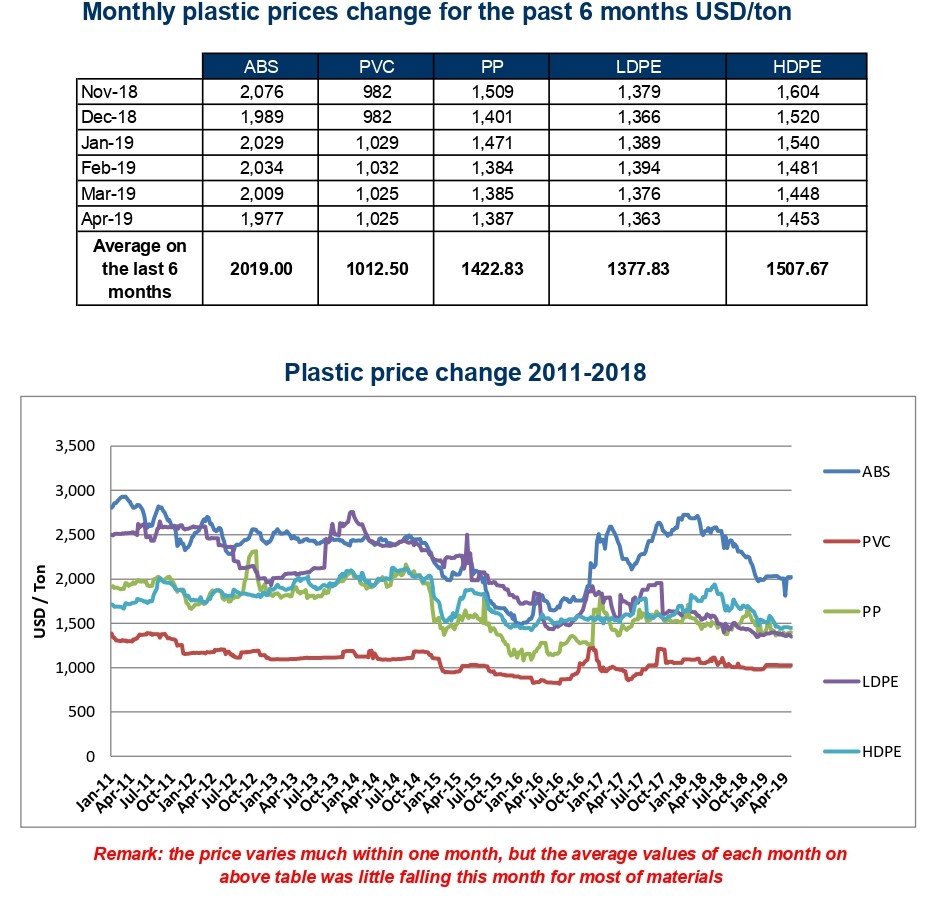
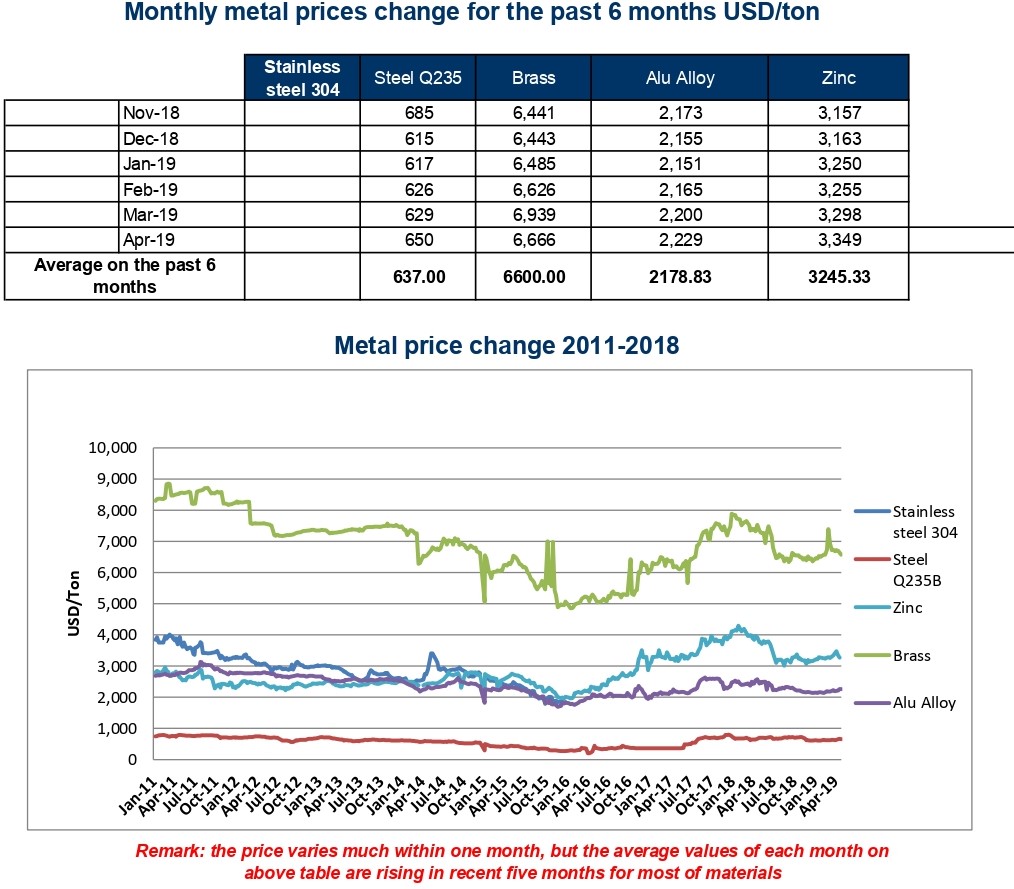
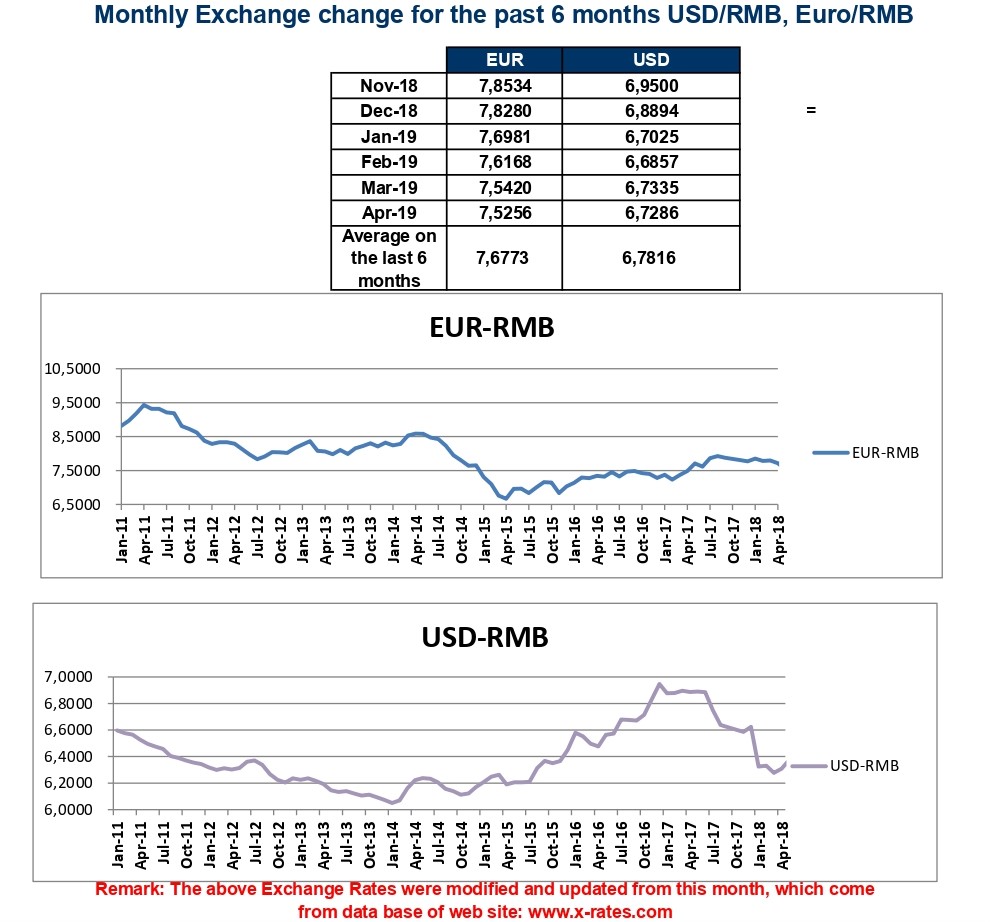
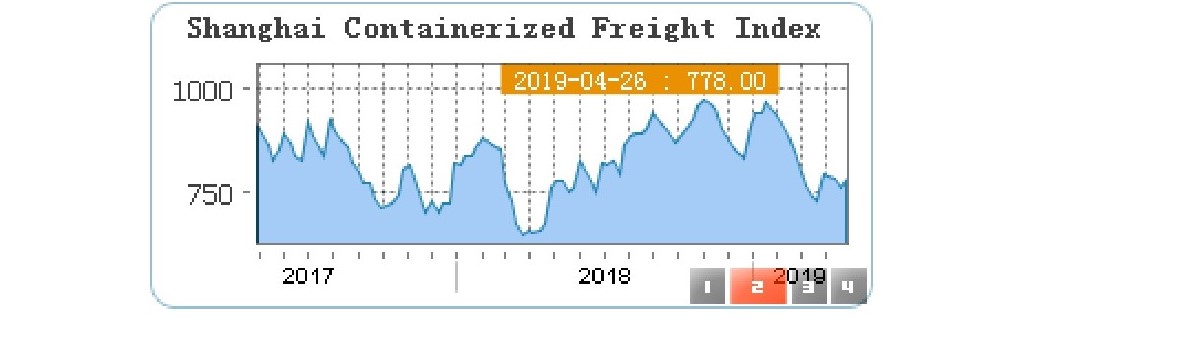
RAW MATERIALS INDEX RATE – MAY 2019

Here-under, the index rate of raw materials in China throughout the last 6 months.

Available in PDF : Download Newsletter VVR 2019 MAY

Read More
THE ROBOTICS EMPIRE

Subtitle


The seventh China Information Technology Expo took place between the 9 and the 11th of April 2019 in Shenzhen. In this event which gathered the World leaders of technologies, the visitors could discover and try the news and innovation like the Youxiaomei robot of the that served cups of tea. Although the exhibitors were from different nationalities, this event was a veritable vitrine for the Chinese progress in this sector.



According to the « made in China 2025 » which objective is to make China become a leader in the high-tech industry, investments are colossal in the Research and Development field. China would like to establish in the Global market of the innovation and strategic sectors. China has the ambition to export their technologies designed and developed nationally in order to put an end to their role of “world factory” that was occupied so far in the international trade. Thus, the high-tech is on the way to become the motor of the Chinese economy. The country counts the strongest growth of the world in the Robotics sector and would largely dominate it in the coming years. Even if the International Robotic Federation (IRF) pointed a delay for China in 2013 based on the number of robots per worker (25 units for 10 000 workers), the progresses were considerable as in 2016 it already counted, 68 robots for 10 000 workers. In 2018, 340 000 were employed in the Chinese factories. The number of companies which activity is linked to the robot construction is rising: in 2017, the country already counted more than 6500. But the Robotics field take off does not only concern Chinese companies, numerous foreign groups interested in the Robotic industry growth and the opportunities that offer the Chinese market set up their manufacturing workshops in China.

In the services sector, the Robotics field records in China the most important growth thanks to the Artificial Intelligence progresses and would represent a market of more than USD 2.9 billion by 2020. The strong enthusiasm of the companies for those technologies fulfils their will of performance and rentability also contributes to the sector dynamism.

Even though the robots are expensive to buy, they quickly permit to make significative cost reduction and improve efficiency. There are a lot of examples of uses in the services sector. The RobotHe restaurants of the Alibaba group only employ robots for the service permitting to increase the speed and save a considerable amount of money from employees. The robots are also used in the post services. Since 2016 they do the parcel sorting for one of the dominating mails operators of the country. In the distribution field, the e-commerce company JD.com significatively uses the robotization. It has warehouses all robotized. To deliver the orders, the company also uses robots, drones or autonomous vehicles. Thanks to those innovations, the group has improved its sales performances and delivering times. The robotization extends to the Health field. In some hospitals in Bejing or Shanghai, robots work at the reception desk: they have the capacity of answering thousands of questions and guide the patient to the required service. Operational since 2018, the robot developed by the Chinese group iFlytek is able to identify the diseases and realize the diagnosis. The education field gives way to the Robotics. In 2018, almost 600 nursery schools in China were using the teaching assistant Keeko developed to interact with pupils.

Finally, in the industry field, China is also leader in the Robotics market.  In 2016, the country represented 30% of it. The IRF plans that in 2020, China will use 950 300 robots in their factories and will produce 150000. The country is already a leader in the purchase and the use of robots and is about to lead the design and production.

From the daily life to the industry, the use of robots is massive. There would be approximately 3 million robots in the world in 2020 only in the industrial sector. The Chinese contribution to the development of robotics is huge. This increasing importance shows the change of the country position in the international market: once “workshop of the world”, it is today one of the leaders. The Chinese progress in the field of high technologies is living up to the desire of industrial development and the will of expend its influence in the key areas of the global economy.

Read More
LISTE 2019 DES SALONS A VENIR EN CHINE

Ci-dessous, une liste des salons qui auront lieu en Chine début 2019. Ne manquez pas ces rendez-vous dans votre secteur d’activité !

Juin

3-5 juin –BUILDEX CHINA 2019– Shanghai

3-6 juin –AQUATECH CHINA 2019– Shanghai

3-6 juin –SNEC 13th (2019) International Photovoltaic Power – Shanghai

4-6 juin –TOPWINE CHINA 2019– Beijing

9-11 juin –EC EXPO 2019– Beijing

9-12 juin –GUANGZHOU ELECTRICAL BUILDING TECHNOLOGY 2019– Guangzhou

11-13 juin –AIE (AIRCRAFT INTERIORS EXHIBITION) CHINA 2019– Shanghai

11-13 juin –The 7th Shanghai International Aviation Services Trade Fair 2019– Shanghai

11-13 juin –FMA CHINA 2019– Shanghai

11-13 juin –INTERNATIONAL CES – ASIA 2019– Shanghai

11-13juin –WIRE & CABLE GUANGZHOU 2019– Guangzhou

11-14 juin –ASIAN ATTRACTIONS EXPO 2019– Shanghai

11-15 juin –DIE & MOULD CHINA 2019– Shanghai

12-13 juin –OPTINET CHINA CONFERENCE 2019– Beijing

12-14 juin –15th Asia International Industrial Automation Exhibition,2019– Beijing

12-14 juin –CIEPEC 2019– Beijing

13-15 juin –CHINA (GUANGZHOU) INTERNATIONAL DIE-CASTING, FOUNDRY & INDUSTRIAL FURNACE EXHIBITION 2019– Guangzhou

13-16 juin –ITE & MICE 2019– Hong Kong

15-17 juin –THE KIDS EXPO 2019– Guangzhou

18-20 juin –CPhI & P-MEC China 2019– Shanghai

18-21 juin –CERAMICS CHINA 2019– Guangzhou

19-21 juin –China International Starch and Starch Derivatives Exhibition– Shanghai

19-21 juin –THE 25TH INTERNATIONAL PROCESSING & PACKAGING EXHIBITION– Shanghai

20-23 juin –CHINA INTERNATIONAL BOAT SHOW 2019– Shanghai

20-23 juin –EXPO LEISURE 2019– Shanghai

20-23 juin –HONG KONG JEWELLERY & GEM FAIR 2019– Hong Kong

25-28 juin –BEIJING ESSEN WELDING & CUTTING 2019– Shanghai

26-28 juin –The 19th China (Guangzhou) International Food Exhibitions and Import Food Exhibitions– Guangzhou

26-28 juin –INDUSTRIAL AUTOMATION SHENZHEN 2019– Shenzhen

26-28 juin –INTERNATIONAL HIGH-END DRINKING WATER EXPO – IHWE 2019– Guangzhou

26-28 juin –MWC (MOBILE WORLD CONGRESS) SHANGHAI 2019– Shanghai

26-29 juin – CIAAF – CHINA INTERNATIONAL AUTO AFTERMARKET FAIR 2019– Zhenzhou

27-30 juin –ASIA OUTDOOR TRADE SHOW 2019– Nanjing

Juillet

1-3 juillet –CIAACE 2019– Guangzhou

4-6 juillet –INTERTEXTILE PAVILION SHENZHEN 2019– Shenzhen

5-7 juillet –HONG KONG BAKERY CARNIVAL 2019– Hong Kong

5-7 juillet –ISPO SHANGHAI 2019– Shanghai

5-8 juillet –TAICHUNG WINE & SPIRITS FESTIVAL 2019– Taiwan

5-8 juillet –TCFB 2019– Taiwan

8-11 juillet –HONG KONG FASHION WEEK 2019– Hong Kong

10-12 juillet –ALUMINIUM CHINA 2019– Shanghai

10-13 juillet –PHOTO & IMAGING SHANGHAI 2019– Shanghai

11-13 juillet –CEF – CHINA ELECTRONIC FAIR – CHENGDU 2019– Chengdu

17-19 juillet –CHINA DIECASTING 2019– Shanghai

17-19 juillet –ESBUILD 2019– Shanghai

17-23 juillet –HONG KONG BOOK FAIR 2019– Hong Kong

18-21 juillet –QINGDAO PLASTICS & RUBBER EXPO 2019– Qingdao

18-22 juillet –JINNUO MACHINE TOOL EXHIBITION – QINGDAO 2019– Qingdao

18-22 juillet –QINGDAO INDUSTRIAL AUTOMATION & INSTRUMENTS EXPO 2019– Qingdao

24-26 juillet –CBME CHINA 2019– Shanghai

24-26 juillet –COOL KIDS FASHION 2019– Shanghai

25-27 juillet –LUXEHOME SHANGHAI 2019– Shanghai

30 juillet-1 août –CHINA SMART CARD AND RFID TECHNOLOGIES 2019– Shenzhen

Août

15-16 août –INTERNATIONAL CONFERENCE & EXHIBITION OF THE MODERNIZATION OF CHINESE MEDICINE & HEALTH PRODUCTS 2019– Hong Kong

15-17 août –HONG KONG INTERNATIONAL TEA FAIR 2019– Hong Kong

16-18 août –GUANGZHOU INTERNATIONAL DRINKING WATER & PURIFICATION FAIR – DWP 2019– Guangzhou

16-18 août –GUANGZHOU INTERNATIONAL SOLAR PHOTOVOLTAIC EXHIBITION 2019– Guangzhou

19-21 août –The 17th China International TIRE EXPO 2019– Shanghai

21-23 août –CNIBF SHANGHAI 2019– Shanghai

21-25 août –PET FAIR ASIA 2019– Shanghai

22-24 août –CHINA GLASSTEC EXPO – CGE 2019– Guangzhou

23-25 août –CHINA LEATHER 2019– Wenzhou

23-25 août –FISHEX GUANGZHOU 2019– Guangzhou

28-29 août –IBTM CHINA 2019– Beijing

28-29 août –VALVE WORLD EXPO&CONFERENCE ASIA 2019– Shanghai

28-30 août –AIFE (ASIA INTERNATIONAL IMPORT FOOD EXPOSITION) – SHANGHAI 2019– Shanghai

28-30 août –CFIE 2019– Shanghai

28-30 août –CHINA INTERNATIONAL GREEN FOOD & ORGANIC FOOD EXHIBITION – SHANGHAI 2019– Shanghai

28-30 août –NATURAL AND ORGANIC PRODUCTS ASIA 2019– Hong Kong

28-30 août –NEPCON SOUTH CHINA (SHENZHEN) 2019– Shenzhen

28-30 août –SBW EXPO – SHANGHAI 2019– Shanghai

28-30 août –10th Shanghai International Catering and Ingredients Exhibition– Shanghai

28-30 août –WORLD SEAFOOD SHANGHAI + SIFSE 2019– Shanghai

Septembre

30 août-1 septembre –HCI EXPO 2019– Guangzhou

30 août-1 septembre –第十九届国际果蔬•食品博览会– Guangzhou

3-5 septembre –ALL CHINA LEATHER EXHIBITION – ACLE ‘2019– Shanghai

3-5 septembre –SIBT – SHANGHAI INTERNATIONAL BUILDING TECHNOLOGY – NEW 2019– Shanghai

3-5 septembre –SPINEXPO SHANGHAI 2019– Shanghai

3-5 septembre –SEAFOOD EXPO ASIA 2019– Hong Kong

3-7 septembre –HONG KONG WATCH & CLOCK ‘2019– Hong Kong

12-15 septembre –CHINA HELICOPTER EXPOSITION 2019– Tianjin

4-6 septembre –ASIA FRUIT LOGISTICA 2019– Hong Kong

4-6 septembre –CAFE SHOW CHINA 2019– Beijing

4-7 septembre –CENTRESTAGE 2019– Hong Kong

4-7 septembre –CIOE 2019– Shenzhen

9-12 septembre –FMC CHINA 2019– Shanghai

9-12 septembre –FMC PREMIUM 2019– Shanghai

9-12 septembre –FURNITURE CHINA 2019– Shanghai

11-13 septembre –INTERIOR LIFESTYLE CHINA 2019– Shanghai

17-21 septembre –CIIF – SHANGHAI INTERNATIONAL INDUSTRY FAIR 2019– Shanghai

17-21 septembre –FACTORY AUTOMATION ASIA 2019– Shanghai

17-21 septembre –IAS – INDUSTRIAL AUTOMATION SHOW 2019– Shanghai

17-21 septembre –METALWORKING AND CNC MACHINE TOOL SHOW 2019– Shanghai

18-20 septembre –CHINA ADHESIVE 2019– Shanghai

18-20 septembre –CHINA PAPER CHEM+TECH 2019– Shanghai

18-20 septembre –ICIF CHINA 2019– Shanghai

18-20 septembre –LED CHINA 2019– Shanghai

18-20 septembre –RUBBERTEC CHINA 2019– Shanghai

18-20 septembre –SIGN CHINA 2019– Shanghai

18-20 septembre –UWT CHINA 2019– Shanghai

18-20 septembre –WATERCHEM + TECH 2019–  Shanghai

18-20 septembre –AIRPORT & AIR TRAFFIC EXPO CHINA 2019– Beijing

18-20 septembre –AVIATION EXPO CHINA 2019– Beijing

18-20 septembre –WATEREX BEIJING 2019– Beijing

18-20 septembre –SEMICON TAIWAN ‘2019– Taiwan

19-21 septembre –CHINA HORSE FAIR 2019-Beijing

19-21 septembre –VIV CHINA ‘2019– Qingdao

23-25 septembre –CHINA INTERNATIONAL BLOCK AND BRICK TECHNOLOGY & EQUIPMENT EXHIBITION – BBE 2019– Guangzhou

24-26 septembre –AUTOMOTIVE TESTING EXPO CHINA 2019– Shanghai

25-27 septembre –LASER TAIWAN 2019– Taiwan

26-28 septembre –TAIWAN AGRICULTURE WEEK 2019– Taiwan

26-28 septembre –TAIWAN FISHERY AND SEAFOOD SHOW 2019– Taiwan

27-30 septembre –OUTDOOR SHOW 2019– Taiwan

Octobre

10-12 octobre –CHINA INTERNATIONAL INTERNET & E-COMMERCE EXPO (CIE) 2019– Shenzhen

10-12 octobre –CIHS – CHINA INTERNATIONAL HARDWARE SHOW 2019Shanghai

10-13octobre –MUSIC CHINA 2019– Shanghai

16-18 octobre –AGROCHEMEX 2019– Shanghai

16-18 octobre –CHINA KIDS EXPO 2019– Shanghai

16-18 octobre –IPB 2019-Shanghai

16-18 octobre –TAITRONICS – TAIPEI INTERNATIONAL ELECTRONICS SHOW ‘2019– Taiwan

17-19 octobre –THS – TAIPEI HARDWARE SHOW 2019– Taiwan

20-23 octobre –HONG KONG MEGA SHOW PART 1 2019-Hong Kong

23-25 octobre –TPCA SHOW 2019-Taiwan

26-28 octobre –CIAME 2019-Qingdao

27-29 octobre –HONG KONG MEGA SHOW PART 2 2019– Hong Kong

30 octobre-1 novembre –ILTM CHINA 2019-Shanghai

Novembre 

1-4  novembre –CCVS – CHINA COMMERCIAL VEHICLES SHOW 2019– Wuhan

15-18 novembre –KAOHSIUNG WINE & SPIRITS FESTIVAL 2019– Taiwan

15-18 novembre –TAIPEI INTERNATIONAL TEA & COFFEE EXPO 2019– Taiwan

15-18 novembre –TAIWAN INTERNATIONAL BEST FOOD PRODUCTS & EQUIPMENT FAIR 2019– Taiwan

15-18 novembre –TAIWAN INTERNATIONAL COFFEE SHOW 2019– Taiwan

15-18 novembre –TAIWAN INTERNATIONAL FOOD INDUSTRY SHOW 2019– Taiwan

15-18 novembre –WINTER CHAIN STORE SHOW 2019– Taiwan

5-7 novembre –ELECTRICAL SHANGHAI 2019– Shanghai

5-9 novembre –EP CHINA 2019– Shanghai

12-14 novembre –METRO CHINA EXPO 2019– Shanghai

13-15 novembre –CIAAR 2019– Shanghai

25-27 novembre –BOILER SHANGHAI 2019– Shanghai

25-27 novembre –HEATEC 2019– Shanghai

25-28 novembre –SWOP 2019– Shanghai

7-9 novembre –VINITALY INTERNATIONAL HONG KONG 2019– Hong Kong

13-15 novembre –COSMOPROF ASIA 2019–          Hong Kong

20-22 novembre –ASIA BLECH 2019–       Chengdu

28-30 novembre –CITE – CHENGDU INTERNATIONAL TOURISM EXPO 2019– Chengdu

Décembre

3-6 décembre –AUTOMECHANIKA SHANGHAI 2019– Shanghai

3-6 décembre –MARINTEC CHINA 2019– Shanghai

11-13 décembre –EDME EXPO 2019– Shanghai

12-13 décembre –TIM EXPO SHANGHAI 2019– Shanghai

9-12 décembre –CINEASIA 2019– Hong Kong

The Chinese Wine Market in 2026: Trends and Consumption

China’s railway network: rapid development to support domestic mobility

Perfume in China 2025: a sector undergoing cultural and economic transformation

Read More
The VVR International activity in short

Overview of the year 2018 and perspectives for the year 2019

According to Camille Verchery, CEO of VVR International, “2018 was a very interesting year that saw a lot of projects achieved. On the industrial front, the essential of the VVR International activity focused on the negotiation of strategic partnerships and on the support of the negotiations for the creation, the organization and the wage portage of team which will follow the projects and ensure their development. Concerning the B to C, the key mission of VVR International was helping our clients to understand the complexity of the Chinese market from connecting the distribution channels to the building of the team”.

First, about the industrial B to B, the comeback of the Franco-Chinese partnership combining French equipment and needing of a local industrialization of all or part of the production was observed in 2018. This type of partnership shows difficulties for the small and medium-sized businesses. “The set up and the fast rentability are difficult challenges for the companies. Then it is about organizing the distribution to ensure a successful commercial development”. To enter the Chinese market, the realization of a partnership with distributors mastering the product type and sales network is essential. In many sectors such as the pharmaceutical one, the aeronautics, railway or nuclear where most of the actors are Chinese, the partnership is compulsory. Nevertheless, these actors have a limited capacity of production. The association of the industrial competence of the French companies with the knowledge and the skills in the Chinese market for these actors is a relevant strategy of development that benefits to both parts. Frequently used, those partnerships, often capitalistic, enable a local industrialization of the French companies and contribute to the industrial competence-building of the Chinese actors. “The mission of VVR is here to ensure the building of the business model of partnership, the progress of the negotiation.” It is a matter, on one hand, of preventing the risks of technological pillage that the French compagnies would face. On the other part we have to guarantee to the Chinese partner a sustainable benefit. “After the structuration of the partnership, VVR International plays a central role in the recruitment of the team adapted to the ambitions of the project. It is about recruiting a technical but also Franco-Chinese sales competence that will have to quickly be operational to support the different phases of the project”.

About the B to C, the distribution of agri-food, cosmetics, food supplements, household, interior decoration products in China is one of the main activities of VVR International in 2018. The Chinese distribution network is more complex than in Europe. In fact, its organization isn’t limited by the simple division between the Offline and the Online but is composed of other ramifications. The Online sale is for instance divided into market places with other actors like WeChat. This new landscape highlights alternative models of distribution. “VVR International helps the companies to understand the distribution channels, define a strategy and set up a brand which does not go through internet automatically”. If internet can be seen as the channel to privilege for selling a product quickly and at lower cost, it is not always the most adapted channel in this complex network. Its use can present advantages, but the risk of an ephemeral success leading to a durable loss of credibility can be considerable. “The Online channel should be considered as a complex tool to deal with but not as a solution. Without a structured and marketed Offline, the Online can’t be develop in a sustainable way. Once the development strategy is defined, the different distribution channels determined and organized, VVR International helps companies to choose the suitable actors.” Considering the Chinese distribution network spreading, a global knowledge of its work is impossible, and specialized actors for each chosen distribution channel are needed. The team responsible for supervision is then chosen.

“Moreover, thanks to the development of the Talent Acquisition Services department, we help our clients in the recruitment and the skill improvement of their teams. That is why VVR International has invested in a Labor dispatch license and a portage license. Those tools permit to legally recruit the new employee without the burden of hiring him/her in our client’s Chinese legal entity.”

The VVR International activity in the past year traduces the underlying trend of the Chinese market and highlight its new issues. According to the observed evolutions, the VVR International activity in 2018 was focused on the understanding of the Chinese market mechanisms, the strategic diagnosis and support of the implantation of the small and medium-sized French businesses in China. The partnership made with the Région Nouvelle for the set up of companies in China is part of this. VVR International, and our numerous partners & professionals work together to propose solution and support. By combining the will of French companies development with the reality of the Chinese market, they ensure the achievement of their projects. The activity for the year 2019 will be similar with last year’s. It will be based mostly on the negotiation and the support of the implantation project to produce and sell locally and on the development of distribution projects in China of food industry, luxury, cosmetics, medical products fully made in France. The potential comeback of more capitalistic acquisition partnership, less frequent in 2018, would be observed.

Je suis un bloc de texte, cliquez sur le bouton \”éditer\” pour me modifier. Lorem ipsum dolor sit amet, consectetur adipiscing elit. Ut elit tellus, luctus nec ullamcorper mattis, pulvinar dapibus leo.

Read More
Digitalizing your company in China

Not merely a tech-business

China seems well ahead on the digitization road: use of new technologies in services (e.g. the mobile payments) , use of artificial intelligence and big data analysis in decision-making (e.g. the Court of Hangzhou), consumers’ behaviors (e.g. the shared bikes), public investments (cf VVR’s article on smart energies)… As a consequence many opportunities arise for European tech businesses in China, but not only. In this article, we will look at the transformation in management, business model, and HR policies induced by the digital transition.

According to a McKinsey report, Internet-linked transformation could contribute to an extent ranging from 7% (in the lowest estimations) to 22% (in the highest estimation) to China’s GDP growth through 2025. The main identified sectors where this growth would mostly happen are:

  • electronic consumer goods (with the Internet of Things, the digital media content…),
  • the automotive (with the supply chain logistics, the development of services thanks to connectivity…),
  • chemicals (with better demand forecast, and production planning, improved R&D…),
  • the financial services (with a decrease in non-performing loans, more efficient banking operations),
  • the real estate (with online sourcing and online marketing),
  • healthcare (with better patient-tracking for chronicle disease, e-commerce for OTC).

To be precise, China is more advanced than Europe when it comes to the use of new technologies, in products or services. Yet, China’s digitization of its industry is less advanced and happening now. Thus European companies already present in China, especially SMEs should take this step towards digitization now, in order to lead the coming disruption (gain in productivity, new business model, new relation to the consumer) instead of feeling threatened by it.

Beyond the development of technology-savvy products for customers (which might not be relevant in all industries), digitization can impact your entire organization in the way things are done, from the product development to the interactions with the client, passing by supply chain management and marketing. In China’s coastal area, most of the companies already initiated their digitization: in an EgonZehnder’s survey over a panel of Chinese companies (2016), 70% of the participants declared that their top management was in support of digitization, and half of them mentioned their CEO as the leader of these changes. Digitization is indeed not only about finding the right technologies to improve your activities, it is first and foremost about having the right team: a team that is able to understand and use these technologies, and that thinks according to this new digital paradigm (for instance, it is about definitely giving up paper-printed presentations). Indeed, a complete shift to the digital age can impact as far as your business model. It requires thus strong adaptation abilities from your company, which need to be developed through the right HR policies.

Given the potential scope of this transition, the top management must design, or at least be associated to, this digitization strategy (e.g. Mengniu’s CEO in VVR’s article on new consumption habits). It might mean thinking about a redefinition of your leadership to better foster collaboration, curiosity and learning in your teams. Besides, there a decision to be taken on whether to allocate digitization to one specific department, in which case you should decide precisely which, to centralize it or to externalize it.

Once the strategy is set, it needs to be taken up by management, as they are essential actors for the teams upgrading, and for the transition towards a more collaborative and innovative-driven way of working. In China, we identify training as crucial: it is indeed easier to train people that are already well integrated in your company rather than hiring and integrating new talents (cf VVR advice on recruitment in China). If, after having upgraded the teams, there is still a HR need, you should pay attention to the peculiarities in China regarding this type of recruitment, making it a rather competitive process.

Indeed, digitization is set to happen faster in China than in any other economy. Thus, several observers pointed out a shortage to come in IT and TIC talents. As such, challenges usually encountered when recruiting somebody in China are exacerbated: finding the right person, negotiating a salary, retaining the new employee… As an illustration, salaries for high-skilled tech talents, especially in the coastal provinces and for people speaking good English, are high, even to European standards.

To smooth the recruitment process and guarantee its success, it is of the utmost importance to carefully follow a rigorous recruiting method. That is to say, first, establish with accuracy the real need(s) of your company that the future employee should satisfy. Then, you will be able to write down precisely the job description and the profile you are looking for (a local Chinese, an overseas returnee, a foreigner…) As digitization is a field in evolution, it is no use to look for specific skills, albeit some basic background is of course required, rather you should be looking for potential. More than ever, recruitment is not about finding a good employee, rather about finding the right person to fit in your company and to hold your company’s vision. Here, analyzing motivations, mentality, and solving approach to new problems might be of a good use.

For more details on recruitment, you may refer to our recruitment department.

To sum up, digitization is happening in China and it opens new doors for products and services, but it also redefines the organization and the vision of each company. We strongly advise to take these steps now, not in an erratic and reactionary manner, but rather in an organized and well-thought strategy, engaging all departments of your company. Two main impacts are to be forecasted in HR: the upgrading of the teams, and the recruitment of new talents.

The cosmetics market in China in 2025: consumers and trends

The cosmetics market in China in 2025: consumers and trends The cosmetics and skincare market in China reached a value of €69.7 billion in 2024. In 2025, the market is proving resilient despite an economic climate marked by low consumer confidence due to concerns about employment and the property market. Are e-commerce and social e-commerce...

Employees Benefits in China: Salary, Compensation, Insurance | A Full Guide 2026

Employees Benefits in China: Salary, Compensation, Insurance | A Full Guide 2026 1. Introduction For foreign companies, understanding salaries and employee benefits in China is essential. The Chinese labor market is large, diverse, and regulated by strict labor laws. Knowing the details of wages, taxes, social insurance, and workplace expectations helps employers avoid risks and attract talent. In 2025,...

The aeronautics sector in China in 2024: growth and business opportunities

The aeronautics sector in China in 2024: growth and business opportunities Introduction China's aerospace sector in 2024 is showing strong growth, underpinned by massive investment in infrastructure and technological advances. As China surpasses pre-pandemic levels in several areas, the industry also offers promising prospects for foreign companies. This article explores the highlights of this recovery...

Read More
CHINA’S URBAN MAP

First, second, third and fourth-tier cities

A May 2018 report by Morgan Stanley asserts that the future of China’s growth (by 2030) will lie within lower-tier cities (namely the third and fourth-tier). It is more and more common to see economic analyses regarding China make use of this urban classification. While being a useful analytical tool to understand China’s society, the definition of tiers is actually not so obvious and requires that we stop for a while and think about it.  This article thus gives you the keys to better understand this aspect of China, and the resultant opportunities for your businesses.

A ranking of cities

To begin with, there is no official definition of what is a first, a second, a third and a fourth-tier city in China. To give you a general idea, Beijing, Shanghai, Shenzhen and Canton are unanimously classified as first-tier cities, while second-tier cities are generally provinces’ capitals. Yet, some rankings would label Suzhou and Wuxi as second-tier cities because of their economic growth and despite the fact that they are not capitals. Similarly, Hefei, the capital of Anhui province, is sometimes categorized as a third-tier city because of its weak domestic growth. Three-tier cities generally include non-capital cities with a dynamic economy (high economic growth rate). Lastly, fourth-tier cities are important cities in terms of their population size, but which economy is not so flourishing.

Each year, Yicai Media Group’s Rising Lab issues a ranking of the Chinese cities in terms of tier and make part of their methodology open to the public, allowing us to take a look at their criteria (Yicai Media Group is one of the first economic media in China). They use five criteria: the density of commercial resources, the degree of transportation’s connectivity (is the city a hub?), urban residents’ habits (to what extent do they use e-commerce?), the diversity of activities available in the city and the degree of visibility into the city’s future (the real estate market, the fluidity of the road traffic, the pollution, the talents’ attractiveness, the entrepreneurial index…) Be aware, classifying a city in a first, second, third of fourth-tier is likely to have a tangible impact on the city’s real estate price…

Thus, each organization speaking about tier cities is likely to have their own and different criteria. Most criteria revolve around the local GDP, the population size, and the administrative status of the city (whether it is a province’s capital or not). While the type of criteria does not vary so much from a report to another, the way it is measured does, inducing porous frontiers between different tiers: some cities can be classified in different tiers. Furthermore, the denomination “lower-tier cities” technically encompasses second, third and fourth-tier cities. This can be misleading since second-tier cities are generally wealthier than the average Chinese city.

Another limit in this definition is that very different realities are described with the same word. Indeed, second-tier cities include industrial cities (Tianjin, Wuhan, Changsha…) coastal cities whose consumption market is more developed (Nanjing, Hangzhou, Wuxi, Suzhou…) as well as inland cities, often industrial but that are also becoming hubs with the One-Belt-One-Road initiative (Chengdu, Chongqing…)

A map of consumers

Despite these limits, knowing the tier of a city still is useful as a reading grid to understand to some extent the geographical diversity of China. Morgan Stanley’s report is an illustration of it, identifying a 6,9 trillion USD potential for growth within third and fourth-tier cities by 2030. They identify more specifically five city-clusters with high growth potential: the Jing-Jin-Ji region, the Yangtze River delta, the Canton bay, the Mid-Yangtze region, and the Chengdu-Chongqing area.

They support this assertion by several arguments, the first one being political support for growth in these very cities. Indeed, the central government and regional governments have been recently issuing many development plans, respectively inter-regional and intra-regional, allocating wide investments in connectivity infrastructures. As a result, there has been a multiplication of high-speed trains connections which divides the travel time by two and helps dis-enclave cities.

Besides, the cities offer financial allocations to help young talents buy real estate properties, a must do after graduation in China (this refers mainly to second-tier cities which have the financial resources for it). Besides, contrary to first-tier cities (except from Shenzhen) who implement stricter hukou* policies in order to hamper their population’s growth, second-tier cities make the promotion of their hukou policies, easy to obtain for young talents. As a result, Morgan Stanley’s report forecasts a 2.5% annual urban growth in lower-tier cities between 2017 and 2030. Lower-tier cities also have a higher fertility rate which accounts for this higher growth, as life costs (and the costs of having a child) are lower than in Beijing or Shanghai.

For European companies, as well as for Chinese ones, this demographic evolution means that lower-tier cities, especially second-tier cities, will gather an increasingly qualified manpower as well as better infrastructures in the near future. Implementation costs are to decrease, while labor costs are increasing on the coast. Chinese and foreign companies already started to move in these inland cities (cf VVR’s September article).

Another consequence of interest for European businesses lies in distribution. Indeed, more and more retailers are attracted to these new and untapped markets opening in these smaller cities, as they become more accessible and people’s incomes are increasing. Firstly, residents from these cities devote a larger part of their budget to discretionary spending as their fixed costs are lower (rents). Besides, although there is in these cities a smaller part of the population earning enough to afford European products (often more expensive and assimilated to rather high-end products), the quantities bought per consumer are comparatively larger than in first-tier cities. In other words, less people buy European goods, but the ones who do buy more of them.

Turning more specifically to these consumers’ habits, a survey by AlphaWise on more than 3000 households notes that the income gap between first-tier and lower-tier cities is reducing, but also that consumption habits changed significantly. Third and fourth-tier cities’ consumers now pay more attention to the value of the goods they buy: they upgrade their consumption and are increasingly sensitive to brands (mostly local brands for now). They also care about the fastness, quality and entertainment’s aspect of the service. In terms of industries, the sectors of daily consumption goods shall mostly benefit from these changes: house appliance, food & beverage (especially dairy products), beauty products and make-up… Most of this growth is also expected to happen within the e-commerce because of accessibility reasons. The entertainment industry (cinema, tourism) and the education industry are also likely to see some positive trends in their consumers’ pool.

There are yet some limits to this overall positive picture of the economic potential within lower-tier cities.   Firstly, today, the costs and risks of implementation in third and four-tier cities are still rather high: quality retail spaces are still few, and the size of the consumers’ pool remains to be verified. Thus, it is recommended to use e-commerce to test these markets (although this retail channel also bears its own limitations, cf VVR’s July article).

Furthermore, third and fourth-tier cities’ consumers might have a similar spending power as in the first and second-tier cities, this does not mean that they have similar consumption habits: it is crucial to analyze accurately the local consumption habits and to not launch a product merely because “it worked well in Shanghai”. Each expansion strategy must be thought locally and a dose of education on international products (on geographical indications for instance) might very well be necessary.

Lastly, the consumption’s growth in the lower-tier cities is conditional upon regulatory changes, especially regarding the real estate market. Indeed, these cities’ attractiveness relies on their low real estate prices, enabling young households to buy property. Besides, these young households’ budget is also less taken up by rent and more is available for consumption. On that point, there is no study that is today forecasting such a change in the near future.

In short, China has diverse markets, and it is important to understand their local specificity. Tiers are one way to approach diversity and allows for the above analyses. It is then one way, but it is not the only one and it can not account for the entire diversity of China. For instance, it is also important for retailers and employers to understand the different generations in China…

* The hukou is a resident permit that each Chinese citizen gets, binding them to a province (Shanghai’s hukou, Beijing’s hukou, Jiangsu’s hukou). It is rather similar to a province-scale “nationality” and serves to obtain a right to some public services in the location of the hukou.

By Manon Bellon

Traditional and commercial holidays in China: public holidays, vacations, and business opportunities in 2026

Traditional and commercial holidays in China: public holidays, vacations, and business opportunities in 2026 This year, Chinese New Year is celebrated on February 17 and marks the beginning of a new year under the sign of the Fire Horse. In China, traditional festivals punctuate the year, accompanied by public holidays, family celebrations, and moments of...

Learning expedition in China: an immersion to understand the innovation and culture of a changing market

Why is immersion becoming an essential step before launching a business in China? Understanding the Chinese market from within China The Chinese market attracts companies from around the world due to its size, capacity for innovation, sustained growth, and vast opportunities in cutting-edge sectors. But China is also a complex market with its own dynamics,…

China’s railway network: rapid development to support domestic mobility

China's railway network: rapid development to support domestic mobility China's rail network: beyond compare China now has the largest rail network in the world, with over 162,000 kilometers of track, including 48,000 km dedicated to high-speed rail. The network is designed to efficiently serve the entire country, connecting major cities such as Beijing, Shanghai, Guangzhou,...

Read More