Category: Recruitment and incubation

Salaries and benefits for employees in China: the complete 2025 guide

Salaries and benefits for employees in China: the complete 2025 guide

As the world’s second largest economy, China has a dynamic labour market with its own particularities in terms of wages, benefits and working conditions. This article provides a detailed overview of these crucial aspects for employees and employers operating in the country.

Wage setting in China

In China, wage determination is a process that combines national legislation, local regulations and individual negotiations.

How much is the Chinese minimum wage?

Unlike in many countries, the minimum wage in China is not set at national level. Instead, it is determined by local governments (cities, provinces and districts) according to the specific socio-economic conditions of each region.

This approach leads to significant variations from one region to another. There is a distinction between the minimum monthly wage for full-time workers and the minimum hourly wage for part-time workers. Here are some examples of minimum monthly wages in major cities:


City Minimum monthly wage (CNY)
Shanghai

2690

Beijing

2420

Shenzhen

2520

Guangzhou

2500

Chongqing

2330

Tianjin

2320

Nanjing

2490

Hangzhou

2490

Chengdu

2330

Wuhan

2210

The minimum wage is revised periodically by the local authorities, usually at least every two years, in accordance with the China Employment Promotion Plan. Employers are obliged to respect the minimum wage in force and to avoid any form of wage discrimination. Social security contributions are calculated on the basis of gross salary and also vary from province to province.

What factors influence wages in China?

Several key factors influence wage levels in China:

  • Region: as mentioned above, regional disparities are marked. Large cities such as Beijing and Shanghai offer higher salaries than less developed provinces.
  • Qualification and experience: the most highly qualified and experienced employees are paid more. Higher levels of education explain the rise in average salaries in China.
  • Spoken languages.
  • Sector of activity: certain sectors, such as finance, technology and medicine, are known for offering more attractive salaries. In these strategic sectors, companies are looking to recruit the best profiles.
  • Nationality: expatriates often receive higher salaries to offset the cost of living and attract international skills.
  • Type of company.

What social benefits does being an employee in China offer?

Employee benefits in China consist of a compulsory social security system supplemented by optional benefits.

China’s compulsory social security system, known as the “5+1” system


China’s social security system is based on five main insurance schemes and a housing fund, financed jointly by employers and employees. Contribution rates vary from region to region. Here are the components of the system:

  • Old-age insurance: contributes to employee pensions, with pooled contributions to finance current pensions.
  • Health insurance: covers a large proportion of medical costs, including hospitalisation and medicines, and often includes maternity insurance.
  • Unemployment insurance: provides temporary financial assistance in the event of involuntary job loss.
  • Industrial accident insurance: protects against work-related injury or illness, covering medical expenses, rehabilitation and disability benefits.
  • Maternity insurance: provides financial support for employees during pregnancy and childbirth.
  • Housing Fund (“+1”): helps employees save for the purchase of a home, with contributions from both the employer and the employee.

Optional benefits offered by certain companies in China

The gross salary is negotiated at the time of hiring and must be stipulated in the employment contract. A variable component based on performance or bonuses (monthly, quarterly or annual or linked to specific events, such as Chinese New Year) may be included. To increase their attractiveness, companies may also offer additional benefits, such as a 13th month’s salary or specific bonuses, to retain their employees. In China, it is common practice to offer additional benefits such as :

  • Allowances to cover expenses such as accommodation, food, transport and children’s schooling.
  • Additional insurance: companies may offer additional medical cover or private insurance, particularly for foreign employees.

Paid leave in China: holidays and public holidays

Employees also benefit from compulsory leave, including :

  • Annual leave (based on length of service).
  • Maternity/paternity leave.
  • National public holidays.

The length of annual leave is determined by the employee’s seniority, not within the company but in the world of work:

  • 1 to 10 years’ professional experience: 5 days’ paid holiday.
  • 10 to 20 years’ professional experience: 10 days’ paid holiday.
  • More than 20 years’ professional experience: 15 days’ paid holiday.

.Working hours and overtime in China

The legal working week in China is 8 hours a day and 40 hours a week, but an employee in China works an average of 44 hours a week. Overtime is permitted, but limited to 3 hours a day and 36 hours a month, with compulsory pay. During the week, overtime is paid at 150% of the basic hourly wage.

The rules of employment in China: deciphering them with the right partners

The Chinese labour market is characterised by a combination of government regulations, local practices and negotiations. Understanding the framework and practices surrounding employment is essential for companies wishing to recruit, retain and effectively manage their teams in China.

VVR International helps companies to structure and optimise their HR policy in China. Whether it’s a question of local recruitment, legal compliance, salary negotiation or freelance administration, our team of HR experts can guide you in making the right choices and building a sustainable HR strategy tailored to the local situation.

Read More
Building a Franco-Chinese team: Tips for successful integration

Building a Franco-Chinese team: Tips for successful integration

Integrating foreign employees into Chinese teams is essential to the effective deployment of business in China, whether they are based locally or working remotely. This is not only crucial to the success of the business, but also an enriching opportunity for the company’s managers. By understanding and respecting local cultural specificities, companies can not only facilitate the building of strong Franco-Chinese teams, but also develop strong cohesion within the team, which will prove to be a decisive factor in productivity.

In this article, we’ll explore practical tips and tried-and-tested strategies to help your foreign employees integrate more easily into everyday life in China. From understanding fundamental cultural values to adapting communication and management styles, every aspect will be covered. The aim is simple: to turn the challenges of integration into opportunities for growth and successful collaboration.

Understanding Chinese working culture

Integrating into a Chinese team requires a thorough understanding of local cultural values and practices. In China, the working culture is shaped by traditions and norms that may seem very different from those in Western countries. Understanding these cultural differences and respecting them on a daily basis is key to successful integration. In this section, we will look at three key aspects of Chinese work culture: hierarchy and respect for elders, the values of collectivism and harmony, and indirect communication styles.

The importance of hierarchy and respect for elders

The Chinese work culture is deeply rooted in traditional values that emphasise hierarchy and respect for elders. Unlike Western cultures, where equality and horizontal collaboration are often valued, the Chinese context favours a clear hierarchical structure. Decisions are generally taken by superiors, and subordinates are expected to follow these directives.

Key values: teamwork, harmony and respect

Teamwork is another cornerstone of Chinese work culture. Unlike Western individualism, success is often seen as a collective effort. The well-being of the team and the company takes precedence over individual interests. This translates into a strong emphasis on collaboration and harmony within the team. Maintaining good relations with colleagues and avoiding direct confrontation are highly valued behaviours.

Differences in communication styles: indirect vs. direct

Communication in China is often more indirect than in Western cultures. Within the company, employees tend to avoid direct confrontation and prefer to use more subtle means to express their opinions or disagreements. For example, the translation of the word “yes” can lead to misunderstandings if it is misinterpreted. In China, it is sometimes used to mean “I understand” rather than “I agree”. This nuance in communication can create misunderstandings if it is not properly understood.

Strategies for successful integration

Here are some tried and tested strategies and innovative approaches that take into account cultural specificities to simplify the integration of foreign employees into a Chinese team and strengthen cohesion within the company.

Intercultural training and cultural awareness

Cross-cultural training is essential to help foreign employees understand and adapt to Chinese cultural norms. This training should cover aspects such as work habits, social protocols and communication expectations.

Innovative approach: Immersive workshops and virtual exchanges

Organise immersive workshops that simulate typical Chinese work situations and social interactions. In addition, anticipate your employee’s arrival by encouraging upstream exchanges with their Chinese colleagues. To do this, you can offer time for discussion during which the future employee can ask questions and where everyone can share their experiences and work practices.

Mentoring and incubation by Chinese employees

Mentoring is an effective way of helping foreign employees adapt more quickly. By assigning a Chinese mentor to each new arrival, you create a supportive relationship that makes it easier to learn cultural and professional nuances.

Reverse mentoring programme

As mentioned earlier, reverse mentoring can also be beneficial. In this model, young Chinese employees mentor foreign managers, bringing a fresh perspective and reversing traditional roles. This encourages a mutual exchange of knowledge and skills, promoting greater cultural understanding on both sides.

Incubation: supporting your employee step by step

In addition to freelance administration, some companies specialising in HR offer an incubation service. At VVR International, we can carry your employee: in this case, we take charge of his or her legal and administrative management. To help them get up and running quickly, our teams welcome them and support them as they set up in China. With the possibility of working on our premises, they will have local contacts, training and a workspace that will enable them to quickly take charge of their new role within your company.

Organising social activities to strengthen ties

Social activities are crucial to strengthening relationships between employees and creating a sense of camaraderie and trust. Regular events allow employees to get to know each other outside the workplace.

Innovative approach : Intercultural team-building events

To take this a step further, team-building events dedicated to intercultural issues in the workplace can help to highlight cultural differences and raise your employees’ awareness of their implications for their day-to-day work, while at the same time strengthening links between teams. For example, cooking workshops in which employees prepare traditional Chinese and Western dishes together, or cultural excursions to explore the local culture can be interesting team-building activities to strengthen the bonds between French and Chinese employees.

Overcoming common challenges

Even with well-planned integration strategies, companies can encounter difficulties when integrating foreign employees into Chinese teams. To avoid these pitfalls, a good knowledge of the points to watch out for can help to achieve a successful and lasting integration.

Managing language differences and misunderstandings

Language barriers can often lead to misunderstandings and frustration. Although many professionals in China speak English, it is essential to recognise the nuances and challenges of multilingual communication.

Technological tools and language training

Technological tools such as real-time translation applications and multilingual communication platforms are invaluable in making day-to-day exchanges more fluid. To take things a step further, language courses tailored to the needs of your foreign employees can be a worthwhile investment in improving the skills of your staff. These courses will focus on terms specific to your sector and expressions commonly used in the workplace. Today, there is a wide range of language learning software with virtual reality functions available, which can be an interesting alternative to traditional language courses. This makes learning more flexible and less expensive.

Adapting management styles to bring them into line with Chinese expectations

Western management styles can sometimes be perceived as too direct or individualistic in China. Adapting these styles so that they are more in tune with local cultural expectations is crucial to effective management.

Innovative approach : Intercultural leadership workshops

An inclusive work environment is essential for employee satisfaction and productivity. This means respecting cultural differences and promoting an atmosphere of respect and collaboration.

Organise cross-cultural leadership workshops where foreign managers can learn to adapt their management style to suit Chinese expectations. These workshops can include role-playing, case studies and group discussions on best management practices in a cross-cultural context. Integrate e-learning platforms to offer continuous training modules and resources that can be accessed at any time.

Conclusion: successful integration is a worthwhile investment

Integrating foreign employees into Chinese teams is essential for success in China. By understanding the working culture, adopting innovative integration strategies and overcoming common challenges, companies can create a harmonious and productive working environment. Successful integration has a direct impact on a company’s overall performance.

VVR International and its HR department can help you create or strengthen your teams in China. Thanks to our teams and our coaching and portage services, we can take charge of your employee and support him or her in settling in and integrating, both culturally and legally and administratively. With VVR International, you benefit from local expertise and personalised support to ensure the successful recruitment and integration of your employees in China.

Read More
Recruiting in China and Europe: key differences and tips for adapting

Recruiting in China and Europe: key differences and tips for adapting

Recruitment is a key success factor for companies. It is no longer enough just to find talent, you also need to be able to attract and retain it. The aim of this article is to compare the recruitment processes in China and Europe in order to identify the major differences and suggest ways in which European companies wishing to succeed in the Chinese market can adapt. By understanding these nuances, companies will be able to refine their recruitment strategies and maximise their chances of success.

The recruitment process in Europe

Recruitment in Europe reflects a certain corporate culture and managerial practices influenced by economic, social and cultural factors. Traditionally, European companies focus on academic qualifications and professional experience. The most common recruitment methods include advertising on job boards, recruitment agencies and job fairs.

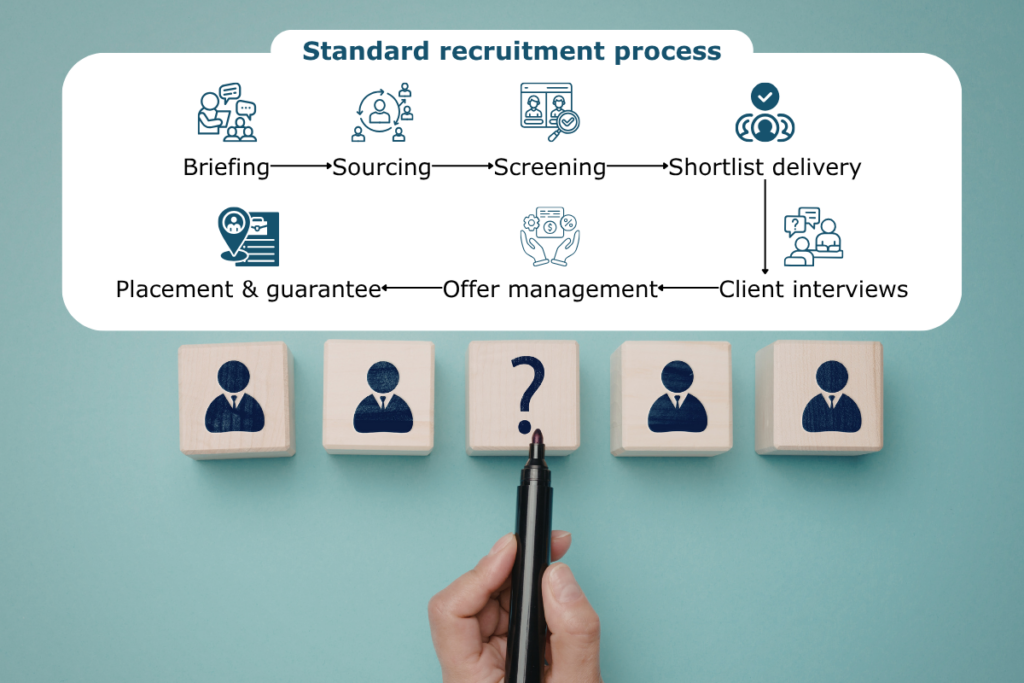
Candidates are generally selected through a number of rigorous stages:

  • CV sorting,
  • Telephone interviews,
  • Face-to-face interviews,
  • Sometimes technical or psychological tests.

Qualifications and experience play a key role in the selection process. In addition, interpersonal skills and the ability to work in a team are increasingly valued criteria.

Finally, compliance with local regulations, such as anti-discrimination laws and personal data protection standards, is essential to ensure a transparent and fair recruitment process. European companies are also investing in diversity and inclusion programmes to attract a wider range of talent.

The recruitment process in China

The recruitment process in China is strongly influenced by specific cultural and historical aspects. Unlike in Europe, where academic qualifications and experience are paramount, in China personal networks (or ‘guanxi’) and recommendations play a key role in recruitment. Guanxi’ refers to the importance of personal relationships and connections, which can often play a key role in securing a job.

Recruitment methods in China include popular online platforms such as Zhaopin and 51job, and even social networks such as WeChat. Companies often use job fairs and partnerships with universities to attract young talent. The market for skilled jobs is dynamic and highly competitive, requiring both companies and candidates to be highly responsive. It should be noted that chasing competitors is a widespread practice, even for less skilled positions.

Companies are competing to attract the best talent. To do this, they adapt their job offers to the expectations of candidates, highlighting the stability of the job, the friendly management and the company’s reputation in China and internationally. They do not hesitate to highlight the opportunities for development within the company and the possibility of training.  Finally, companies must also take account of regional and sectoral differences to adapt their recruitment strategies.

Recruitment: what do they have in common?

In China, as in Europe, the importance of employer branding and personal development opportunities is growing. Companies need to focus on creating an attractive working environment and offering compelling value propositions to attract the best talent.

For European companies wishing to succeed in China, it is essential to adapt to these cultural specificities. Building strong relationships, understanding the importance of ‘guanxi’, and adapting local recruitment methods are key strategies. Investing in local market knowledge and working with local experts can also greatly facilitate the process.

Conclusion: Summary and recommendations for success in China

To recruit successfully in China, it is essential to understand the cultural and structural differences with Europe. In Europe, the emphasis is on academic qualifications and professional experience. In China, personal relationships, known as “guanxi”, and recommendations are crucial. To optimise recruitment in China, it is important to establish and maintain solid personal networks. It is advisable to use local recruitment platforms and Chinese professional social networks. To maximise your chances of success, to build or strengthen your local team and thus ensure the success of your development, it is advisable to call on the services of a specialist local company such as VVR International.

VVR RH by VVR International

VVR International has a dedicated Human Resources department. Our team of experts will advise and support you at every stage of the recruitment process to ensure that you find the ideal profile. Once selected, VVR International, via its freelance administration service, can manage your employee administratively and legally. You don’t even need to have a legal entity in China!

Read More
HR Outsourcing in China: Trends, Challenges, and Strategic Solutions (2025 – 2026)

HR Outsourcing in China: Trends, Challenges, and Strategic Solutions (2025 – 2026)

1. Introduction

HR outsourcing China has become one of the most strategic tools for foreign companies entering or expanding in the Chinese market. Managing payroll, benefits, and compliance locally is complex, and building an in-house HR team requires heavy investment. Outsourcing allows companies to hire employees in China faster, remain compliant with local laws, and focus on growth instead of administration. 

China remains a global business hub in 2026, with a labor force of more than 770 million people and a fast-changing workforce. At the same time, HR policies in China, strict labor contract laws, and varying payroll systems across cities make human resources management difficult for newcomers. By partnering with HR outsourcing providers, companies reduce risk while benefiting from local expertise. 

In this article, we, VVR International, examine the current HR landscape in China, the role of outsourcing, top challenges, strategic HR solutions for foreign businesses, and future trends shaping HR practices in 2026.

2. HR Management in China: A Current Landscape

To understand where things stand, we begin by looking at today’s HR landscape in China, including market size, regulations, and talent dynamics. China is not isolated from global trends. According to Insignia Resource, the global HR outsourcing industry is projected to grow from USD 276.44 billion in 2025 to USD 291.59 billion in 2026. In parallel, Deloitte reports that 62% of Chinese companies plan to increase investment in HR technology in 2025–2026, focusing on automation and analytics tools.  

This shows that HR management in China is entering a new phase: balancing compliance with digital innovation. 

HR management in China is influenced by strict labor laws, fast-changing workforce expectations, and regional disparities. On one hand, China offers a wide range of skilled employees, from IT engineers to manufacturing specialists. On the other hand, employers must deal with high compliance requirements, complex payroll rules, and rising benefit expectations. 

For instance, HR policies in China are shaped by strict labor contract rules and mandatory benefits such as social insurance and the housing fund. Employers must sign written agreements with employees, contribute to insurance schemes, and respect probation and termination clauses. Mutual agreement is essential in resolving disputes.

Chinese firms and foreign investors alike now treat HR management as a strategic function. It is no longer only about hiring and payroll. Instead, HR policies in China emphasize employee retention, digital transformation, and compliance with social insurance rules. Strategic HR management ensures that companies can balance talent acquisition with long-term workforce development.

Foreign firms often struggle to adapt to local HR practices. Payroll systems differ by region, social insurance contributions vary by city, and employment contracts must comply with the labor contract law. For this reason, many foreign companies choose HR outsourcing services in China to avoid costly mistakes and reduce risks.

3. HR Outsourcing in China: Why It Matters 

Given rising complexity in compliance and talent demands, HR outsourcing China matters now more than ever for foreign businesses. It offers solutions to the two main challenges: managing compliance with Chinese labor laws and handling payroll across regions.

HR outsourcing in China offers various benefits for international businesses.

HR outsourcing in China offers various benefits for international businesses.

Benefits of HR outsourcing for foreign companies in China

HR outsourcing in China offers clear benefits for international businesses: 

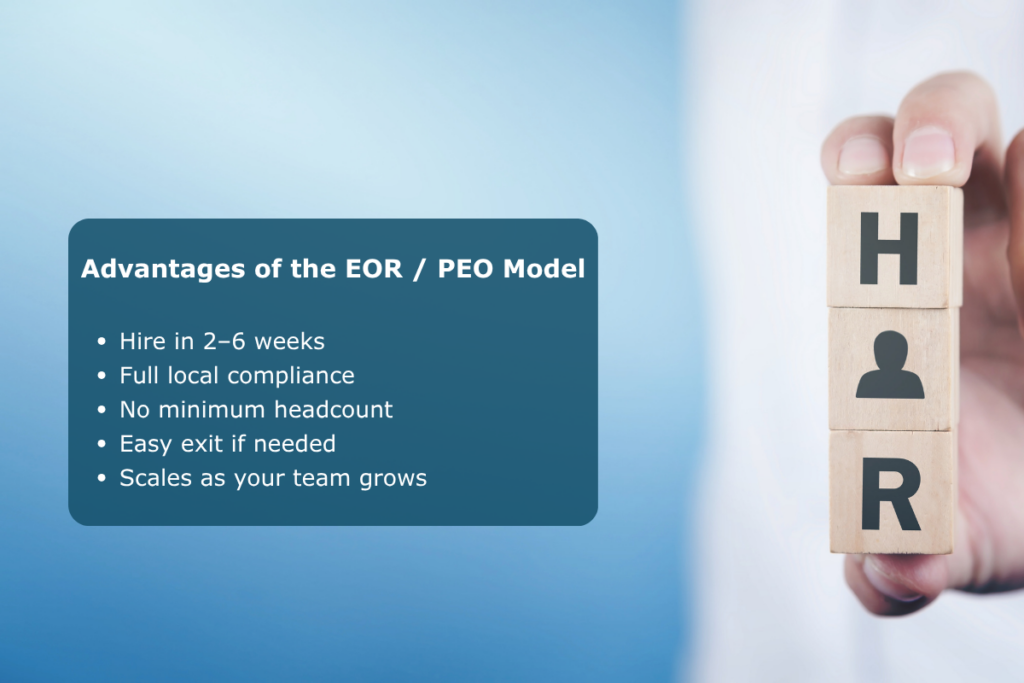
  • Compliance: Providers ensure contracts, social insurance, and payroll comply with Chinese labor law. 
  • Cost savings: Hiring a local HR team is expensive; outsourcing reduces overhead. 
  • Speed: Companies can hire employees in China without first creating a local entity. 
  • Flexibility: Scale operations up or down as business needs change. 
  • Local expertise: Providers understand HR policies in China and offer tailored solutions. 

Outsourced HR services in China cover a wide range of functions, including: 

  • Payroll support. 
  • Social insurance and employee benefits management. 
  • Recruitment and onboarding support. 
  • Work permit processing for foreign employees. 
  • Labor contract management under mutual agreement rules. 

By relying on an HR outsourcing company, foreign firms can focus on growth while ensuring compliance with Chinese regulations.

If you are considering between HR outsourcing and in-house HR, their pros and cons, let’s explore the below table.

Factor  In-House HR in China  HR Outsourcing in China 
Cost High (salaries, training, systems)  Lower, predictable service fees 
Compliance  Risk of errors  Provider ensures accuracy 
Flexibility  Limited  High (easy to scale up/down) 
Speed  Slower onboarding  Faster hiring process 
Expertise  Dependent on internal team  Access to local experts 


👉 The verdict: HR outsourcing China is the preferred option for foreign SMEs and companies testing the market. It saves costs while reducing legal risks. 

4. Top HR and Talent Management Challenges in Mainland China 2026 

Despite the opportunities, HR management in China presents many challenges. These issues explain why outsourcing has grown so quickly.

  • Complex HR policies in China

Chinese labor laws are detailed and strictly enforced. Employers must provide written contracts, pay social insurance, and contribute to the housing fund. Any mistake can lead to fines or employee claims. Mutual agreement clauses must also be clearly defined. HR outsourcing providers help foreign companies navigate these policies safely.

  • Compliance and payroll

Payroll regulations vary across China, with each city applying its own social insurance rates, housing fund rules, and tax brackets. Managing employees in multiple locations requires strong local knowledge. This is one of the top challenges when your company operates in the China region.

Therefore, as an HR professional/provider, VVR can support you in ensuring employment practices are aligned with regional requirements.

The top HR challenges in China are compliance, payroll, and retention.

The top HR challenges in China are compliance, payroll, and retention.

  • Talent retention

China’s economy continues to evolve. Employees in China, especially younger professionals, expect higher salaries, better benefits, and career development. HR outsourcing partners can provide market insights, salary benchmarks, and benefits packages to help firms stay competitive.

  • Work permits and foreign employees

Hiring expatriates in China involves strict work permit rules. Without expert guidance, the process can delay projects or prevent hires. HR outsourcing services include support for work permits, helping foreign companies hire smoothly. 

👉 The verdict: The top HR challenges in China are compliance, payroll, and retention. Outsourcing offers solutions by combining expertise with local knowledge.

5. Strategic HR Solutions for Foreign Companies in China

Foreign companies, facing unique challenges in hiring and compliance, require strategic HR solutions to succeed in China.

Foreign businesses expanding to China often ask: How do we hire employees quickly and compliantly? Our HR outsourcing provides solutions such as: 

  • Recruitment support and access to local talent pools. 
  • Employment contracts are drafted under labor contract law. 
  • Social insurance and tax compliance. 
  • HR audits and compliance monitoring.

Outsourcing providers guide companies through work permit applications, ensuring expatriates can be legally employed. They also monitor compliance with mutual agreement rules, probation periods, and termination laws.

By outsourcing HR services, companies can align with China’s workforce trends. Providers ensure compliance but also deliver insights on HR practices in China, helping firms adapt to employee expectations. 

👉 The verdict: For foreign companies, HR outsourcing in China is not just about cost savings. It is a strategic tool for compliance, talent retention, and long-term growth.

6. Opportunities from HR Outsourcing in China

Despite obstacles, HR outsourcing in China offers real opportunitiesfrom cost savings to faster market entry.

Providers in China offer a wide range of HR solutions, from payroll to full employee lifecycle management. These include:

  • Benefits administration and social insurance payments. 
  • Hiring services for foreign companies entering China. 
  • Compliance monitoring and HR audits.

Companies that outsource HR can focus on business growth instead of administrative work. Here are some examples of how to apply HR outsourcing solutions in a variety of industries: 

  • IT companies use HR outsourcing to recruit engineers quickly. 
  • Manufacturers rely on providers to manage payroll across multiple cities. 
  • Service firms outsource HR functions to reduce compliance risk.

👉 The verdict: HR outsourcing in China provides practical opportunities for all industries. It helps businesses scale while staying compliant.

7. The Future of HR Practices in China

Looking ahead, HR management in China will continue to evolve. By 2026, HR practices in China will be shaped by technology, big data, and digital transformation.

  • Digital HRAI and Big Data

By 2026, HR practices in China will lean further into big data, AI tools, and cloud-based HR platforms. Providers predict that AI-powered recruitment, payroll automation, employee analytics, and performance tracking tools will be adopted by most mid-to-large enterprises. 

Insights from Deloitte and other tech-studies show digital HR spend growing by double digits in China. Moreover, with HR technology market rising strongly (global growth of ~12.8% CAGR), foreign firms must plan for digital adoption as part of their HR strategy

The future of HR practices in China is big data and AI transformation.

The future of HR practices in China is big data and AI transformation.

  • Employee well-being and ESG

HR policies in China now emphasize employee well-being, diversity, and ESG standards. Outsourcing providers help companies align with these values by offering modern HR practices. 

  • Strategic HR management

HR is becoming a driver of growth, not just a support function. Strategic HR management helps businesses hire, retain, and motivate employees in China while adapting to new labor trends. 

👉 The verdict: The future of HR management in China is digital, data-driven, compliance-focused, and employee-centered. Outsourcing providers will play a leading role in this transformation. Companies that adopt outsourcing with digital HR solutions will be best positioned for success. 


You may also like 

📩 Looking to expand your HR operations in China? Talk to VVR International experts today.


8. Look Ahead

HR outsourcing China has moved from being an optional service to a strategic necessity in 2026. It allows foreign companies to hire employees quickly, receive support for managing salaries in accordance with labor standards, and comply with strict HR policies in China. At the same time, it provides flexibility, scalability, and digital transformation. 

For businesses, the choice is clear: HR outsourcing in China is not just about administration. It is a strategic tool that supports long-term success in a competitive market. 

📩 Contact VVR International today to discover how our HR outsourcing services in China 2026 can help your business hire employees, manage payroll, and stay compliant.  

Share your project with us via contact@vvrinternational.com.

CONTACT US

FAQ

  • What are the main HR challenges in China that outsourcing helps foreign companies solve?

The main HR challenges in China include compliance with labor contract law, managing payroll across different cities, handling social insurance and housing fund contributions, and navigating work permit requirements for foreign employees.

HR outsourcing for foreign companies in China addresses these issues by providing local expertise, payroll outsourcing services, contract management under mutual agreement rules, and support for work permits. This allows companies to operate smoothly while minimizing legal and operational risks.

  • How do HR outsourcing services in China support strategic HR management and long-term growth?

HR outsourcing services in China support strategic HR management, aligning with modern HR practices in China, including digital HR solutions, employee retention strategies, and ESG-focused HR policies. By outsourcing HR functions, companies gain access to market insights, salary benchmarks, and compliance monitoring, enabling them to build sustainable teams in China while adapting to workforce trends and long-term business objectives.

Related Posts

Read More
Outsourcing in China: Everything You Need to Know (2025 – 2026)

HR Outsourcing in China: Everything You Need to Know (2025 – 2026)

1. Introduction

Expanding into China remains a key strategy for international companies seeking growth and cost efficiency. The country combines world-class manufacturing capacity, skilled labor, and advanced infrastructure. However, entering China’s market can be complex due to regulations, labor laws, and setup costs. That’s why HR outsourcing in China has become one of the most effective solutions. It allows foreign businesses to delegate specific functions, from manufacturing and IT to HR and logistics, to local experts without establishing a full legal entity. 

In this article, VVR International’s experts will explore: 

  • What outsourcing in China is and how it works. 
  • The benefits and risks of this model. 
  • HR, and compliance aspects about labor contract law. 
  • A comparison between outsourcing and outstaffing models. 
  • Why companies increasingly rely on outsourcing for faster, more efficient market entry.

By the end, you’ll understand whether outsourcing is the right strategy to support your expansion in China.

2. Outsourcing in China: 101 Overview

For global businesses, outsourcing provides a quick and compliant way to access China’s talent, production, and service capabilities. Let’s dive into what it means and how it differs from other models like outstaffing. 

Outsourcing offers a fast and compliant way to access the local talent pool.

Outsourcing offers a fast and compliant way to access the local talent pool.

What is Outsourcing in China? 

Outsourcing is a business model where a company delegates certain functions, projects, or processes to an external service provider in China. The provider handles managing tasks, people, and outcomes. 

Unlike outstaffing, where employees are legally hired by a third party but work under your daily supervision, outsourcing means the provider takes full responsibility for delivery, quality, and operations. 

Common types of outsourcing in China include: 

  • Manufacturing outsourcing: Partnering with Chinese factories to produce goods cost-effectively. 
  • IT outsourcing: Delegating software development, technical support, or maintenance. 
  • Business Process Outsourcing (BPO): Outsourcing functions such as customer service, accounting, or procurement. 
  • HR outsourcing: Using a local partner to handle contracts and compliance. 

Key Benefits of Outsourcing to China 

Outsourcing continues to attract global companies for its strategic and operational advantages: 

  • Cost efficiency. China offers competitive labor and production costs without compromising quality. 
  • Access to expertise. Local providers bring deep knowledge of supply chains, logistics, and compliance. 
  • Faster market entry. Avoid months of administrative setup by working through established partners. 
  • Scalability. Easily expand or reduce operations based on demand. 
  • Focus on core business. Delegating non-core functions allows management to focus on growth. 
  • Compliance support. Providers ensure adherence to labor, and environmental regulations.

👉 The Verdict: Outsourcing in China delivers flexibility, cost savings, and operational reliability. Thus, it is ideal for companies aiming to grow in Asia while minimizing administrative complexity.


Risks and Challenges of Outsourcing in China 

Like any business approach, outsourcing brings both advantages and risks. Companies must also consider its challenges: 

  • Loss of direct control. The provider manages daily operations and decisions. 
  • Quality consistency. Product or service quality must be monitored closely. 
  • Intellectual property (IP) risks. Always use clear legal contracts and NDAs. 
  • Cultural and communication gaps. Time zones, language, and expectations may differ. 
  • Vendor dependence. Your performance may rely heavily on your partner’s reliability. 

⇒ Tip for you: You should choose outsourcing companies with proven track records, transparency, and strong local networks to mitigate risks. 

3. Outsourcing vs Outstaffing in China 

Both models help companies operate in China without building a full entity, but they serve different purposes. 

  • Outsourcing in China shifts responsibility for a function or project to a third party. You focus on results while the provider manages the process. 
  • Outstaffing in China gives you dedicated employees who legally belong to the outstaffing company but work under your direction. Think of it as renting talent with compliance included. 
Outsourcing in China shifts responsibility for a function or project to a third party.

Outsourcing in China shifts responsibility for a function or project to a third party.

The table below shows some key points of the two models’ differences. 

Aspect  Outsourcing in China  Outstaffing in China 
Control  Limited control, focus on outcomes.  Full control over tasks and workflows. 
Cost structure  Fixed price for project/function.  Salaries plus service fees. 
Workforce  Staff serve multiple clients.  Dedicated staff to your company. 
Flexibility  Less flexible once contracted.  Easy to scale up or down. 
Compliance  Provider ensures project delivery.  Provider ensures labor law, payroll, and social insurance. 

👉 The Verdict: Choose outsourcing when you prefer a hands-off, results-driven model. So, it is perfect for production, logistics, IT, or back-office operations. Opt for outstaffing when you want to manage people directly while keeping legal employment with a third party.


Here are some practical scenarios for your references: 

  • A software company needs developers: outstaffing model. 
  • A fashion brand wants garments produced: outsourcing to China. 
  • A trading company needs logistics support: could use either, depending on goals. 

So, the decision depends on your business goals. 

Choose outstaffing services in China if: 

  • You want to manage employees directly. 
  • You need flexibility to scale quickly. 
  • You value compliance and secure HR handling. 
  • You plan to test the Chinese market before setting up a company. 

Choose outsourcing to China if: 

  • You want a third party to take over manufacturing or support functions. 
  • You don’t need daily management of employees. 
  • You want predictable project-based costs. 

4. Why Foreign Companies Use HR Outsourcing in China 

Here’s why outsourcing remains one of the top entry strategies for international businesses: 

  • Access to a skilled workforce. China has a large talent pool in IT, engineering, sales, and manufacturing support. 
  • End-to-end service. From design to delivery, providers handle complete workflows. 
  • Compliance and legal safety. Local partners ensure adherence to China’s labor contract law. 
  • Supply chain optimization. Outsourcing manufacturing or logistics reduces overhead and speeds of delivery. 
  • HR outsourcingProviders support recruitment, contract administration, and local HR compliance. 

For foreign businesses, this model allows companies to start operations quickly, without forming a Wholly Foreign-Owned Enterprise (WFOE).

Outsourcing services in China help foreign companies save time and reduce risks.

Outsourcing services in China help foreign companies save time and reduce risks.

5. How Outsourcing Works in China: The Typical Process 

A successful outsourcing setup generally follows these steps: 

  • Define needs. Determine which functions or projects to delegate. 
  • Select a provider. Choose based on experience, references, and local expertise. 
  • Set KPIs and scope. Agree on timelines, performance metrics, and quality standards. 
  • Contract signing. Include clauses on IP, confidentiality, and dispute resolution. 
  • Project execution. The provider manages tasks while reporting progress. 
  • Quality control and feedback. Regular reviews ensure compliance and standards. 

For example, instead of registering a WFOE (known as Wholly Foreign-Owned Enterprise), a European consumer-goods brand may outsource packaging production to a certified Chinese supplier while maintaining quality control through audits and shared digital tools. 

6. How to Choose Right HR Outsourcing Partner in China 

Your success depends heavily on the provider. So how do you choose HR outsourcing for foreign companies in China to meet the needs? Here are key tips to help you make better decisions:  

  • Compliance expertise. Do they understand Chinese labor laws? 
  • Industry knowledge. Do they have experience in your sector? 
  • Quality control systems: Are processes certified (e.g., ISO, BSCI)? 
  • HR systems. Can your provider effectively support recruitment workflows, employee documentation, and compliant contract handling? 
  • Transparency. Clear fees and no hidden costs. 
  • Network. Strong local connections for recruitment and support. 

When you have a list of potential providers, remember to always ask for references and case studies before signing an agreement.


You may also like:

📩 Looking to expand your HR operations in China? Talk to our experts today. 


7. HR Considerations in Outsourcing 

China has strict labor and HR regulations. Many foreign companies often struggle with employment laws and expectations. Therefore, HR outsourcing providers bridge this gap, especially in recruitment, onboarding, and employee support. 

Chinese Labor Contract Law requires formal, compliant agreements that define the employee’s terms of work. A reliable HR provider can help draft and manage these contracts. 

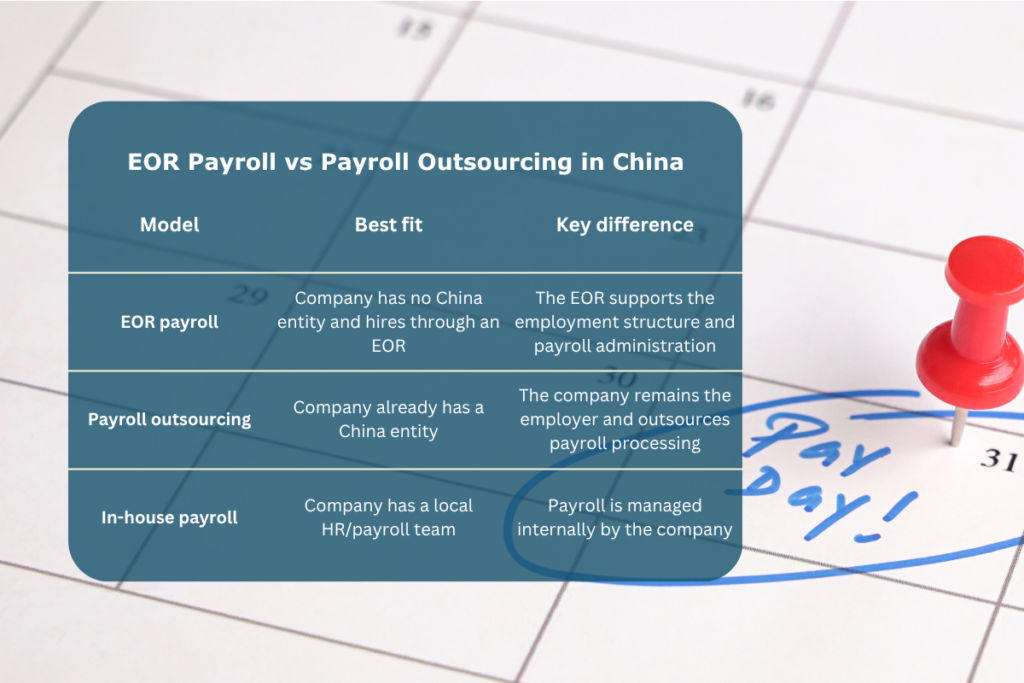
In addition, HR partners like VVR International assist with talent acquisition, onboarding, and day-to-day HR guidance. When operating under an Employer of Record (EOR) service, the HR provider becomes the legal employer in China, and is responsible for contracts, onboarding, and social insurance obligations. 

In short: A trustworthy outsourcing partner like VVR you stay compliant with Chinese labor law, especially when recruiting, onboarding, and supporting employees, so you can focus on core growth. 

⇒ Read more about Salaries and benefits for employees in China: the complete 2025 guide. 

8. Look Ahead

Outsourcing in China is a flexible and cost-effective way for foreign companies to hire staffs, enter the market quickly, and reduce compliance risks. Compared to outstaffing, it offers a more hands-off model focused on results and end-to-end delivery. 

If you are considering outsourcing services in ChinaVVR International can support you. With deep experience in Chinese labor law, HR management, our team guides foreign companies through every step of their China strategy. 

⇒ Contact us today to discover how outsourcing can accelerate your business in China.

Share your project with us via contact@vvrinternational.com.

CONTACT US

FAQ

  • How does EOR model work for foreign companies without a local entity in China?

EOR in China allows foreign companies to hire and manage staff without setting up a Wholly Foreign-Owned Enterprise (WFOE). A local EOR/PEO provider acts as the legal employer, handling labor contracts, social insurance, and compliance with Chinese labor contract law. This model enables faster market entry, reduces administrative burden, and ensures compliance, while foreign companies retain strategic oversight of operations. It is particularly suitable for companies testing the Chinese market or scaling teams quickly in 2026.

  • What are the main compliance risks when outsourcing to China and how can they be managed?

When outsourcing to China, foreign companies may face compliance risks related to labor law, intellectual property protection, and quality control. These risks can be managed by selecting experienced outsourcing providers with proven compliance expertise, clear contractual frameworks, and strong IP protection clauses. Reputable HR outsourcing partners also ensure employment contracts align with Chinese labor contract law, reducing legal exposure and operational risk for foreign companies expanding in China.

Related Posts

Read More
Outstaffing and PEO service in China: Legal news to know

Outstaffing and PEO service in China: Legal news to know

Professional Employer Organization PEO service in China is an advantageous solution for foreign companies wishing to establish themselves in this dynamic market. As the economy is constantly evolving and the legal framework is rapidly adapting, it is crucial for companies to be aware of the rules governing contingent workforce management in China. The purpose of this article is to inform companies of the latest legal developments regarding the hiring and taxation of Chinese or expatriate employees. As evidenced by the extension of expatriate tax benefits until 2027, China continues to open its doors and attract foreign talent and skills. 

China: Fertile Ground for Business Expansion

With a population of over 1.4 billion and a growing middle class, China offers immense potential for foreign companies. The country is a global hub for manufacturing, technology and services. Through the use of “portage salarial”, companies can access this lucrative market while minimizing risk and investment. By simplifying administrative and legal procedures and delegating them to a competent Outstaffing company such as VVR International, companies can concentrate on their core business. What’s more, “portage salarial” offers greater flexibility than setting up a local company when it comes to implementing a strategy in China, and enables rapid adaptation to market changes. In an economic environment as dynamic as China’s, this flexibility is an advantage for initiating and sustaining local operations.

New Legislative Developments and Their Impact

In an effort to attract more foreign investment, China is constantly adjusting its legislation on professional management. Recent legislative changes are designed to simplify procedures for businesses while providing greater protection for both local and foreign workers. For foreign companies, this means a better understanding of their legal obligations, a reduction in the risks associated with non-compliance, and greater confidence in the freelance management process. In addition, the introduction of these new regulations demonstrates China’s commitment to creating a favorable and transparent business environment for foreign companies.

Taxation: benefits for foreigners extended until 2027

One of the most notable aspects of China’s recent developments concerns taxation. With the aim of encouraging more expatriates to work in China and making the country more attractive to international talent, the Chinese government has decided to extend tax benefits for foreigners until 2027. This measure, which was originally planned for a shorter period of time, offers significant benefits to foreign workers in terms of tax relief. 

Navigating the Chinese regulatory landscape

In a country where regulations are rapidly evolving, it is imperative for companies to keep abreast of the latest legislative changes. With its growing economy and increasing openness to foreign businesses, China frequently adjusts its laws to meet changing market needs.

Preparing for the future of professional management in China

As China continues to assert itself as a global economic power, the opportunities for foreign companies are greater than ever. With its advantages and flexibility, professional management is an invaluable tool for those seeking to penetrate this dynamic market. However, effective legal intelligence is essential to ensure compliance and maximize the benefits of China’s labor and tax laws. Companies that invest in regular legal intelligence can anticipate and adapt quickly.

For foreign companies, working with an experienced, locally-established partner like VVR International is the key to efficient and rapid recruitment. What’s more, our HR team will keep you abreast of any legal developments that may affect your teams in China and will support and advise you at every stage of the recruitment process and in setting up your collaboration.

Read More
Recruiting in China: Avoid classic mistakes

Recruiting in China: Avoid classic mistakes

Entering the Chinese market requires a well-thought-out strategy, especially when it comes to recruitment. The Chinese market is not only vast, it’s also complex to understand. Navigating the Chinese business landscape without making mistakes can seem like a daunting task. But with the right information and careful preparation, it’s possible. This article aims to guide you through the common pitfalls of recruiting and managing human resources in China to help you find and hire the best talent.

Understanding the Chinese Job Market

China is unique, both culturally and economically. Before you begin the recruitment process, it’s important to understand some of its unique characteristics.

Cultural peculiarities:

Chinese culture emphasizes hierarchy and respect. During interviews, for example, it’s not uncommon for candidates to be modest and downplay their accomplishments. Being able to read between the lines is essential to accurately assess their abilities.

The value of guanxi:

In China, relationships, or “guanxi,” play a paramount role. Guanxi is more than a professional network. It’s a complex web of personal relationships that can influence hiring decisions. Failing to take this into account can mean missing out on quality candidates or, conversely, leading you to make less prudent hires.

In short, the key is to adapt and integrate rather than impose a Western approach.

Common recruiting mistakes to avoid:

Success in China often depends on the ability to learn and adapt quickly. To avoid common faux pas, here are a few mistakes to avoid:

Inappropriate job offers:

Simply translating a job posting is not enough. It’s crucial to contextualize it for the Chinese market. For example, expected benefits and job descriptions may differ from those in the West. The choice of job title is also an issue to be aware of in order to receive appropriate applications.

Underestimating the employer brand:

In China, a company’s image is paramount. Candidates often research a company’s reputation before applying. Make sure your brand is strong and well-received locally.

Ignore local regulations:

Chinese labor laws are strict and can vary from region to region. Make sure you are in compliance to avoid potential penalties.

While these mistakes are common, they can be avoided with proper preparation and in-depth knowledge of the local context.

How to streamline the recruitment process ?

To successfully recruit in China, here are a few key tips to optimize your approach:

Work with local experts:

Working with local specialists or recruitment agencies such as VVR International, which has a dedicated HR department and team, can help you better understand the professional landscape, education system, training courses and diplomas awarded, while effectively targeting ideal candidates.

Focus on ongoing training:

Chinese employees value training and development opportunities. Offer attractive programs to attract and retain top talent.

Multi-channel approach:

Don’t limit yourself to traditional recruitment platforms. Use a combination of job boards, social networks and networking events to reach a wide range of potential candidates.

Getting started in China requires a thoughtful, customized approach. Follow these tips to maximize your chances of success.

Enter the Chinese market with confidence

There is no denying the potential of the Chinese market. However, the key to success lies in a thorough understanding of its unique landscape and cultural idiosyncrasies. By avoiding common recruitment mistakes and adopting a well-thought-out strategy, companies can not only succeed, but also build lasting and beneficial relationships with their Chinese employees.

Never underestimate the importance of preparation. By investing time and resources in a thorough understanding of the market, working with local experts, and continually developing your team, you’ll be well positioned to make the most of this dynamic market.

Enter China with confidence, but always with a willingness to learn and adapt. Your success will depend as much on your preparation as on your ability to evolve.

Read More
Efficient Recruitment and Portage : Rapid and Successful Deployment in China

Efficient Recruitment and Portage : Rapid and Successful Deployment in China

The Chinese market offers strong economic potential and is attractive to international companies. However, there are a number of hurdles that need to be overcome in order to be successful. Firstly, recruitment is one of the biggest challenges for companies looking to set up in China. That’s why it’s wise to seek advice and support at this crucial stage of your development strategy in China. Once the talent is selected, it’s time to set the terms of the relationship, which will depend on the stage of development of the company in China. If you’re just starting out in this market, or if you want to assess the opportunities for your business in the country before considering setting up your own structure, then portage salarial may be the solution. Portage salarial allows companies that are not physically present in China to quickly hire a new employee. The employee can then perform tasks locally, delegating the administrative and legal management of the employee position to a third-party company based in China.

Understanding Portage and PEO services in China

Wage portage is a three-way relationship between a management company, a professional and a client company. Instead of hiring an employee directly, a company can go through a “portage salarial” company. The “portage” company then handles all the administrative and legal formalities associated with the employment. (https://www.vvrinternational.com/en/succeeding-in-china-portage-services-to-get-started/)

Why is this important in China?

Legal compliance:

The legal framework for employment in China is complex and evolving. Using the portage solution ensures that companies remain compliant with local laws and regulations without having to master them themselves.

Flexibility:

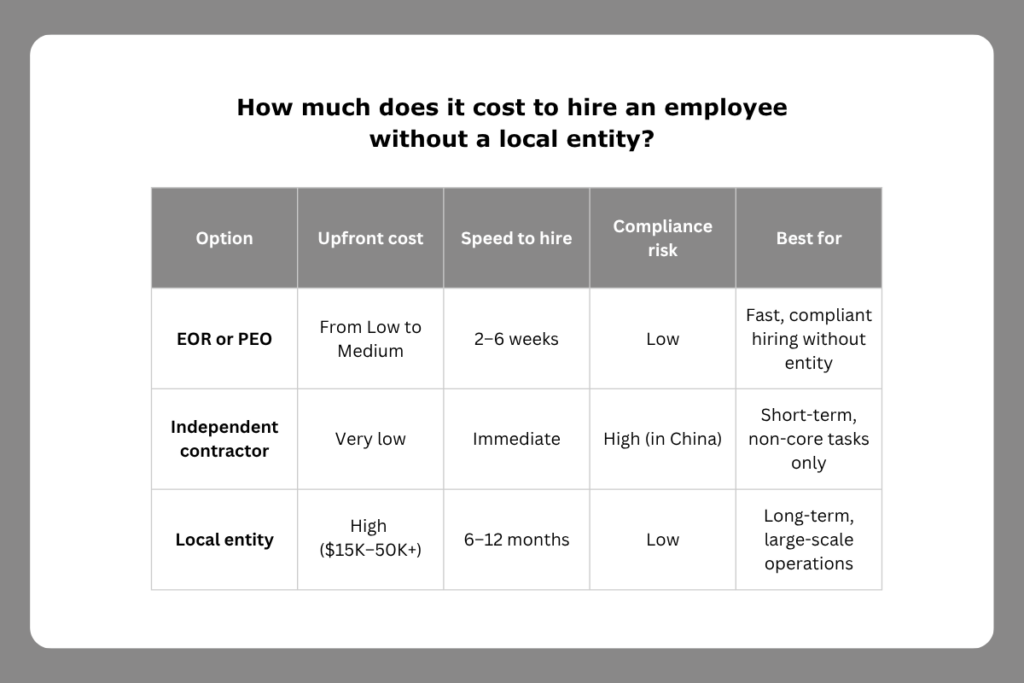
Companies can test the Chinese market without setting up a legal entity. This allows for faster expansion with less financial risk.

Ease of administration:

All aspects of employment contracts, payments, benefits, and taxes are handled by the Portage company. This frees the client company from administrative management and allows them to focus on their core business.

Access to a talent network:

Freelance administration companies with a specialized HR department staffed by experts familiar with the Chinese labor market have privileged access to a network of qualified professionals. This local presence combined with HR expertise is particularly beneficial for foreign companies that are not yet familiar with the specifics of the Chinese labor market.

In many cases, the use of “portage salarial” is the most appropriate solution for companies wishing to expand in China. Not only does it allow you to navigate the legal labor landscape with confidence, it also offers unrivaled speed of implementation, flexibility and efficiency.

Strategies for Identifying and Attracting Top Talent through Portage and PEO services

A company’s success depends largely on the quality of its talent. This is especially true in China, where competition for skilled professionals is fierce and the talent pool is the size of the combined American and European pools. Here’s how companies can optimize their recruitment strategy:

Use local tools:

The Chinese market has its own job search and professional networking platforms. Rather than relying solely on Western platforms, companies should explore tools such as Zhaopin or 51Job to access a wider pool of candidates.

Work closely with specialized companies that offer Portage and PEO services in China:

By working closely with an HR consulting firm such as VVR RH, companies can benefit from sound advice on how to position their job offers, salary expectations, and more.

Consider Chinese culture:

Corporate culture in China is heavily influenced by traditional Chinese culture. Appreciating aspects such as respect, loyalty, and professional stability can make all the difference in an interview.

Provide training and development opportunities:

Chinese candidates value ongoing training opportunities. By partnering with Portage companies that offer such training, companies can stand out from the competition.

Contractual clarity:

Make sure the terms of employment are clearly defined. With Portage Salary, this is made easier because the Portage company manages these aspects while ensuring compliance.

It is important to recognize that the Chinese market is unique. By adapting the recruitment strategy to the needs and expectations of Chinese professionals, while relying on freelance administration, companies can truly maximize their chances of success.

Ensure Successful Integration of Employees Recruited Through Portage  and Strengthen Your Collaboration Through Incubation

The act of hiring is only the first step in an ongoing employer-employee relationship. To ensure a successful long-term collaboration, it’s critical to facilitate the smooth integration of new employees:

Thorough training:

Make sure employees fully understand their roles, responsibilities, and expectations. As part of their incubation services, Portage companies can often provide customized training and a welcome home for foreign employees to help bridge cultural or language gaps.

Ongoing support:

Assign a mentor or consultant to guide the new employee through the initial stages of integration. VVR International’s HR team ensures smooth communication between foreign companies and expatriates, and is on hand to help solve any problems or adjustment difficulties that new expatriates may encounter in China.

Facilitate administrative management:

One of the great strengths of independent management is that it simplifies administrative procedures. This allows new employees to focus on their work without having to worry about bureaucratic aspects such as obtaining insurance or managing tax deductions.

Company culture and values:

Although portage administration allows for some distance between the client company and the employee, it is important to ensure that the company’s values and culture are well communicated. Integration sessions, workshops and regular meetings can help build a sense of belonging.

Provide regular feedback:

The first few months are critical to the employer-employee relationship. Be sure to provide regular, constructive feedback to set the employee up for success.

With a successful integration, not only does the company benefit from a dedicated and productive employee, but it also strengthens its reputation as an employer of choice, making it easier to recruit in the future.

Portage combined with hiring the right talent: the winning strategy for success in China

Rich with opportunities and challenges, China is an expansion territory for many international companies. But if you really want to get a foothold and succeed, mastering recruitment is crucial. Portage Salarial is emerging as a winning strategy, not only to facilitate the recruitment process, but also to ensure the integration and retention of top talent.

With over two decades of experience, VVR International has positioned itself as an invaluable partner to European companies seeking to establish and thrive in China. By taking over critical tasks such as drafting employment contracts, managing human resources, payroll, administration and much more, VVR ensures that companies can focus on their core business.

Read More
Portage vs setting up a business in China: The duel

Portage vs setting up a business in China: The duel

Once the Chinese market has been identified as a real opportunity, there are two main strategies for accelerating your business development in China: portage and setting up a local company. While China continues to be a popular destination for international expansion due to its vast and dynamic market, choosing the best approach to enter requires careful consideration. By simplifying the process, portage appears to be an attractive option for companies wishing to test the waters. On the other hand, setting up a local entity offers an unparalleled level of control and commitment. However, each option comes with its own set of advantages and disadvantages. This article will examine these two strategies in detail, weighing up the pros and cons, to help companies make an informed choice tailored to their needs and objectives in China.

Advantages of Portage services in China

Portage salarial is a solution that enables a company to hire an employee in China without having to set up a local legal entity. Here are the main advantages:

Administrative simplification

Avoid the complexities involved in setting up and managing a local entity. The freelance administration company handles all the administrative, tax and social security formalities for you, and can even physically house your employee in its premises in China.


Financial flexibility

With portage solution, no investment is required to set up your team in China. The only costs are the actual operating costs (salaries, travel expenses, etc.). Companies can therefore test the Chinese market with minimal investment and a limited commitment.

Absence of legal and regulatory risks

The portage company masters Chinese labour legislation and takes care of the employee’s legal obligations and administrative management, thereby reducing the risks for the foreign company.

Speed of implementation

Once the new employee has been selected, companies can start their activities in China almost immediately, without waiting for the long lead times involved in setting up a company.

Disadvantages of portage in China

While portage offers a simplified entry into the Chinese market, it also has its limitations:

Potential long-term costs

Although less expensive initially, portage can become costly over time, particularly if the company wants to increase the number of employees working in China. In this case, portage is a temporary solution until a local legal entity can be set up. VVR International supports companies from the recruitment of their first employee to the setting up of their own entity in China.

Dependence on a third party

Trust in a portage company imposes a dependence that can limit strategic autonomy. This is why it can be a transitional solution. This first stage can be part of a development project. If you are planning to set up a long-term presence in China, we recommend that you use a company offering a strategic diagnosis and a range of services to support your development and ensure the long-term future of your business.

Less control over operations

By delegating the administrative, tax and legal aspects, companies can feel a lack of direct control over their activities and their employees. This can be countered by implementing effective communication and monitoring tools that are accessible in both Europe and China.

Advantages of setting up a business in China

Opting to set up your own business in China is an ambitious move that offers a number of significant advantages:

Full control over operations and strategy

Having your own business gives you total control, enabling you to adjust strategy and operations in line with market needs and opportunities.

Potential for growth and expansion

With a solid structure, companies have the freedom to grow, invest and expand without limitations.

Recognition and credibility in the local market

A local presence, by opening stores or premises dedicated to its business or to the distribution of its products, strengthens the confidence of Chinese consumers and partners, facilitating business relationships.

Cultural and market adaptability

Proximity to the market allows us to understand consumers even better, and to adapt more finely to cultural and commercial specificities.

Disadvantages of setting up a business in China

Despite its advantages, setting up an entity in China is also fraught with pitfalls that should not be overlooked:

A long and complex process

setting up a business in China can be an obstacle course, with lengthy and sometimes opaque administrative, regulatory and legal procedures.

Legal and regulatory risks

China has a distinct legal and regulatory environment that can pose challenges for foreign companies. Failure to comply with regulations can result in severe penalties.

High initial costs

Unlike freelance administration, setting up a business requires a substantial initial investment, particularly in terms of capital, time and resources.

Cultural and linguistic barriers

Cultural differences can lead to misunderstandings and require constant adaptation.

Optimise your expansion in China with VVR International

The decision between portage and setting up a company in China is a crucial one, and largely depends on each company’s objectives, resources and long-term vision. While portage offers a quick and less risky entry into the Chinese market, a long-term vision with ambitions for solid expansion might lean towards setting up a company, despite its initial challenges.

However, this is not a choice to be made alone. With 23 years’ experience and more than 1,000 successful projects under its belt, VVR International is your trusted partner for securing and sustaining your business development in China.  VVR International carries out an initial diagnosis and works with you to devise a development strategy tailored to your business. VVR International then has the necessary licences and a dedicated HR team to recruit and support your employee in China or to help you set up an entity in China. Whatever your decision, VVR’s expertise will be a major asset in your conquest of the Chinese market.

Read More
Success in China: Managing your local teams brilliantly

Success in China: Managing your local teams brilliantly

China, with its dynamic economy and large population, offers countless opportunities for foreign companies looking to expand their global presence. Yet succeeding in China is about more than simply bringing products or services to market. At the heart of this success lies the ability to manage local teams effectively, a task that requires a deep understanding of Chinese culture and the country’s specific business environment. This article aims to enlighten companies on the nuances of management in China and to provide practical advice on how to build a strong and successful corporate culture.

Understanding Chinese culture at work

The Chinese business world is deeply rooted in its rich history and traditions. To effectively manage teams in China, it is essential to understand some key elements of the local business culture.

The predominant role of the hierarchy

In China, respect for hierarchy is sacrosanct. Employees often expect clear direction from their superiors and are used to a hierarchical structure. As a manager, it is crucial to recognise and respect this system, while creating an environment where employees feel confident to share feedback and ideas.

Guanxi (relationships) in business

Guanxi is a concept that refers to the importance of relationships in the Chinese business world. Building and maintaining solid relationships is fundamental to success. It’s much more than just a professional network; it’s a symbiosis based on mutual respect, trust and reciprocity. Incorporating this element into your management approach can greatly improve team collaboration and effectiveness.

Particularities of teamwork in China

Unlike some Western cultures where individualism can be valued, in China group harmony often takes precedence. Teams tend to value cohesion and avoid direct conflict. It is therefore essential to promote an environment where each member feels valued and where open communication is encouraged.

Best practices for effective management

Managing a team in China can be a challenge for those unfamiliar with the local culture. However, by adopting certain best practices, it is possible to successfully navigate this complex landscape.

Give priority to clear communication

Language and cultural barriers can often lead to misunderstandings. It is essential to ensure that expectations are clearly defined and understood. Using translation tools, organising regular training sessions and encouraging question-and-answer sessions can help ensure smooth communication.

Promoting training and skills development

The Chinese commercial landscape is changing rapidly. To stay competitive, it’s essential to invest in ongoing training for your teams. This can include technical training, language courses or cultural workshops.

Recognising successes and tackling challenges

Recognition is a powerful motivator. Celebrating successes, whether big or small, can boost team morale. Similarly, when it comes to challenges or problems, it’s best to approach them constructively, looking for collaborative solutions rather than pointing fingers.

Building a solid, appropriate corporate culture

Creating a corporate culture that resonates with local employees while retaining the company’s global identity is a delicate balance to strike. Here are a few key points to help you succeed.

The fusion of Chinese and Western values

It is not simply a matter of transposing a Western corporate culture to China. It is essential to understand and integrate Chinese values. This might involve taking account of local festivities, adopting preferred modes of communication or introducing managerial practices that resonate more with the local ethos.

Fostering a culture of innovation

The Chinese market is extremely competitive and constantly evolving. Encouraging innovation, initiative and flexibility within the team can help the company stay at the forefront and adapt quickly to new trends and opportunities.

Putting trust at the heart of relationships

Trust is the cornerstone of any successful business relationship. This is particularly true in China, where guanxi plays a central role. Establishing a culture of mutual trust, where employees feel valued and listened to, can greatly enhance commitment and job satisfaction.

Towards a prosperous future: conclusions and next steps

Navigating the Chinese business landscape, rich in opportunities but also in challenges, requires a tailored approach that respects local particularities. Success in China depends not only on a sound business strategy, but also on the ability to build and manage high-performance local teams.

The key elements discussed in this article, from understanding Chinese workplace culture, to adopting best managerial practices, to building a solid corporate culture, are all cornerstones for success in China.


As the Chinese market continues to evolve, it is essential for companies to remain flexible, invest in ongoing training and ensure that their management approach is adapted to local realities. By putting these principles in place, foreign companies can not only succeed in China, but also build lasting and mutually beneficial relationships with their local teams.

VVR International and its VVR HR team can help you set up a management style that is adapted to international companies and to the way Franco-Chinese teams operate.

Read More