Managing Teams Effectively in China: Strategies for International Companies

Managing teams effectively in China can be challenging when headquarters, managers, or HR teams are based overseas. China-based employees may work toward global business goals, but they still need clear communication, role expectations, regular feedback, and local support.
For international companies, team management in China requires structure. Managers need to clarify priorities, document decisions, build trust, and keep employees connected to the wider organization. Local HR coordination also plays an important role, especially when employees have questions about onboarding, employment documents, workplace expectations, or role changes.
This article explains what makes managing China-based teams different, common challenges to avoid, and practical strategies to help international companies lead employees in China with more clarity and consistency.
Key Insights
|
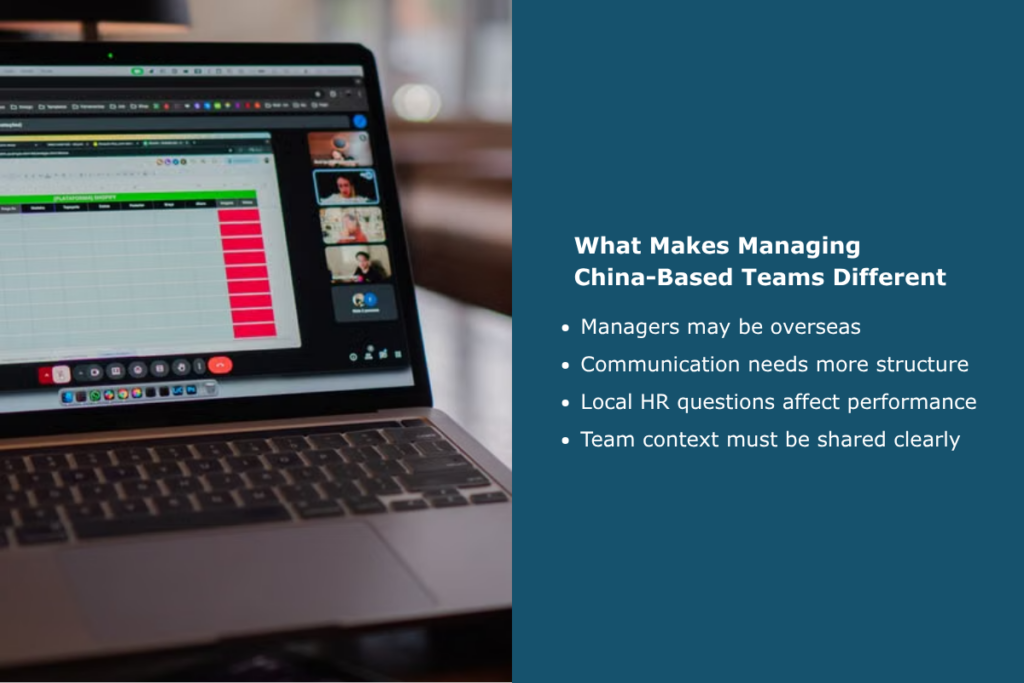
China-based teams need structured communication, clear team context, and local HR support when managers or headquarters are overseas.
What Makes Managing China-Based Teams Different
Managing employees in China from overseas requires more intentional coordination than managing a team in the same office. Distance can affect communication, trust, context sharing, and employee support. These gaps can be managed, but they need a clear structure.
First, China-based employees may not have daily access to their manager or leadership team. They may miss quick updates, informal decisions, or context shared at headquarters. As a result, managers should create regular touchpoints and document important decisions. This helps employees understand priorities even when they are far from the main office.
Then, communication style can vary across countries and teams. Managers should avoid vague instructions and explain expectations clearly. This includes priorities, deadlines, approval steps, and feedback. Clear communication helps China-based employees understand what success looks like and how to ask for support.
Furthermore, even when daily work is managed globally, local HR questions can affect confidence and engagement. Employees may need guidance on documents, onboarding, internal procedures, or workplace concerns. If they do not know who to contact, small questions can become larger frustrations. A clear local support channel helps employees stay focused on their work.
Common Challenges When Managing Teams in China from Overseas
International companies often face similar challenges when managing China-based employees remotely. Most issues are not caused by employee capability. They usually come from unclear communication, weak follow-up, or missing local support.
- Unclear roles and reporting lines
Employees need to know who manages their work, who approves decisions, and who supports HR questions. If the reporting line is unclear, employees may receive mixed messages from different stakeholders. This can slow down execution and create confusion around priorities.
- Limited context from headquarters
China-based employees may miss key business context if updates happen informally at headquarters. They may complete tasks without fully understanding the wider objective. Managers can reduce this gap by sharing meeting notes, business updates, and decision summaries.
- Feedback comes too late
Remote employees need feedback early. Waiting until a formal review can allow small issues to become performance gaps. Managers should provide practical feedback during regular check-ins. This helps employees adjust their work and understand expectations before problems become difficult to correct.
- Weak team connection
Employees in China may feel separate from the wider company if they are excluded from meetings, team updates, or culture moments. This can affect motivation over time. Managers should include China-based employees in relevant discussions and recognize their contributions publicly when appropriate.

Managing teams effectively requires clear roles, structured communication, timely feedback, accountability, and recognition of local contributions.
Strategies for Managing Teams Effectively in China
Strong team management depends on simple routines that managers can maintain. For China-based employees, these routines should create clarity, trust, and accountability without making the employee feel over-controlled.
-
Set clear roles and priorities
Managers should define responsibilities, first deliverables, decision rights, and success expectations. This is especially important for first hires in China, who may not have a local team around them. Clear priorities help employees understand where to focus their time and how their work supports the business.
-
Build consistent communication routines
Regular communication reduces uncertainty. Managers can use weekly check-ins, project updates, shared meeting notes, and clear response expectations. The goal is to make communication predictable, not excessive. Employees should know when they will receive feedback and where to raise questions.
-
Give feedback early and regularly
Feedback should be practical, timely, and linked to real work. Managers can comment on deliverables, communication, collaboration, and priorities. Early feedback helps employees improve faster. It also shows that the manager is involved and paying attention to the employee’s progress.
-
Create accountability without micromanagement
Accountability does not require controlling every task. Managers can set ownership, timelines, decision points, and follow-up meetings. Then, they should give employees enough autonomy to complete the work. This balance helps employees feel trusted while keeping performance visible.
-
Recognize contributions and local insights
China-based employees can provide valuable insights about local customers, suppliers, partners, operations, or market expectations. Managers should recognize these contributions during team meetings or internal updates. Recognition helps employees feel visible and reinforces the value of their local perspective.
-
Managing Remote and Hybrid Teams in China
Many China-based employees work remotely or in hybrid setups with overseas teams. This can work well when processes are clear. Without structure, however, remote work can create delays, duplicated work, and weaker team connection.
-
Document workflows and decisions
Remote employees need easy access to information. Managers should document workflows, approval steps, tools, meeting notes, and project updates. This reduces repeated questions and helps employees work independently across time zones.
-
Respect time zones and meeting balance
China-based employees should not always carry the burden of late meetings. When possible, rotate meeting times or share recordings and notes. Respecting time zones supports healthier collaboration and helps employees feel that their location is considered.
-
Keep employees connected to the wider company
Remote employees need more than task assignments. Include them in relevant meetings, business updates, informal touchpoints, and cross-location discussions. This helps them understand company culture and see where their work fits.
-
Support first hires with extra structure
The first employee in China often needs stronger guidance. They may work alone locally and report to someone overseas. Managers should provide extra clarity during the first months, including regular check-ins, clear priorities, and access to local HR support.
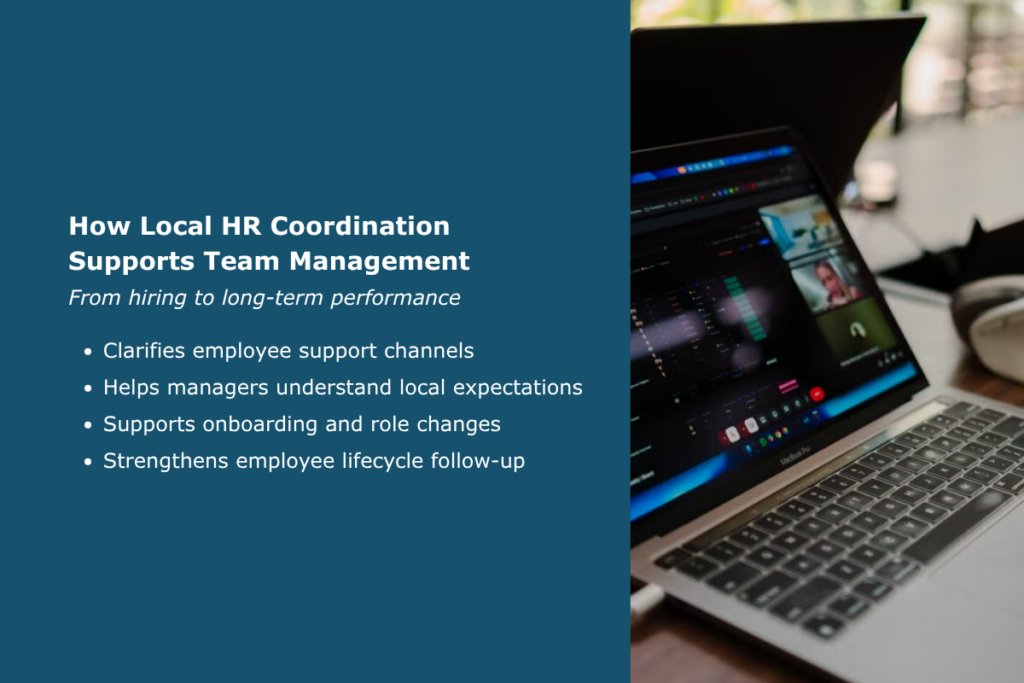
Local HR coordination helps international managers support China-based employees from hiring to long-term performance.
How Local HR Coordination Supports Team Management in China
Local HR coordination helps international companies manage China-based employees with more confidence. It creates a clearer support system for employees and gives overseas managers practical help when local questions arise.
- It clarifies employee support channels
Employees should know who supports HR questions, local documents, onboarding, and employment-related changes. A clear support channel reduces uncertainty. It also helps managers avoid handling local HR topics without enough context.
- It helps managers understand local expectations
Overseas managers may not always know how local employees interpret communication, feedback, or workplace expectations. Local HR coordination can help explain concerns, clarify processes, and support smoother communication between both sides.
- It supports the full employee lifecycle
Team management continues after hiring. Employees may need support during onboarding, engagement, role changes, feedback cycles, and offboarding. Local HR coordination helps companies manage these steps in a more consistent way, especially when the headquarters team is outside China.
How Better Team Management Supports International Hiring Success
Hiring in China is only the first step. A strong candidate can still struggle if onboarding, communication, engagement, and management routines are weak. This is why team management should be connected to the full employee experience.
- Hiring needs follow-up to become performance
Recruitment brings the employee into the company. Management turns that hire into business contribution. After hiring, managers need to clarify goals, provide tools, give feedback, and keep the employee aligned with business priorities.
- Onboarding, engagement, and performance are connected
Clear onboarding helps employees start with confidence. Engagement keeps them connected. Regular management turns both into performance. If one part is weak, the employee experience may suffer. A good management structure links these stages together.
- China-based teams need global alignment and local support
Employees in China should feel part of the international company while still receiving relevant local coordination. This balance helps them work toward global objectives with the support needed in their local environment.
Conclusion
Managing teams effectively in China requires clear communication, role clarity, regular feedback, employee inclusion, and local HR coordination. For overseas managers, structure is essential. China-based employees need to understand priorities, feel connected to the wider company, and know where to get support.
Strong management also connects hiring, onboarding, engagement, and long-term performance. When these elements work together, international companies can support China-based employees with more confidence.
VVR International supports international companies managing employees in China through recruitment coordination, local employment administration, HR communication, and employee lifecycle support. Contact VVR to strengthen the way you hire, onboard, and manage your China-based team.
FAQs
- What does managing teams effectively in China mean?
Managing teams effectively in China means giving China-based employees clear roles, communication routines, feedback, and local support. For international companies, it also means helping overseas managers coordinate with employees across time zones, cultures, and HR expectations.
- How can overseas managers manage employees in China effectively?
Overseas managers can manage employees in China effectively by setting clear priorities, scheduling regular check-ins, documenting decisions, giving timely feedback, and including employees in relevant team updates. They should also make sure employees know who supports local HR questions.
- What are the biggest challenges when managing China-based employees?
Common challenges include unclear reporting lines, limited context from headquarters, late feedback, weak team connection, and unclear local HR support. These issues can affect engagement and performance if managers do not address them early.
- Why is local HR support important for managing teams in China?
Local HR support helps employees understand documents, HR processes, onboarding steps, and workplace expectations. It also helps overseas managers interpret local questions more clearly. This creates a stronger support system for China-based employees.
Related Posts


Shanghai, Chine
7888 Humin Road, Minhang District
+86 21 3422 7164 103
contact@vvrchina.com

Guangzhou, China
Merchants City Home
495 Hanxi East Road,
Panyu District
+86 20 8332 1024
contact@vvrchina.com

Shijiazhuang, China
368 XinShi Bei Road,
Zhenxin Industry District
+86 3118 381 0103
contact@vvrchina.com

Sao Paulo, Brésil