Tag: HR outsourcing

EOR/PEO Services in China: Detailed Explanation and Legal Insights for Foreign Companies

PEO Services in China: Detailed Explanation and Legal Insights for Foreign Companies

1. Introduction

China continues to attract foreign companies, but hiring employees directly is never simple. The country’s strict labor laws, complex payroll system, and regional social insurance rules make compliance a serious challenge. For businesses that want to expand quickly, PEO services in China provide a practical solution. In this article, we – VVR RH, explain what EOR/PEO services are, how they work, and what legal updates in 2025 – 2026 mean for foreign businesses. We also compare EOR/PEO with alternatives like WFOEs, helping you decide which approach best supports your China expansion.

2. What Are EOR/PEO in China?

Before diving into regulations, it is important to define what PEO means in China. A Professional Employer Organization (PEO) is a local HR service provider that becomes the legal employer of record for your staff. PEO allows companies to hire employees in China without creating a local entity. While the PEO handles payroll, contracts, and benefits, the foreign company still manages the employees’ day-to-day work.

This model reduces time, costs, and legal risks while ensuring compliance with Chinese regulations. In fact, PEO services are now one of the most popular choices for SMEs and multinational firms testing the market. This arrangement is also referred to as EOR in China, since in practice, the PEO functions as the employer of record. In China, the difference between the two is more technical than practical.
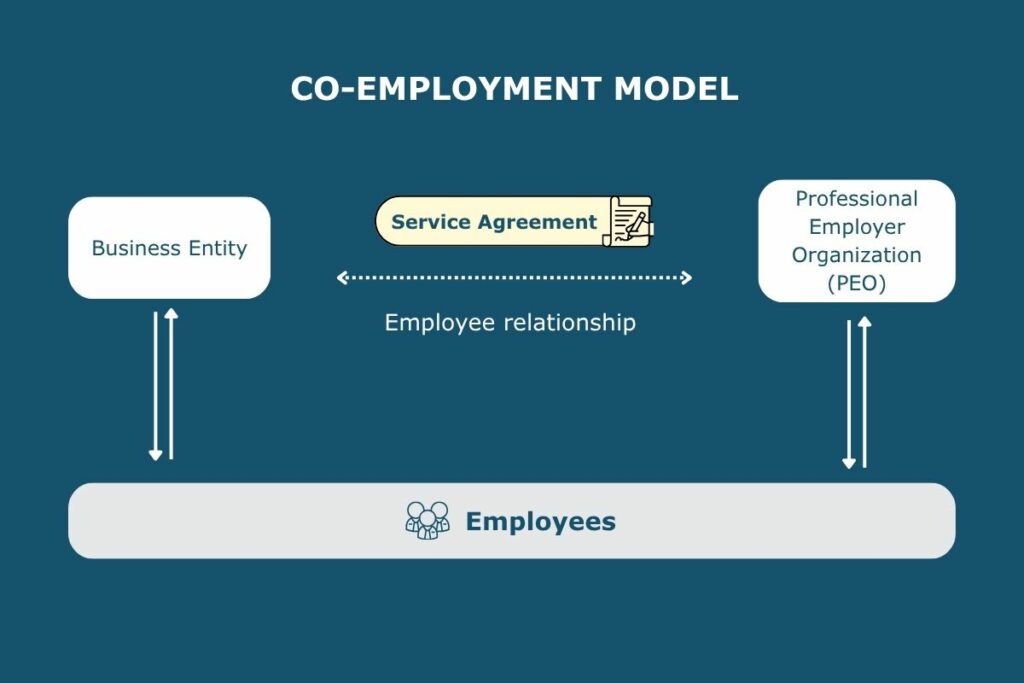
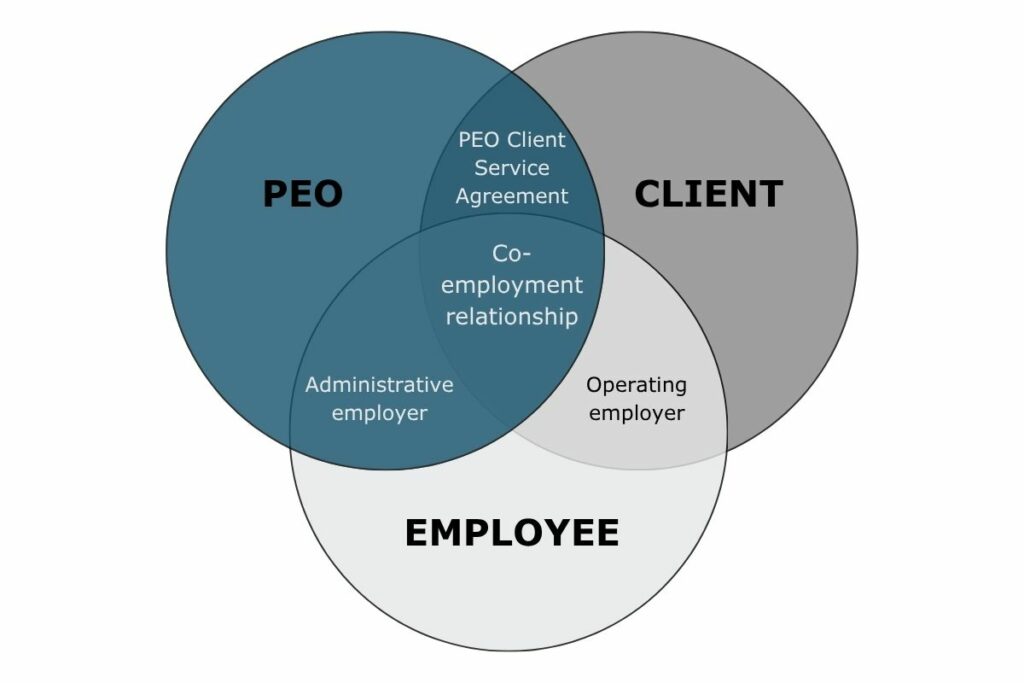
Co-employment involves a business and a professional employer organization (PEO) jointly sharing specific employment responsibilities through a contractual relationship.

Co-employment involves a business and a professional employer organization (PEO) jointly sharing specific employment responsibilities through a contractual relationship.

PEO and EOR in China: Definitions

Although the terms are used interchangeably, understanding the PEO and EOR helps decision-makers.

  • PEO (co-employment). Both the PEO and the client share employer roles. The PEO handles HR and payroll, while the client directs the employee’s work.
  • EOR (full legal employer). It refers to when the PEO is the sole legal employer. The client company manages the employee’s duties but does not appear as the employer on contracts.

In China, most providers market PEO/EOR services together, so the difference is largely branding. The choice depends on whether the company already has a legal entity in China. If yes, PEO services complement the entity. If not, EOR solutions in China provide a full legal employer framework.

Benefits of Using This Service in China

For many foreign companies, the benefits go beyond compliance.

  • Market entry speed: Start operations quickly.
  • Legal security: Reduce exposure to fines or lawsuits.
  • Employee satisfaction: Timely salary, insurance, and benefits build trust.
  • Strategic flexibility: Scale staff up or down as business needs evolve.
  • Access to HR expertise: PEOs understand local practices, from contracts to dispute resolution.

Ultimately, PEO/EOR services in China free up foreign firms to focus on sales, sourcing, and growth — while experts handle HR and compliance.

Risks and Challenges

Of course, no model is without drawbacks. Companies should understand the risks before committing.

  • Legal gray areas. In some regions, PEO services may overlap with restricted “labor dispatch.” Choosing a licensed provider reduces this risk.
  • Higher long-term costs. Service fees may exceed the cost of setting up a WFOE if hiring dozens of staff.
  • Employee perception. Some Chinese employees may prefer direct contracts with foreign entities.
  • Dependence on provider. The client relies on the PEO’s systems and expertise.
  • Mitigation strategy. Conduct due diligence and choose a provider with proven compliance, transparent pricing, and local licensing.

3. Why Foreign Companies Choose PEO/EOR in China

Expanding in China is complex, but PEO services simplify the process. For foreign companies, the benefits are immediate and significant.

  • Speed. A PEO can onboard employees in days, while setting up a Wholly Foreign-Owned Enterprise (WFOE) may take 3–6 months. So, it is critical for companies testing the market or starting pilot projects when applying PEO service in China.
  • Compliance. China has strict rules for labor contracts, payroll, and mandatory benefits. PEOs ensure full compliance with the Chinese Labor Contract Law and local bureau requirements.
  • Flexibility. Companies can start with one or two employees before scaling up. If the business shifts, they can also exit without facing heavy closure costs.
  • Risk reduction. PEOs reduce the risk of fines, penalties, or employee lawsuits related to misclassification.
  • Cost efficiency. SMEs can avoid the high registered capital and administrative costs linked to entity setup.

In short, PEO services in China provide a low-risk bridge for foreign companies that want to operate in the country without committing large investments upfront.

Furthermore, the demand for PEO services in China is set to rise, driven by several key trends. Many companies are adopting a China+1 strategy, combining their China presence with expansion into ASEAN markets such as Vietnam and Thailand, and PEO solutions make this dual approach easier to manage.

At the same time, the rise of digital PEO platforms, powered by AI and automation, is streamlining payroll, enhancing compliance monitoring, and reducing costly errors. Moreover, high-growth sectors such as green energy, semiconductors, and AI are attracting increasing foreign investment, creating strong demand for compliant hiring models.

Together, these factors indicate that PEO services will remain a critical tool for businesses entering China, offering agility and compliance in an unpredictable global market.
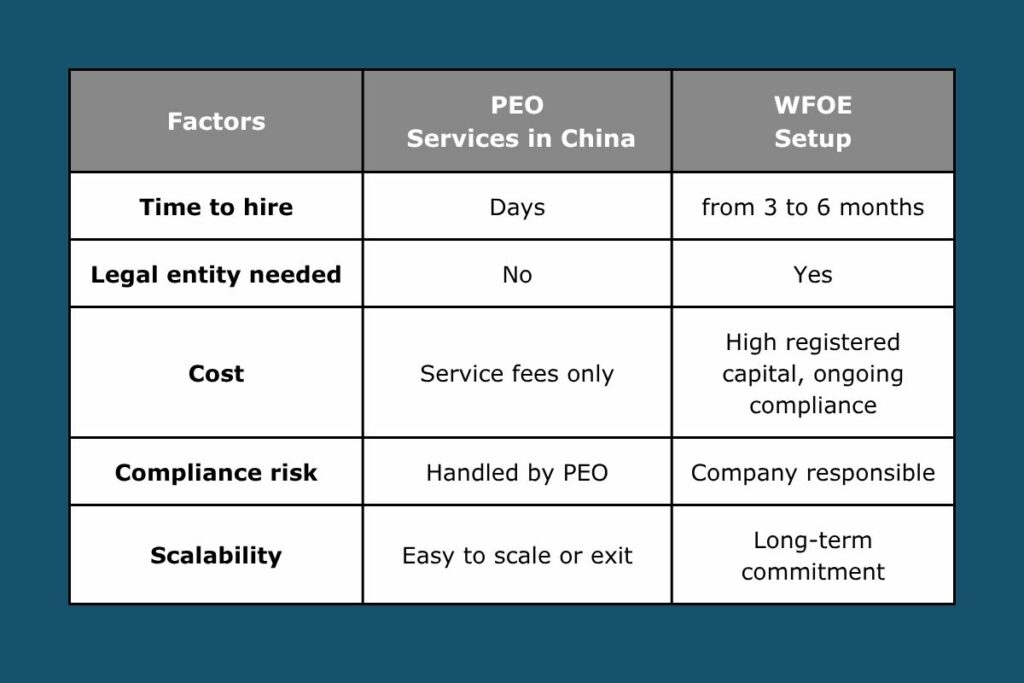
Comparison between PEO (Professional Employer Organization) and WFOE (Wholly Foreign-Owned Enterprise) in China.

Comparison between PEO/EOR and WFOE (Wholly Foreign-Owned Enterprise) in China.

4. Legal Environment for PEO Services in China (2026 Update)

China’s labor market is heavily regulated, and foreign companies must follow the same laws as local employers. PEOs step in as the legal buffer to ensure compliance.

  • Employment contracts. Every employee in China must have a written labor contract in Mandarin. Contracts must specify job roles, working hours, wages, benefits, and termination clauses. PEOs prepare these contracts according to Chinese law, protecting foreign companies from non-compliance fines.
  • Social insurance and housing fund (5+1 model). Employers must contribute to the “five insurances and one housing fund” which are pension, medical, unemployment, work injury, maternity, and housing fund. Contribution rates vary by city. For instance, in Shanghai, employers pay around 27% of salary, while employees contribute ~11%. PEOs manage these payments accurately, avoiding penalties and ensuring employees receive their benefits.
  • Probation and termination rules. Probation periods are capped based on contract length, ranging from one to six months. Termination without proper cause requires severance pay. Mishandling termination is one of the most common risks for foreign firms, and PEOs reduce this risk by following the correct procedures.
  • Expat employment rules. Hiring foreigners in China requires work permits, Z visas, and residence permits. PEOs can handle these processes, ensuring documents meet requirements and reducing visa rejection risks.
  • Legal updates. Crackdowns in Beijing and Shanghai on the misuse of labor dispatch agencies. Stricter enforcement of social insurance for foreign workers, unless exempted by bilateral agreements. More digitalized labor administration systems, requiring timely online filings.

To sum up, these updates make it more difficult for foreign companies to hire directly without expertise, further reinforcing the value of EOR/PEO services in China.

5. EOR/PEO vs. Setting Up a WFOE in China

Foreign firms often compare PEO with setting up a Wholly Foreign-Owned Enterprise (WFOE). Both allow hiring, but the processes differ greatly.

Factors EOR/PEO in China WFOE Setup
Time to hire Days 3 – 6 months
Legal entity needed No Yes
Cost Service fees only High registered capital, ongoing compliance
Compliance risk Handled by PEO/EOR Company responsible
Scalability Easy to scale or exit Long-term commitment


Therefore, for companies testing the market, PEO/EOR is a flexible first step. WFOEs are better for firms planning long-term, large-scale operations.

6. Payroll and HR Compliance Under China EOR Services

Payroll in China is more complex than in many Western countries. PEO/EOR payroll services ensure compliance with:

  • Personal income tax (PIT). Progressive rates up to 45%, with monthly withholding.
  • Social insurance and housing fund contributions.
  • Reporting deadlines. Company must file with the local tax bureaus each month.
  • Payroll cycle. Usually monthly, with strict deadlines.

Failure to comply can lead to fines or blocked work permits. Using a PEO payroll service reduces administrative burdens while guaranteeing employees are paid accurately and on time.
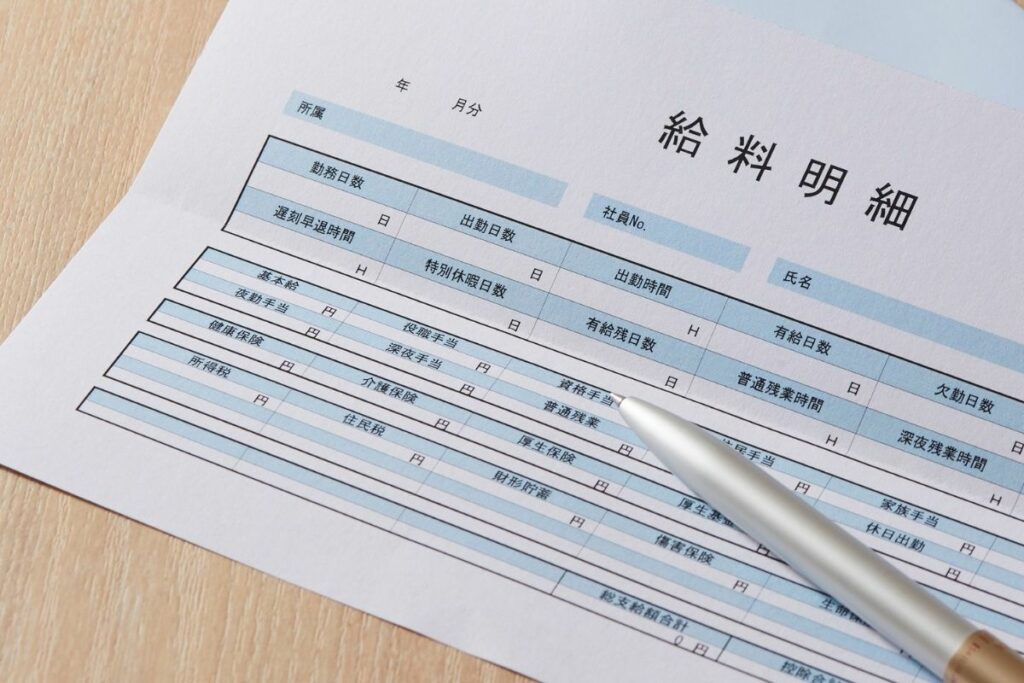
Payroll in China is more complex than in many Western countries.

Payroll in China is more complex than in many Western countries.

7. How to Choose the Best PEO Services in China

Selecting the right PEO partner is essential, as your compliance, payroll accuracy, and even employee trust will depend on it. The wrong choice can lead to fines, disputes, or talent loss. Below are key factors for your evaluation:

  • Licensing and compliance track record.

Not every PEO in China is licensed to operate legally. You always verify that the provider holds valid licenses for HR outsourcing, payroll services, and labor dispatch, where applicable. Also, you should ask for proof of compliance and check whether the provider has faced any disputes with local authorities. A strong track record ensures you won’t risk penalties.

  • Experience with foreign SMEs and multinationals.

A PEO that has worked with both small businesses and large corporations understands different hiring needs. SMEs often require flexibility and cost efficiency, while MNCs demand scalability and strict compliance. Look for case studies or testimonials from companies similar to yours, especially in your industry.

  • Transparent fees without hidden charges.

Some providers charge low upfront fees but add hidden costs for visa applications, tax filings, or sudden contract terminations. You should request a full pricing sheet that covers payroll, benefits, onboarding, and offboarding. Clear pricing builds trust and helps you budget accurately.

  • Knowledge of local labor laws.

Chinese labor law is detailed and enforced differently across provinces. A good PEO should not only know the national laws but also local variations in minimum wage, social insurance rates, and housing fund contributions. Providers should also update you about regulatory changes that may affect your employees.

  • Ability to handle expat visas and cross-border payroll.

If you plan to hire foreign experts in China, the PEO must manage work permits, residence permits, and renewals smoothly. Delays can interrupt operations and frustrate employees. For regional companies, the PEO should also provide cross-border payroll support, ensuring compliance when staff split time between China and ASEAN hubs under a China+1 expansion model.

  • Cultural and HR expertise

Beyond compliance, a strong PEO understands workplace culture in China. This includes handling sensitive resignations, providing guidance on bonuses, and supporting employee retention strategies. Providers with bilingual HR staff can bridge communication gaps between foreign managers and local employees.


Read more related articles


8. Conclusion

Hiring employees in China is complex, but PEO/EOR services in China simplify the process. They provide a legal employer framework, manage payroll and benefits, and ensure compliance with labor laws. Compared to setting up a WFOE, PEO services are faster, cheaper, and less risky, making them ideal for SMEs and firms testing the Chinese market. However, choosing the right partner is critical. A reliable PEO not only manages compliance but also builds trust with employees, supporting long-term success.

📩 If you want to hire employees in China without setting up a local entity, VVR RH offers expert PEO and/or EOR solutions for foreign companies in China. Contact us today to explore how we can help you expand with confidence.

Share your project with us via contact@vvrinternational.com.

CONTACT US

FAQ

  • What are the main HR challenges in China that outsourcing helps foreign companies solve?

The main HR challenges in China include compliance with labor contract law, managing payroll across different cities, handling social insurance and housing fund contributions, and navigating work permit requirements for foreign employees.

HR outsourcing for foreign companies in China addresses these issues by providing local expertise, payroll outsourcing services, contract management under mutual agreement rules, and support for work permits. This allows companies to operate smoothly while minimizing legal and operational risks.

  • How do HR outsourcing services in China support strategic HR management and long-term growth?

HR outsourcing services in China support strategic HR management, aligning with modern HR practices in China, including digital HR solutions, employee retention strategies, and ESG-focused HR policies. By outsourcing HR functions, companies gain access to market insights, salary benchmarks, and compliance monitoring, enabling them to build sustainable teams in China while adapting to workforce trends and long-term business objectives.

Related Posts

Read More
Human Resources in China: Common Recruiting Mistakes to Avoid and What to Do Instead

Human Resources in China: Common Recruiting Mistakes to Avoid and What to Do Instead

1. Introduction

China is one of the world’s most attractive destinations for international business, yet it is also one of the most complex when it comes to its people. For global companies, managing human resources in China requires a new mindset: a mix of cultural awareness, legal precision, and adaptive leadership. Unlike in Western markets, success in recruiting in China doesn’t simply come from offering good pay. It stems from understanding what motivates Chinese professionals, how trust is established, and why speed, clarity, and respect influence every hiring decision. In this article, we, VVR HR, explore the main aspects of human resources in China, including how to attract, hire, and retain top talent in China, while avoiding the costly mistakes many foreign companies make. 

2. Understanding the Chinese Job Market

Before posting your first job ad, it’s important to understand how the Chinese employment landscape differs from Western markets, both culturally and structurally. 

A massive workforce and a growing talent gap 

China’s labor market remains one of the largest on Earth, with over 770 million active workers according to the National Bureau of Statistics. Yet employers often face talent shortages, especially in specialized sectors like engineering, AI, green energy, and logistics. In 2025, average urban wages grew by more than 6% year-on-year, reflecting rising expectations among skilled employees. This means that human resources in China must focus not only on hiring, but also on retaining valuable professionals through development, benefits, and culture. While entry-level recruitment remains abundant, mid-level management and technical roles are becoming more competitive, pushing companies to enhance training and succession planning.

Cultural context: Hierarchy, respect, and harmony 

The Chinese professional environment still values hierarchy and collective harmony. Employees appreciate structure and clarity in reporting lines. For example, during interviews, modesty is a sign of respect rather than weakness. A candidate who avoids self-promotion may still be extremely competent, just more reserved. For foreign HR leaders, understanding this nuance is essential. It’s part of what defines successful human resource practices in China. For instance: 

  • Asking candidates to “describe how your team achieved success” feels more natural than “what did you accomplish?” 
  • Managers are expected to lead by example, balancing authority with empathy. 
  • Public recognition of achievements motivates staff, but private criticism preserves face and respect. 

These subtleties might seem minor, but they deeply influence trust, engagement, and retention.

Guanxi: The invisible engine of China’s HR ecosystem 

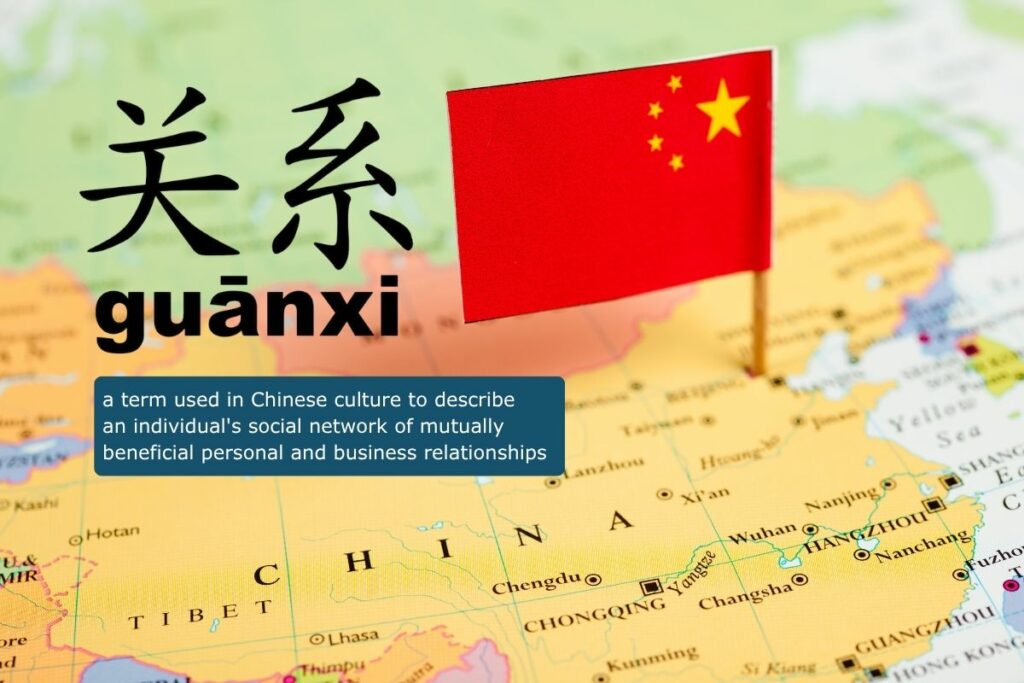
Guanxi (关系) refers to the web of personal and professional connections built through trust and reciprocity. In China human resources, guanxi remains an invaluable asset. Many quality hires still come through referrals rather than job boards.

Guanxi refers to the web of personal and professional connections built through trust and reciprocity.

Guanxi refers to the web of personal and professional connections built through trust and reciprocity.

Foreign companies often underestimate this soft power. Building guanxi takes time: attending industry events, supporting local initiatives, or collaborating with universities can open doors that standard recruitment channels cannot. Moreover, maintaining good relationships with current employees enhances your employer reputation — an important aspect of human resource management in China that drives word-of-mouth recruitment. 

Human Resources in China: Regional diversity and mobility 

China is not a single market. The country has regional diversity, including: 

  • Tier-1 cities (Shanghai, Beijing, Shenzhen, Guangzhou) offer deep talent pools but also the highest salary competition. 
  • Tier-2 cities (Chengdu, Suzhou, Nanjing, Wuhan) balance affordability with strong universities and rising professional populations. 
  • Tier-3 manufacturing hubs attract younger workers but require more investment in onboarding and training. 

As mobility increases, many professionals prefer employers offering hybrid work or rotational assignments. Flexible policies, when aligned with compliance, make companies more attractive, a growing trend in human resources management in China post-pandemic. Besides, employers are expected to provide not only fair compensation but also career development, training opportunities, and a clear sense of purpose, all of which strongly influence candidate decisions. 

3. Common Mistakes Foreign Companies Make (and What to Do Instead)

Many companies enter China with enthusiasm, but without adapting their hiring practices to local realities. Here are the most common pitfalls to avoid. 

Translating job descriptions without localization 

Literal translation often results in confusion or misalignment. A job posting written for Europe or the U.S. might not fit Chinese expectations of seniority or reward. In fact, titles, benefits, and role expectations may not align with local norms. For instance, what’s considered a “Manager” in Europe may be viewed as a mid-level position in China. Or a “Business Development Executive” role might sound junior in China, while “Sales Manager” communicates clearer responsibility. Likewise, benefits such as social insurance, annual bonus, and housing allowances are not perks; they are norms. HR Tips: Write the job description in Mandarin first. Specify clear KPIs, include benefits transparently, and describe the company’s local presence. This ensures your recruitment in China resonates with both language and mindset.

A job posting written for Europe or the U.S. might not fit Chinese expectations of seniority or reward.

A job posting written for Europe or the U.S. might not fit Chinese expectations of seniority or reward.


Underestimating employer branding 

Today’s candidates check everything, from your WeChat account to employee reviews. Without localized visibility, your company can appear transient or unreliable. Candidates regularly check company profiles on Maimai, WeChat, and major job portals such as Zhaopin, Liepin, or 51Job before applying. If they can’t find credible local information about your company, they may question its stability or long-term presence. HR Tip: Create Chinese-language pages and updates. Post about your team, community engagement, or partnerships. Maintain a responsive WeChat Official Account. A consistent local narrative builds trust and strengthens human resources management in China. 

Delays and unclear job offers 

One of the biggest cultural mismatches is timing. Chinese candidates expect clarity and speed in communication. Prolonged approval cycles, incomplete offer details, or inconsistent communication are among the main reasons candidates reject offers. Indeed, silence after interviews can be discouraging for candidates. HR Tip: Provide a structured one-pager (role details, compensation overview, benefits, key conditions) and prioritize transparent, timely communication at each stage. Even when a process needs more time, clarity and consistency help maintain engagement and trust. 

Ignoring compliance and labor law 

China’s labor regulations are detailed and vary between cities. Mistakes such as exceeding legal probation periods, skipping mandatory benefits, or using generic foreign contracts can lead to disputes or penalties. 

  • Written contracts are mandatory and must include job title, location, term, and benefits. 
  • Probation periods are capped based on contract length (e.g., 1 month for contracts under a year, up to 6 months for long-term contracts). 
  • Social contributions (known as the “Five Insurances and One Housing Fund”) must be paid for every employee, with rates that differ by region. 

HR Tip: Always prepare bilingual contracts, following national and city-specific regulations. Keep a record of all signed documents and onboarding procedures. Or you can work with local HR experts or a PEO provider who understands the latest legal updates and ensures full compliance from day one. 

Using a single recruitment channel 

Focusing only on one hiring source, such as LinkedIn or Western job boards, is a common and costly mistake. In fact, LinkedIn’s audience in China is small. Chinese professionals rely heavily on domestic platforms and personal referrals. They use Zhaopin, 51Job, Liepin, and Boss Zhipin, while Maimai functions as a business social network. Therefore, relying on one platform reduces diversity in applications. HR Tip: Use a multi-channel approach: from posting on local job portals, engaging on social media, attending networking events, building referral programs, to mixing job boards with headhunters. 

Overlooking onboarding and training 

Hiring is only the first step. Retaining your talent requires consistent follow-up and professional development. Many employees leave within their first year if they feel disconnected or undervalued. HR Tip: Design a clear 30–60–90 day onboarding plan, offer training on company tools and culture, and ensure regular manager check-ins. Strong onboarding is one of the most impactful human resources practices in China, directly reducing early turnover. 

4. How to Succeed in Recruiting in China

Once you understand the challenges, the next step is to design a recruitment strategy tailored to local realities, ensuring consistency, adaptability, and long-term thinking. Here is how to build robust strategies for human resources in China. 

Collaborating with local specialists 

Partnering with a local HR or PEO expert is the most efficient way to navigate legal, cultural, and operational complexities. At VVR International, our VVR HR helps foreign companies understand local law systems, diploma structures, salary benchmarks, and industry-specific expectations. With a local partner, you can identify qualified candidates faster and avoid costly hiring mistakes. For foreign companies entering the Chinese market, the hybrid model of human resources management, like EOR/PEO in China, reduces risk and accelerates setup.

Partnering with a local HR or PEO expert is the most efficient way to navigate legal, cultural, and operational complexities.

Partnering with a local HR or PEO expert is the most efficient way to navigate legal, cultural, and operational complexities.

Investing in employee development 

Training and career progression are among the top factors influencing job satisfaction in China. Offering learning opportunities, even small-scale internal programs, helps build loyalty and reduces turnover. Regular feedback and mentorship show that your company values long-term growth, not just short-term performance. HR Tip: Introduce quarterly workshops, mentorship programs, and internal promotions. Link training outcomes to recognition and measurable growth. Such investment nurtures loyalty and strengthens your human resource practices in China. 

Design structured, transparent recruitment processes 

An organized recruitment flow conveys professionalism. Here is our recommended model for your reference: 

  • Job definition and salary validation 
  • Mandarin-language posting 
  • Screening and shortlisting within 7–10 days 
  • Two interview rounds: HR fit and technical 
  • Reference check (often informal via guanxi) 
  • Offer issuance within 3 days 

Consistency and clarity build trust both internally and externally, hallmarks of strong China human resources operations 

Negotiate with cultural awareness 

Negotiation in China is not just about numbers. It’s about balance and sincerity. Candidates may discuss job title, growth path, or even working location before confirming. How you communicate matters as much as what you offer. Be consistent in your messaging, transparent about compensation, and respectful of the decision-making process. HR Tip: Be flexible but transparent. Explain how social insurance, taxes, and bonuses affect net pay. Avoid abrupt changes or delayed responses, stability and predictability are highly valued in recruiting in China. 

Cultivate company culture with local flavor 

Global companies often bring a strong culture, but local adaptation matters. Chinese employees value leaders who are visible, empathetic, and decisive. Cultural exchange, bilingual communication, and community-building activities help bridge global and local mindsets. HR Tip: Encourage team lunches, celebrate Chinese holidays, and highlight shared achievements publicly. A strong local identity within a global framework fosters pride and belonging across your China human resources network.


Read more related articles


5. Look Ahead: Enter the Chinese Market with Confidence

To sum up, recruiting in China is not about replicating your home-country methods; it’s about adapting and evolving. Understanding local culture, complying with labor laws, and investing in relationships will shape your long-term success far more than short-term cost savings. At VVR International, we help foreign companies hire and manage teams in China with confidence. From recruitment strategy and compliance to payroll and employee management, our local experts simplify complexity, so you can focus on growth. 

Reach out to our HR experts to discuss your recruitment or compliance project. Together, we’ll turn China’s complexity into your competitive advantage. 

Share your project with us via contact@vvrinternational.com.

CONTACT US

FAQ

  • What are the main HR challenges in China that outsourcing helps foreign companies solve?

The main HR challenges in China include compliance with labor contract law, managing payroll across different cities, handling social insurance and housing fund contributions, and navigating work permit requirements for foreign employees.

HR outsourcing for foreign companies in China addresses these issues by providing local expertise, payroll outsourcing services, contract management under mutual agreement rules, and support for work permits. This allows companies to operate smoothly while minimizing legal and operational risks.

  • How do HR outsourcing services in China support strategic HR management and long-term growth?

HR outsourcing services in China support strategic HR management, aligning with modern HR practices in China, including digital HR solutions, employee retention strategies, and ESG-focused HR policies. By outsourcing HR functions, companies gain access to market insights, salary benchmarks, and compliance monitoring, enabling them to build sustainable teams in China while adapting to workforce trends and long-term business objectives.

Related Posts

Read More