Sécuriser et pérenniser votre développement en Chine
Commencer votre projet iciA propos
Créée en 1999, VVR International est une société de conseils et de services qui assiste les sociétés européennes dans leur développement industriel et commercial en Chine.
Le cœur de métier de VVR International est de sécuriser et de pérenniser le développement de ses clients en Chine.
Depuis 24 ans, VVR International a géré plus de 1000 projets en Chine, incluant plus de 300 projets de distribution (diagnostic stratégique, développement de réseaux commerciaux, recrutement, portage et montage de structure commerciale …), 300 projets de partenariats industriels (diagnostic stratégique, transfert de technologie, implantation en propre, joint-venture, levée de fonds, fusion, acquisition…), et plus de 400 projets achats / qualité (sourcing, audit, développement produit, contrôle qualité) dans une vingtaine de secteurs d'activités.
En 2023, VVR International a géré plus de 165 millions d'euros de courant d'affaires entre l'Europe et la Chine.
Domaines
De compétences

Diagnostic stratégique
Analyser le marché, élaborer votre future stratégie adaptée au marché chinois.

Développement commercial
Sécuriser et pérenniser votre expansion commerciale en Chine.

Supply Chain & Distribution
Optimiser l'exportation et la gestion logistique de votre structure en Chine.

Industrialisation & TOT
Vous implanter en Chine, en propre ou via un transfert de technologies.

Achat & Qualité
Accompagner votre département achat et qualité à chaque étape de votre projet de sourcing en Chine.

Recrutement & portage
Identifier, qualifier, recruter, si nécessaire porter et intégrer les talents adaptés à vos besoins en Chine.

Fusions & Acquisitions
Vous accompagner dans la négociation de votre projet de partenariat stratégique (M&A, JV...) en Chine.
VVR RH
Le département VVR RH offre aux entreprises étrangères souhaitant consolider leur implantation sur le territoire chinois un panel de solutions personnalisées, incluant les services RH classiques (conseil, diagnostic organisationnel, recrutement, coaching..) et une gamme de services opérationnels pour assister les entreprises dans la gestion quotidienne de leur équipe en Chine, sans avoir besoin de créer une entité juridique locale (incubation, portage salarial, domiciliation, Externalisation des Processus d'Affaires (BPO), Service de Labor Dispatch.
VVR RH s'appuie sur plus de 20 ans d'expérience dans les services RH en Chine, une solide équipe sino-européenne, toutes les licences nécessaires et 4 bureaux dans les grandes villes chinoises pour apporter aux entreprises les meilleures solutions RH en Chine.

VVR medical
Actif dans le secteur médical depuis 2008, VVR International a établi VVR Medical en 2018, avec une équipe de 8 personnes dédiées aux innovateurs européens en technologies médicales et outils de diagnostic.


Management VVR




Irénée ROBIN
Directeur Associé
VVR Medical

Jean-Luc ADDA
Directeur Financier
VVR International

WEI Hua
Directeur
VVR Chine

WANG Jun
Directeur du bureau
VVR Shijiazhuang

XIA Dan
Directrice du bureau
VVR Shanghai

CHEN Minyu
Directrice du bureau
VVR Canton

YU JiaXin
Directrice financière
VVR Chine
Bureaux VVR
en Chine
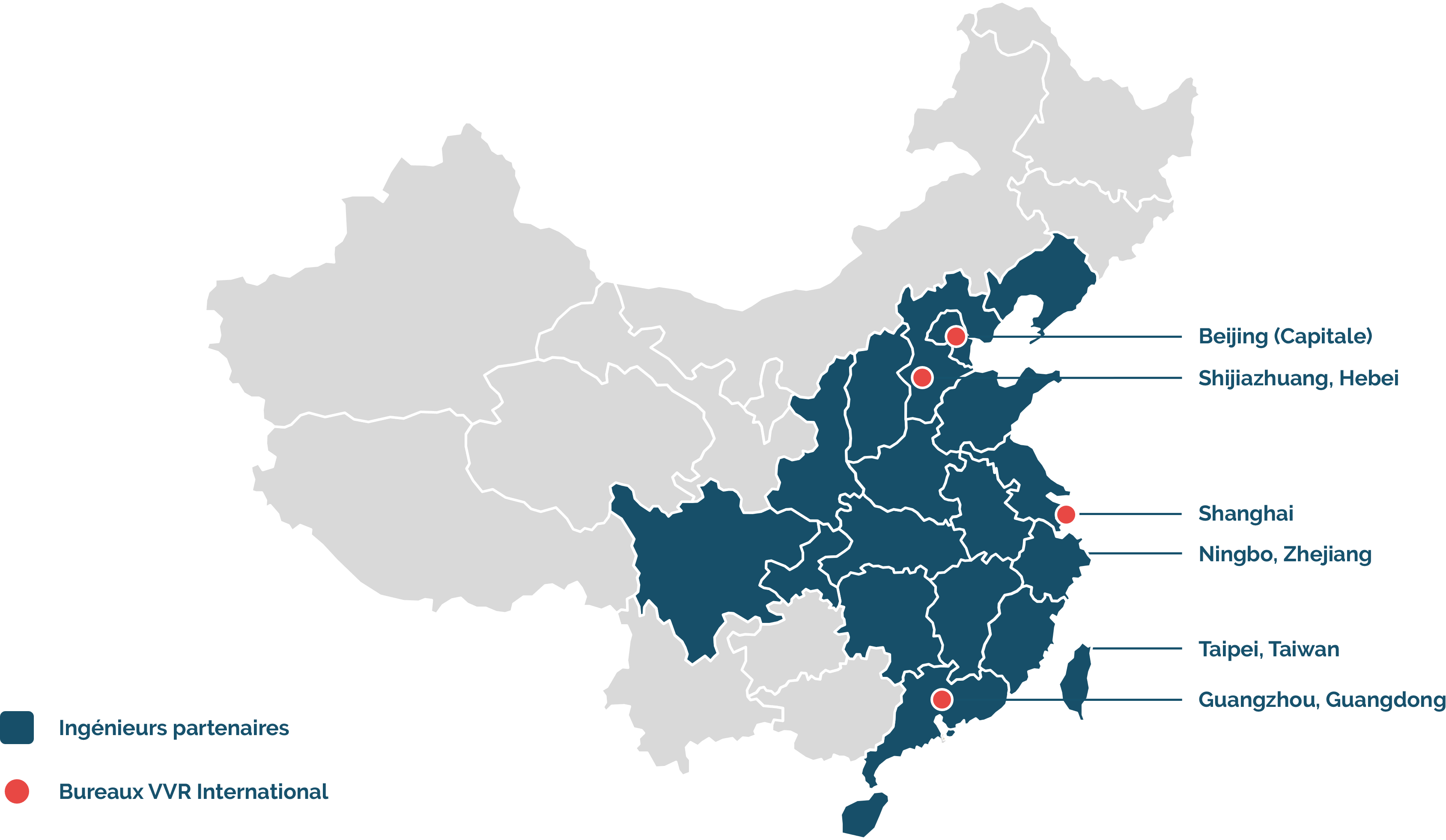
Notre réseau de partenaires
VVR est un membre du réseau Globallians
Globallians est un réseau de sociétés indépendantes expertes en accompagnement international et spécialisées par pays.

VVR est membre du réseau Medicallians
Medicallians est un réseau de sociétés expertes du secteur de la santé et en accompagnement international en Allemagne, UK, Emirats, Japon, USA et Chine.

VVR international est adhérent et membre du Conseil d'administration de l'OSCI
L'OSCI est la fédération des sociétés privées dédiées au développement international des entreprises.

Actus VVR

Le marché des cosmétiques en Chine en 2026 : consommateurs et tendances
Le marché des cosmétiques en Chine en 2026 analysé par VVR International : consommateurs et tendances
Chine : décryptage d’un marché en pleine transformation, devenu le centre de gravité industriel et technologique mondial
Chine : décryptage d’un marché en pleine transformation, devenu le centre de gravité industriel et technologique mondial

Consommation de fruits en Chine : tendances, distribution et opportunités en 2026
Consommation de fruits en Chine : tendances, distribution et opportunités en 2026

Le marché du vin en Chine 2026 : tendances et consommation
Le marché du vin en Chine 2026 : tendances et consommation .